Pakistan LPG surge eases only slightly at border
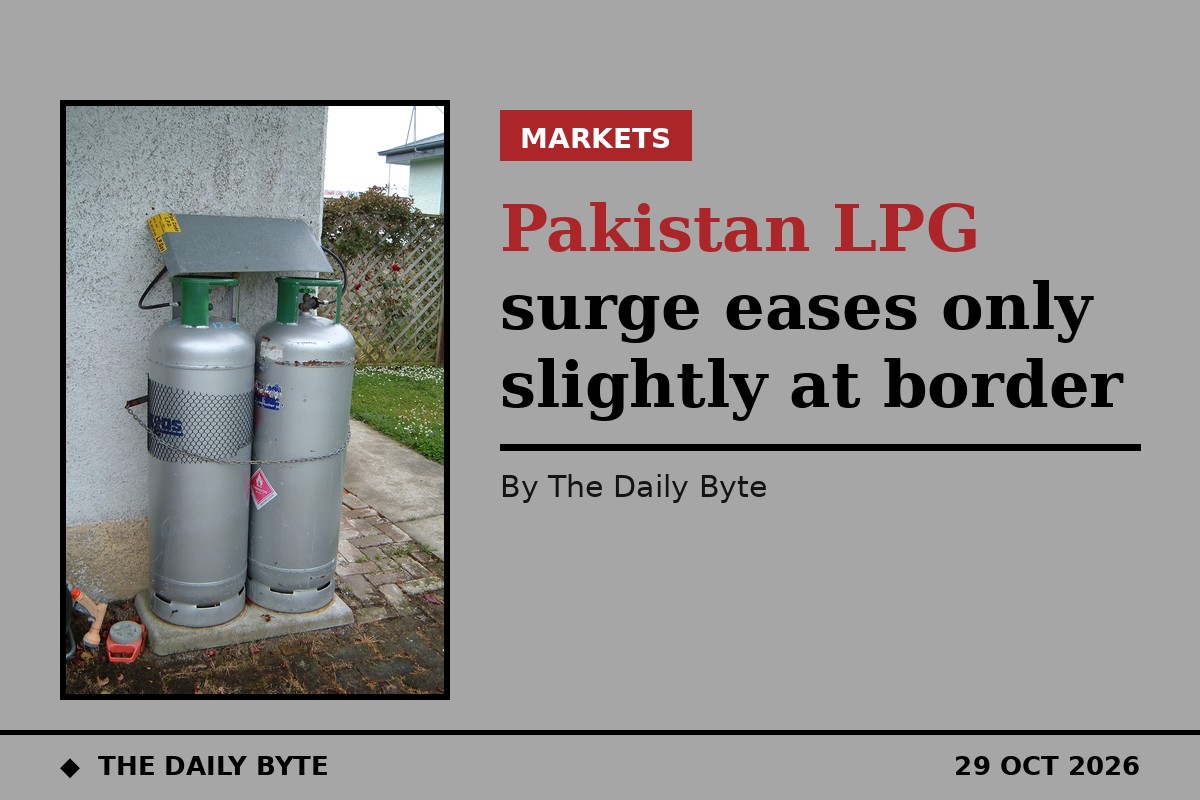
Pakistan's liquefied petroleum gas shortage is persisting, with households reporting prices far above the official rate despite a partial reopening of a key border crossing with Iran.
A partial reopening, not a full fix
The Gabd-Rimdan and Taftan crossings were closed on 17 October, halting LPG imports from Iran. Pakistan imports about 7,000 metric tonnes of LPG a day from Iran, according to the Pakistan LPG Association, with more than 4,000 tonnes a day entering through Gabd-Rimdan alone. Traders said the price of a 12 kg cylinder in Balochistan had risen from about PKR 4,500 to about PKR 7,000 within days.
Households pay far above the official cap
After a week-long suspension, Gabd-Rimdan reopened on 24–25 October for consignments with paperwork dated 16 October or earlier only, under added security. Hundreds of trucks and LPG tankers had been stranded, and unidentified gunmen attacked parked freight near the crossing during the suspension, setting dozens of trucks ablaze. Full resumption of LPG flows and Taftan's reopening remain unresolved, traders warning that supply problems and prices could deepen ahead of peak winter demand.
The gap between the notified price and the market price is stark. The Oil and Gas Regulatory Authority's October cap is PKR 279.34 per kg, or PKR 3,296.23 for an 11.8 kg domestic cylinder. Yet Dawn reported on 21 October that LPG had climbed to as much as PKR 600 per kg in hilly areas and PKR 500 per kg in Punjab and Khyber Pakhtunkhwa, and on 26 October that households in Rawalpindi and Islamabad, receiving piped gas for only about six hours a day, had begun turning to wood and coal for cooking. Pakistan cited security and anti-smuggling concerns for the closure, while Iran pointed to technical issues.
Sources: Reuters, Business Recorder, Particle News, Dawn (via eDailyGraph).