Pakistan Marks Iqbal's 149th Birth Anniversary
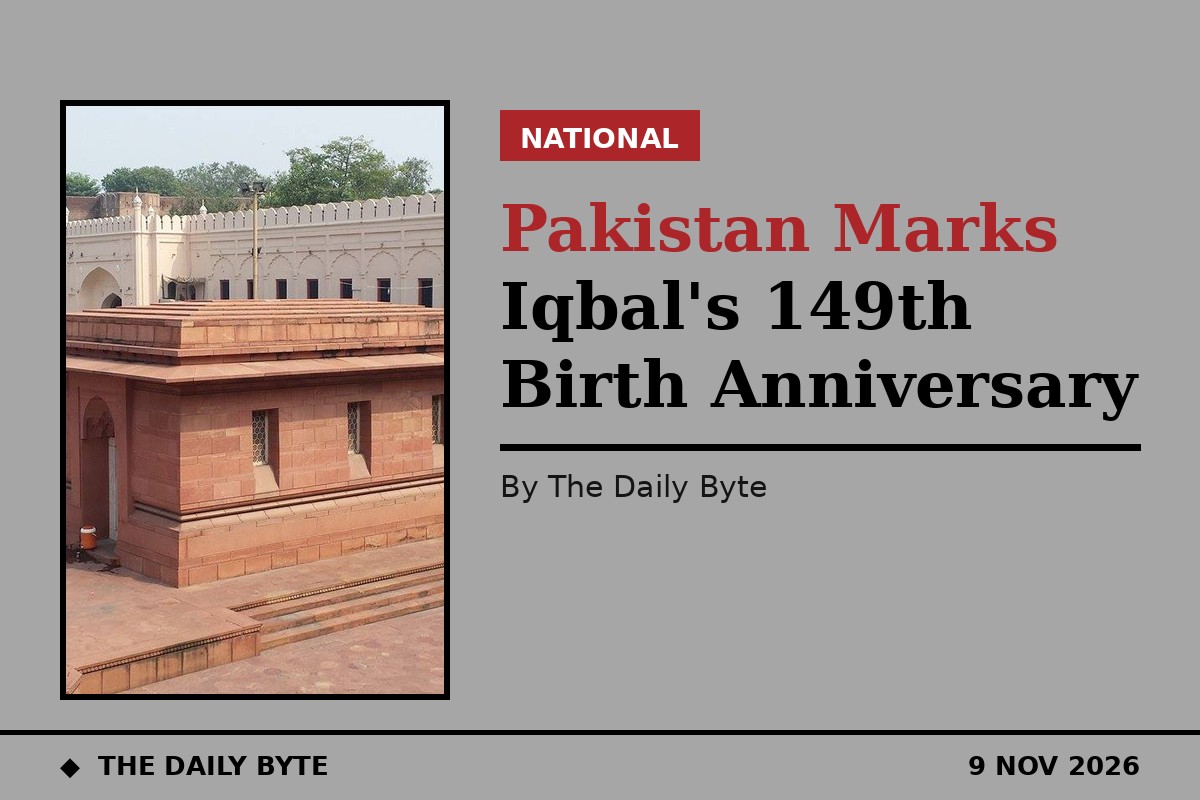
Pakistan observed the 149th birth anniversary of national poet Allama Muhammad Iqbal on Monday, 9 November, with ceremonies in Lahore and tributes from the country's leadership. Iqbal, widely known as Shair-e-Mashriq, the Poet of the East, and Hakim-ul-Ummat, the Sage of the Ummah, was born in Sialkot on 9 November 1877.
The day was a public holiday across the country, with federal and provincial government offices, banks and educational institutions closed under a notification from the Cabinet Division. Normal activities resume on Tuesday, 10 November.
Change of guard at Mazar-e-Iqbal
A solemn changing of the guard ceremony was held at the mausoleum of Allama Muhammad Iqbal in Lahore to mark the anniversary. Commodore Misbah-ul-Amin, Station Commander of the Pakistan Navy in Lahore, attended as chief guest, laid a floral wreath at the mausoleum and offered Fateha.
He inspected the ceremonial guard contingents comprising personnel from the Pakistan Rangers and the Pakistan Navy. Following the ceremony, a smartly turned-out Pakistan Navy contingent formally assumed responsibility for ceremonial guard duties at the mausoleum, taking over from the Punjab Rangers. The ceremony was covered live by SAMAA TV, with admirers and visitors gathering at the mausoleum to pay tribute to the national poet.
President pays tribute
President Asif Ali Zardari paid tribute to Allama Iqbal in his message on the occasion, highlighting the poet's role in shaping the political consciousness of Muslims in the Subcontinent. He said Iqbal's poetry empowered Muslims to recognise their potential and their right to determine their own future, and provided intellectual direction to their aspirations for freedom, dignity and an honourable place in society.
The president also noted that Iqbal's poetry challenged exploitation, raised awareness among disadvantaged communities about their rights and emphasised the dignity and respect of the working class.
A lasting legacy
Iqbal received his early education in Sialkot before studying at Government College Lahore and pursuing higher education in Britain and Germany. Through his poetry and philosophical writings, he awakened a sense of political and national consciousness among Muslims and encouraged them to pursue self-realisation, dignity and independence.
His celebrated poetic collections, including Bang-e-Dara, Bal-e-Jibril and Zarb-e-Kaleem, remain influential, particularly among younger generations, carrying messages of hope, courage and intellectual awakening. His message of faith, self-respect and determination continues to inspire people in Pakistan and around the world.
Special events and seminars were held across the country to mark the day, and the formal changing of the guard at the mausoleum remains one of the most closely watched traditions of the annual observance. The Navy will hold the ceremonial guard duties until the next change of guard.