Pakistan Overseas Jobs Fall 25% as Gulf Hiring Slows
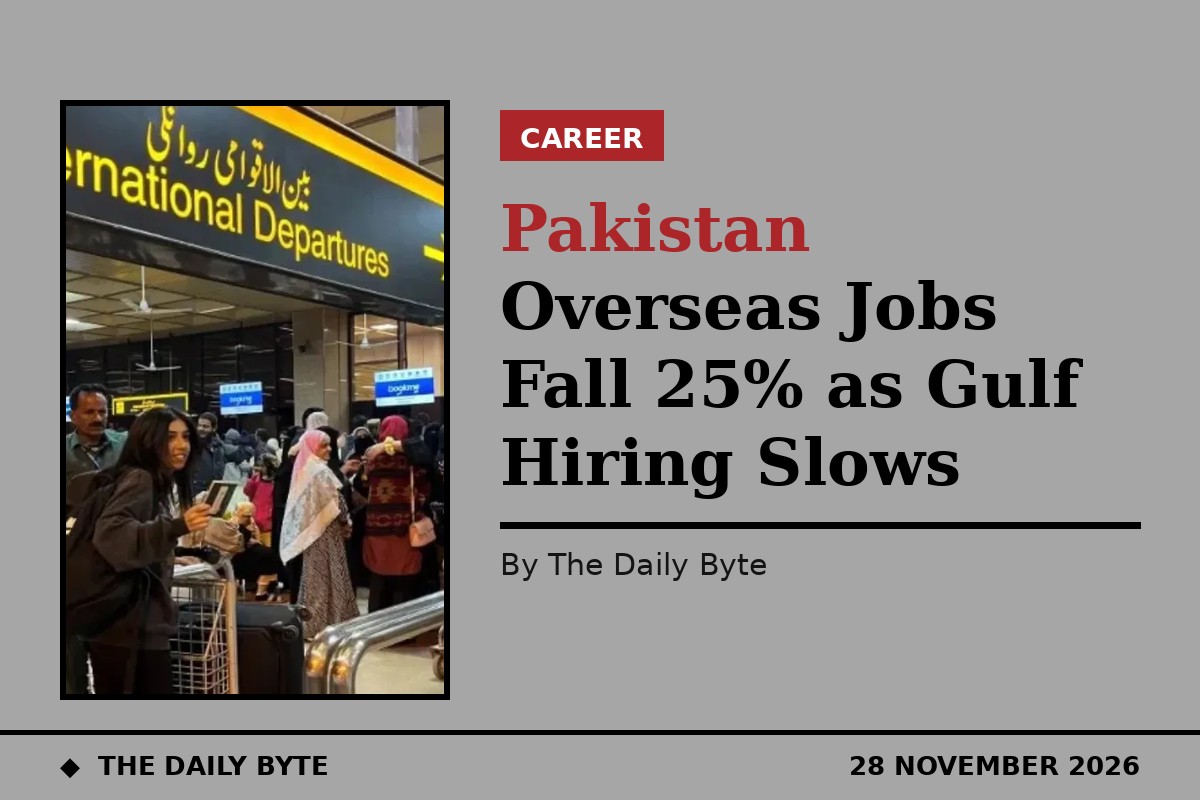
Pakistani overseas job placements have fallen by about a quarter in 2026, as conflict in the Gulf disrupts business activity, flights and recruitment across the region. Figures from the Bureau of Emigration and Overseas Employment (BE&OE), reported this week, show 476,238 Pakistanis registered for overseas employment in the first ten months of the year, against 763,526 during the whole of 2025. The monthly average has fallen by 25.2 percent, from 63,627 last year to 47,624 in the first ten months of 2026.
Saudi Arabia remains the largest destination by a wide margin, but it has seen the sharpest fall. The kingdom received 294,297 Pakistani workers up to 20 November, compared with 530,437 in all of 2025. Qatar took 35,934 workers, down from 68,386 last year, while Bahrain received 22,387, down from 37,726. The United Arab Emirates was the only major market to hold steady, taking 53,018 workers, slightly above its full-year 2025 figure of 52,664. Together the six Gulf countries accounted for about 86 percent of registrations, down from around 91 percent in 2025.
Why hiring has stalled
The Pakistan Overseas Employment Promoters Association (POEPA) blames the US-Iran conflict for the slowdown. Its chairman, Athar Shah, said the conflict has disrupted business, development projects and investment in the Gulf, forcing many companies to halt plans for new hires. Recruitment agents say Gulf employers have stopped sending new demand letters, and some earlier requests have been put on hold. Workers who had already completed ticketing, medical tests, protector clearance and training are facing cancelled flights, with promoters covering refund and rebooking costs.
Air travel has been hit as well. Passenger and cargo flights by Pakistani and foreign airlines to Riyadh and Dammam were reported cancelled until 30 November, while Dubai airport has seen multiple cancellations and delays. Pakistanis already working in the region are also feeling the pressure: port workers have been affected by reduced shipping, while taxi drivers, delivery riders and free-visa labourers report a shortage of work, and some are struggling to pay their sponsors to keep their legal status.
Who is still going abroad
Labourers and drivers still dominate the outflow. Labourers accounted for 293,401 registrations in the first ten months of 2026, followed by drivers with 94,479. Engineers recorded 4,318 registrations, doctors 2,529, accountants 2,844 and computer analysts 1,143. A few occupations actually grew despite the shorter reporting period: teachers rose to 1,883 from 1,743 in the whole of 2025, cooks to 11,325 from 10,503, and fitters to 2,956 from 2,847. Türkiye also emerged as a growing destination, with 10,284 registrations, nearly double the 5,288 recorded in all of 2025.
The bureau also reported 220,170 overseas job vacancies, of which 113,192 had been filled and 106,978 remained available. The slowdown comes as unemployment at home rises: the Pakistan Bureau of Statistics' Labour Force Survey 2024-25 put unemployment at 7.1 percent, up from 6.3 percent in 2020-21, with 5.9 million people unemployed. There are also concerns about remittances, with overseas Pakistanis having sent about $39 billion to $40 billion home in 2025. Registration figures record intent to work abroad rather than departures actually completed, so they measure the pipeline of workers heading overseas, not only those who have already travelled.