Pakistan overseas jobs fall to 476,238 in Jan-Oct
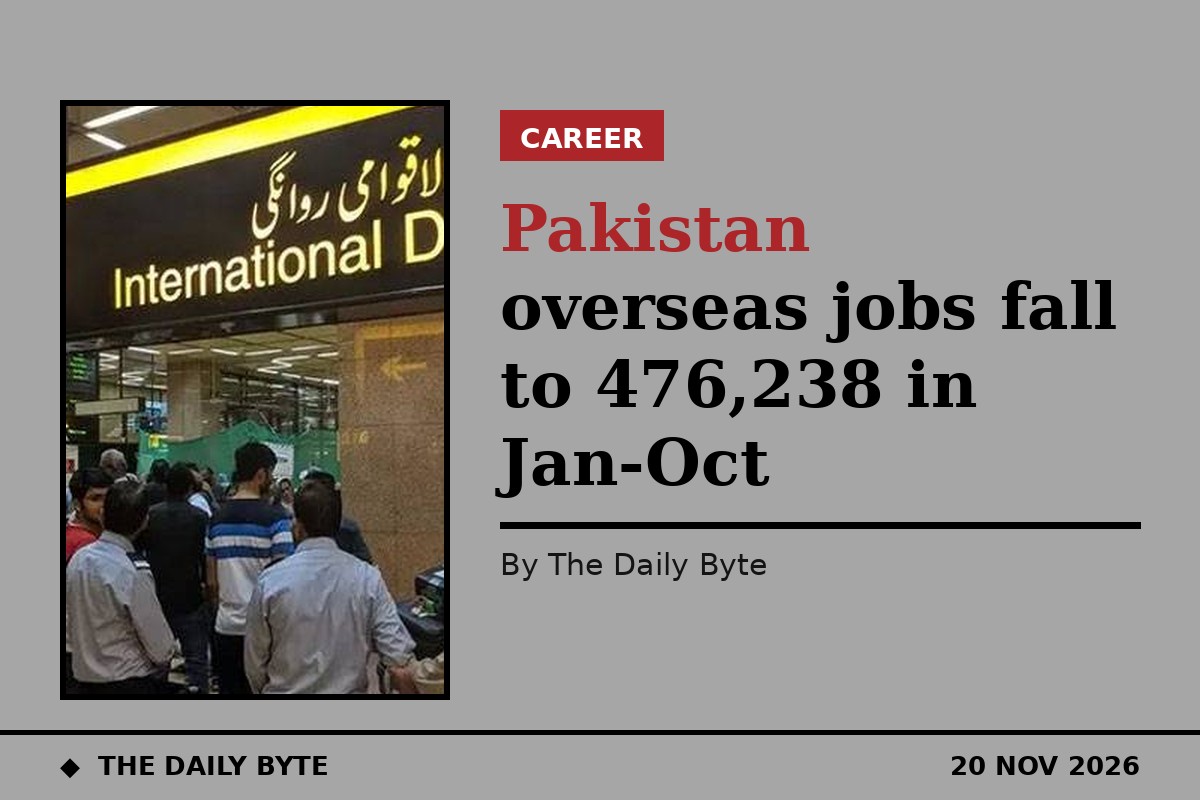
Fewer Pakistanis went abroad for work in the first ten months of 2026 than in recent years, with 476,238 workers and professionals moving overseas for jobs between January and October, according to figures from the Bureau of Emigration and Overseas Employment (BEOE) reported by TechJuice on 16 November. The ten-month total is about 62 per cent of the 763,536 Pakistanis who secured overseas employment in the whole of 2025, and the monthly pace has fallen by about a quarter: an average of 47,623 workers a month left in January to October 2026, against 63,628 a month in 2025.
The slowdown matters because overseas work is one of Pakistan's largest sources of jobs and remittances. The government had aimed to send 800,000 Pakistanis abroad for employment in 2026, a target announced by the Minister for Overseas Pakistanis, Chaudhry Salik Hussain, in February. With two months of the year left, the 476,238 recorded so far is under 60 per cent of that target, and even a strong November and December would leave the full-year figure well short of it.
Where workers went
Saudi Arabia remained by far the largest destination, receiving 294,297 Pakistani workers in the first ten months of 2026, followed by the UAE with 53,018. The sharpest falls came in the smaller Gulf states: Qatar took 35,934 workers, down from 68,386 in 2025, and Bahrain received 22,387, against 37,726 a year earlier. Employment in the United Kingdom and the United States also declined, the report said. Not every destination shrank: Turkey took 10,284 Pakistani workers in the first ten months, almost double the 5,288 recorded in 2025, and Malaysia and Cyprus also recorded increases.
Why the slowdown
TechJuice attributed the slowdown to geopolitical tensions after the US-Iran conflict, economic uncertainty in Gulf labour markets, delays in development projects and more restrictive employment visa policies. Muhammad Adnan Paracha, vice-chairman of the Pakistan Overseas Employment Promoters Association, put the same cause first, saying the US-Iran conflict was the main reason for the sudden drop, while also pointing to longer-running structural problems, including weak implementation of federal manpower policies at district level. The published figures do not split workers into skilled and unskilled categories, so it is not possible to say from them which kinds of workers were hit hardest; earlier BEOE data for January to May showed labourers and drivers making up about 80 per cent of registrations.
A possible pickup in October
There is one encouraging sign in the monthly figures. BEOE recorded 48,803 registrations in October, about a third above the July-to-September monthly average of about 36,700. A single month does not make a recovery, and October's figure is still below the 2025 monthly average of 63,628, but it suggests the decline may have stopped getting worse in the autumn. Whether that holds will be clear only when the November figures are published.
What industry wants next
Industry representatives have called for a comprehensive government policy to strengthen the manpower export system, with technical and vocational training, capacity building and foreign-language education to prepare workers for jobs in the Gulf and other markets. The call reflects a long-standing complaint: Pakistan produces large numbers of workers for overseas jobs, but too few arrive with the certified skills and language ability that higher-paid Gulf employers now demand. For the workers themselves, the stakes are immediate: with Gulf hiring slow, families that depend on remittances face tighter months, and the government faces a bigger domestic jobs task at home.