Pakistan policy uncertainty eases in September as reserves rise and revenue target met
Economic, trade and investment policy uncertainty in Pakistan all declined in September 2026, according to the latest policy uncertainty indices compiled by the Lahore School of Economics, offering a calmer reading after months of fiscal and energy pressures.
What the indices show
The Economic Policy Uncertainty Index fell 24.21% month-on-month to 162.46 in September, the Trade Policy Uncertainty Index declined 22.1% to 192.89, and the Investment Policy Uncertainty Index dropped 6.45% to 145. The report was prepared by Dr Azam Chaudhry, professor and dean of the faculty of economics at the Lahore School, and Dr Gul Andaman, a research fellow there, and published in the school's October newsletter.
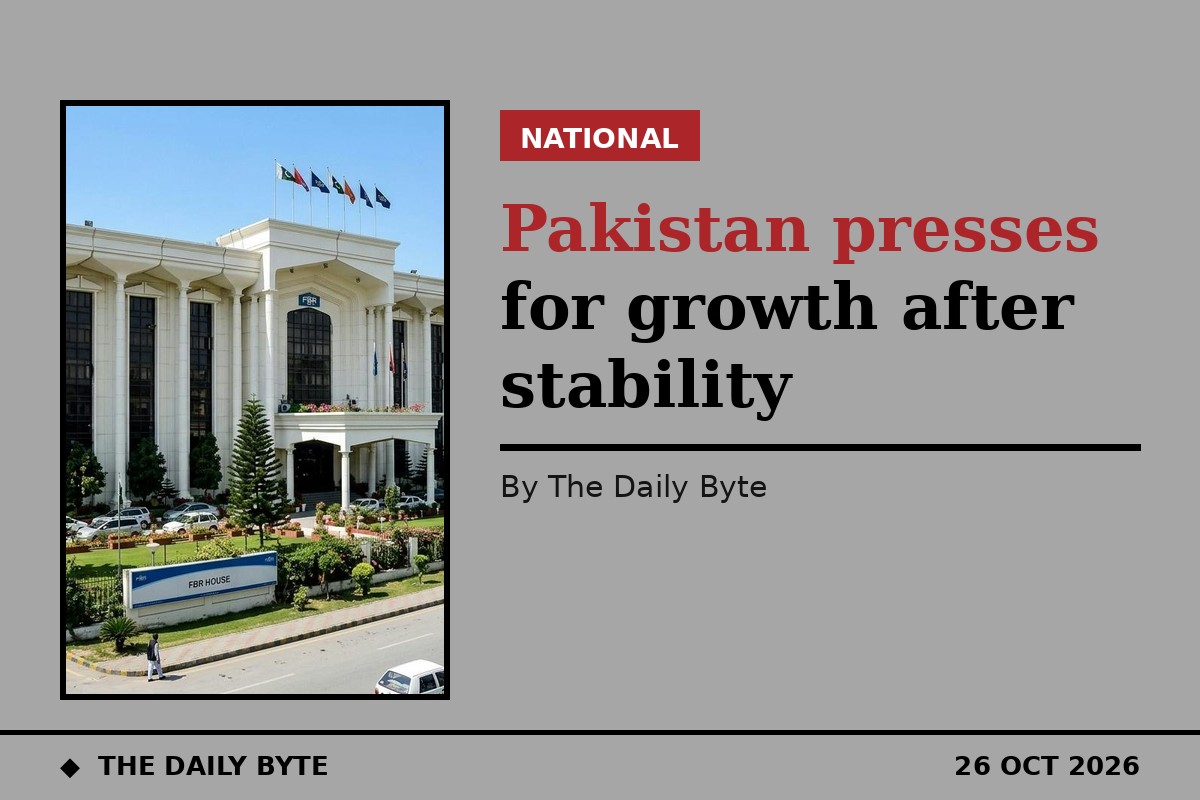
Three factors supported the improvement: the State Bank of Pakistan kept its policy rate unchanged at 11.5%, foreign exchange reserves rose to $26.8 billion, and the Federal Board of Revenue met its first-quarter revenue target for fiscal year 2026-27, although income tax collections fell short of target.
What still worries businesses
The improvement has not removed the risks. Uncertainty persisted over fuel pricing, fiscal pressures, trade reforms and the government's unfinished automobile policy. Talks with the International Monetary Fund remained stalled over fuel subsidies, gas-sector receivables and circular debt, while the petroleum levy stayed high.
On the brighter side, trade policy uncertainty eased as Pakistan's trade deficit narrowed in August and exports grew 7% year-on-year during July and August, with tariff rationalisation on track, including reductions in duties on imported mobile phones.
Sources: The News, Pakistan's economic, trade, investment policy uncertainty eases in Sept, 26 October 2026; Lahore School of Economics policy uncertainty indices, October newsletter.