Pakistan reserves Rs300bn export finance for SMEs
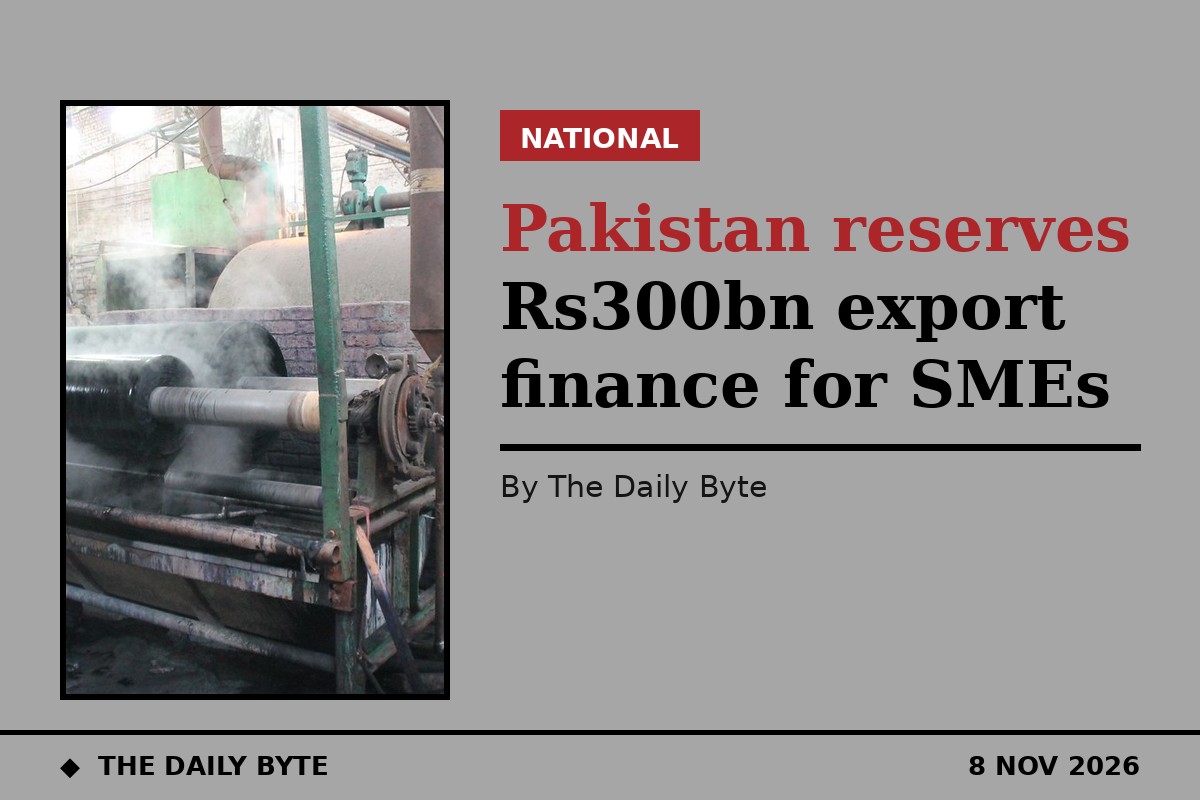
Pakistan has reserved Rs300 billion in export financing exclusively for eligible small and medium-sized enterprises (SMEs), in a policy shift aimed at widening access to affordable credit for smaller exporters and lifting the country's export competitiveness.
The allocation under the Export Finance Scheme will be channelled through the Pakistan Export-Import Bank (Pak EXIM), Finance Ministry adviser Khurram Schehzad announced in a post on social media platform X. The sum is worth roughly $1.1 billion.
Until now, larger exporters have taken the biggest share of concessional export finance. Reserving the whole Rs300 billion envelope for SMEs and new exporters is designed to change that, giving smaller firms the working capital they need to expand production, take on bigger orders and reach new international markets.
The move follows a high-level meeting chaired by Prime Minister Shehbaz Sharif on 5 November on facilitating export-oriented SMEs. At that meeting, the prime minister directed the removal of the requirement that small and medium businesses must generate at least 80 per cent of their revenue through exports to qualify for long-term financing. He also directed that no bank would be allowed to deviate from implementing concessional financing schemes for SMEs and exporters.
Officials told the meeting that around 17,000 SMEs in Pakistan are linked to exports. The State Bank of Pakistan launched a dedicated online portal on 1 November to make it easier for small businesses to apply for financing, and more than 10,000 loan applications have already been received through it.
Alongside the Rs300 billion Export Finance Scheme allocation, the government has earmarked Rs350 billion this year for the Long-Term Financing Facility. The two are separate facilities with different purposes, and the combined figure is an allocation, not money already disbursed to businesses.
The SME package builds on measures in the federal budget for fiscal year 2026-27, which include abolishing the export surcharge, reducing taxes and super tax on export income, and providing concessional export financing at significantly lower rates.
Finance Minister Muhammad Aurangzeb has also stressed the importance of bringing more new SMEs into formal credit. For many smaller exporters, the test of the announcement will be how quickly the reserved funds reach firms through banks, and whether the removal of the 80 per cent export condition opens long-term finance to businesses that were previously locked out.
SMEs form the backbone of Pakistan's manufacturing and services economy, yet they have long struggled to secure bank credit on affordable terms. If the reserved financing is delivered as announced, it could ease one of the most persistent constraints on smaller exporters at a time when the government is pushing to grow exports and reduce reliance on imports.