Pakistan Seeks Climate Grants, Not Loans, Before COP31
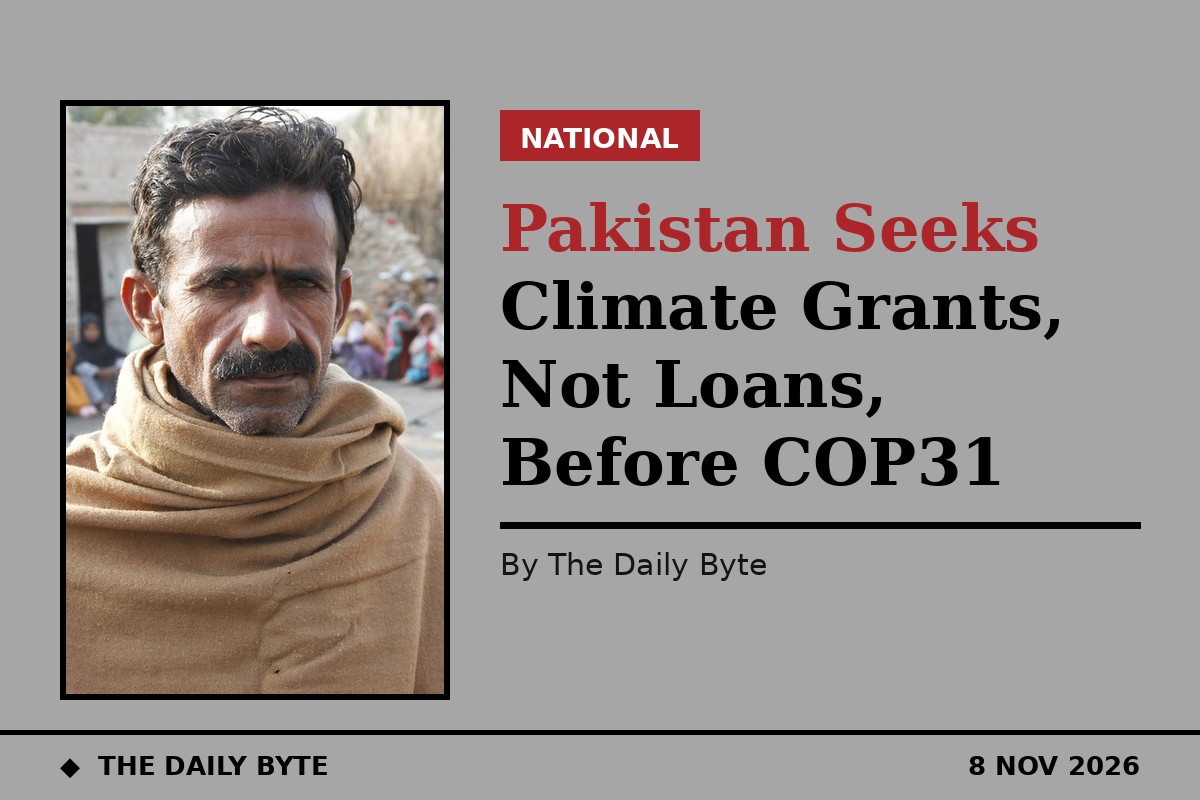
Pakistan will press the international community for climate finance in the form of grants and highly concessional funding, rather than further loans, at the COP31 climate conference, the country’s climate minister has said.
Shezra Mansab Kharal, Minister of State for Climate Change and Environmental Coordination, said international climate funding must not worsen Pakistan’s existing debt burden. Speaking to Dialogue Earth ahead of the conference, she called for a fairer global financing system that reflects the unequal responsibility of countries for climate change.
“We are going to say a firm ‘no’ to more loans and more debt collection,” Kharal said. Grants remain Pakistan’s top priority, she added, although the government would keep an open mind on highly concessional loans where appropriate.
Pakistan is one of the world’s most climate-vulnerable countries, despite contributing less than one per cent of global greenhouse gas emissions. The country faces floods, glacier lake outburst floods, cloudbursts, droughts, urban flooding and extreme heat, and disasters have repeatedly forced money earmarked for health, education and development to be diverted to recovery.
The 2022 floods, which killed more than 1,700 people and affected at least 33 million, led Pakistan to champion the creation of a Loss and Damage Fund at COP27 later that year. Four years on, however, the country is still waiting for any money from the fund.
Pakistan has submitted two project proposals to the fund, totalling 39.9 million US dollars. Each project is capped at 20 million dollars. Kharal said the government hoped at least one of the projects would be approved by December, but stressed that no disbursement had happened yet.
She also drew a distinction between the different stages of climate finance: international pledges, actual contributions to funds, approved project financing and money actually reaching affected countries are four separate things, she said, and the sums pledged so far are far smaller than what Pakistan needs.
According to Pakistan’s updated Nationally Determined Contributions, known as NDC 3.0, the country will need about 565.7 billion US dollars in investment by 2035 to deal with its climate vulnerability. Under the same plan, Pakistan aims to cut greenhouse gas emissions by 50 per cent by 2035, with 17 per cent of the reduction achieved through domestic efforts and a further 33 per cent depending on international support.
Kharal argued that financing for adaptation and loss and damage should be treated differently from funding for commercially viable projects. Renewable energy and industrial efficiency can attract concessional loans and private capital, she said, but flood protection, glacier monitoring, early warning systems and measures to protect vulnerable communities generate little direct financial return and therefore need grants.
She also called for new financial tools to help disaster-hit countries, including temporary pauses in debt repayments after a climate disaster and debt-swap arrangements that would let governments redirect money towards recovery and resilience.
The minister rejected the suggestion that delays in funding were caused by poor governance in recipient countries, while acknowledging that transparency in managing climate resources mattered. The real obstacles, she said, were complex accreditation processes, extensive technical documentation, high project preparation costs and lengthy approvals, which can delay finance even when needs are urgent.
Within Pakistan, Kharal said the government was prioritising cleaner transport, stronger industrial emission standards, air quality monitoring and better management of agricultural residue to tackle smog, alongside glacier monitoring and early warning systems in Gilgit-Baltistan and more climate-resilient farming. The World Bank is supporting the Punjab Clean Air Program with 300 million US dollars in financing.
As COP31 approaches, Pakistan’s central message is that climate commitments must be turned into accessible, predictable and fair financing. For a country already carrying a heavy debt burden, the minister said, the question is not only how much money is promised, but whether it arrives without adding to the debts that already weigh on the economy.