Sugar mills seek 400,000-tonne export as surplus piles up
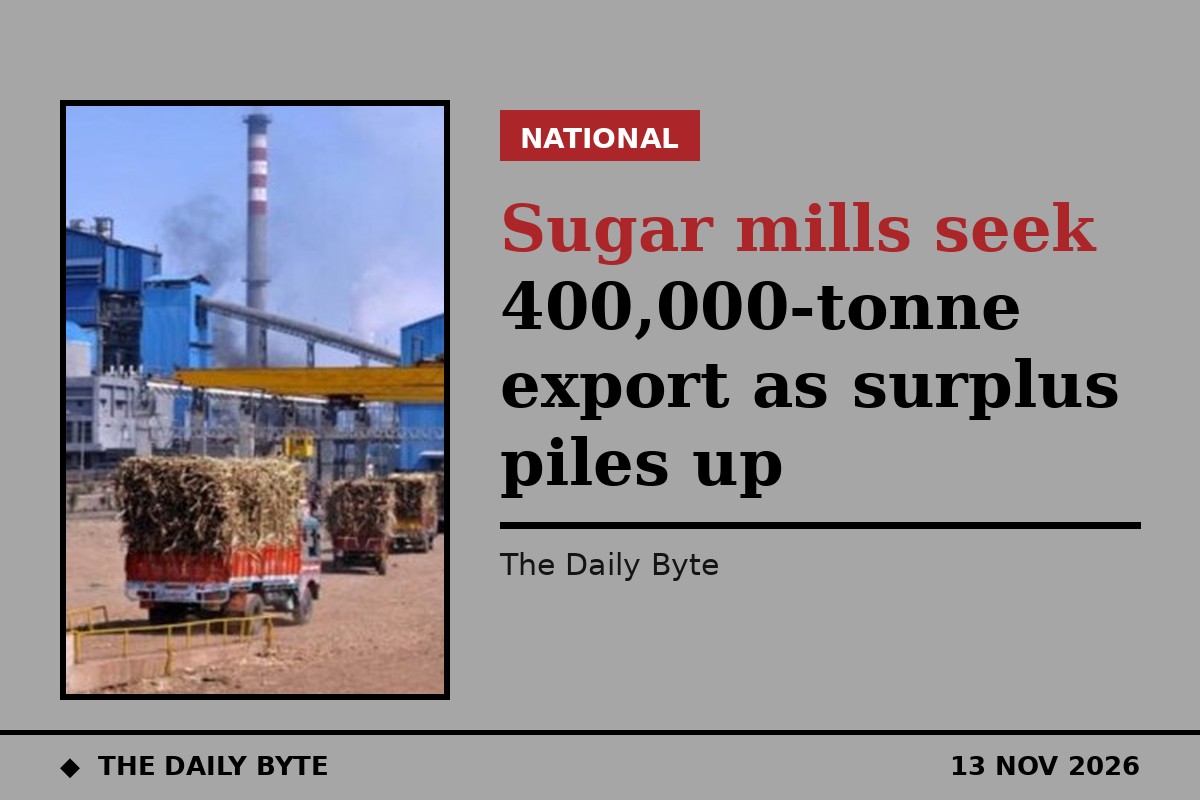
Pakistan's sugar mills have asked the government to allow the early export of 400,000 metric tons of surplus sugar and to issue a long-awaited deregulation policy for the sector, warning that they cannot start the 2026-27 crushing season before December. The Pakistan Sugar Mills Association (PSMA) says about 1.1 million metric tons of sugar remain in surplus even after the government approved the export of 200,000 tons, and that mills are unable to begin crushing under the current circumstances.
The demands were agreed at a general body meeting of the association held on Wednesday, 11 November 2026, simultaneously in Lahore, Karachi and Islamabad, with mill owners from across the country taking part. A PSMA spokesman said mill owners from Punjab, Sindh and Khyber Pakhtunkhwa were concerned that the government had yet to allow the export of the agreed-upon quota, leaving stocks piled up as the new season approaches. The association's statement was reported by The Tribune International, and the state-run Associated Press of Pakistan carried the same account.
Why mills say they cannot start crushing
Crushing is the process in which mills buy sugarcane from growers and crush it to make sugar, and the season normally begins in November. The PSMA says the sheer volume of sugar already in store makes it impossible to start on time. With about 1.1 million metric tons still surplus after the approved 200,000-tonne export, mills say they have nowhere to put new production and no room to take in fresh cane from farmers.
The members at the meeting were unanimous that, given the existing stock levels, it would not be possible to commence the 2026-27 crushing season before December. The association warned that the problem would not end with this season: it said another substantial surplus of sugar was expected to be available by the end of the 2026-27 crushing season, and that without timely policy action the industry would face continued stock accumulation and financial strain.
The two demands put to the government
The meeting gave the association's executive committee full authority to take the case to the government, with two specific demands. The first is permission for the early export of 400,000 metric tons of surplus sugar, double the 200,000 tons already approved. The second is the release of the long-awaited deregulation policy for the sugar sector, which the industry has sought for years and which would let the market play a bigger role in pricing and sales.
The general body stressed that releasing the deregulation policy was now imperative. It also entrusted the association with playing an active and key role in engaging with the government on all other pending matters facing the industry. The association said it hoped the government would resolve the issues as soon as possible, in the broader interest of the industry, farmers and the national economy. The APP report of the meeting records the same two demands and the same warning about the crushing season.
What happens next
The mill owners decided to hold a press conference in Lahore on 16 November 2026 to set out their future course of action. It was also proposed that the association write a formal letter to the deputy prime minister and seek an appointment to explain the challenges facing the industry.
The outcome matters beyond the mills themselves. Sugarcane growers depend on the crushing season starting on time to sell their crop and be paid, and a delayed season can leave cane standing in the fields and payments held up. Exporting the surplus would clear storage space and bring in foreign exchange, which is why the industry has pressed for export permission since the surplus first built up. Whether the government agrees to the extra 400,000 tons, and when the deregulation policy finally appears, will decide whether the mills can start crushing in December or face a longer delay.