Pakistan, Turkiye to Sign Judicial Cooperation MoU
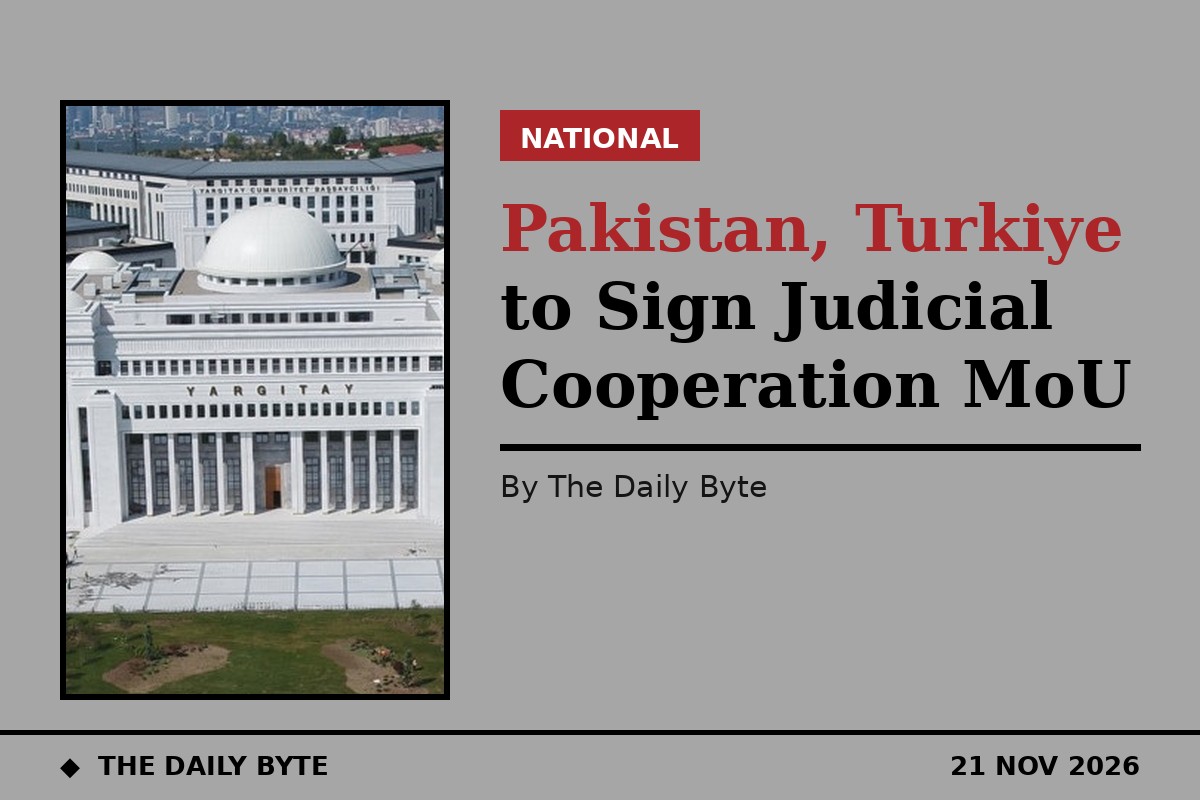
Pakistan and Turkiye will formalise judicial cooperation with the signing of a memorandum of understanding at the Supreme Court of Pakistan on Monday, 23 November. The Supreme Court will host a high-level delegation from the Court of Cassation of the Republic of Turkiye from 23 to 27 November, led by its president, Ömer Kerkez, along with senior judges and officials.
The agreement is expected to establish a structured and forward-looking framework for collaboration between the two countries' superior courts, focusing on judicial exchange, capacity building, and the sharing of best practices in adjudication. The initiative reflects the shared commitment of Pakistan and Turkiye to strengthening judicial cooperation and fostering closer institutional linkages between their courts.
Training and technology at the centre
A central feature of the proposed cooperation is the professional development of the judiciary, particularly at the district level, through joint training programmes, academic exchanges, and exposure to comparative judicial practices. The collaboration is also expected to support the integration of modern technologies in judicial processes, aimed at improving efficiency, transparency and accessibility of justice.
During their stay, the Turkish delegation will hold high-level institutional interactions alongside engagements with key justice-sector stakeholders. The discussions will focus on contemporary challenges in adjudication, judicial administration, and reform-oriented initiatives.
A week of engagements
In addition to official engagements, the delegation will visit Taxila, Faisal Mosque, and the Walled City of Lahore, reflecting Pakistan's cultural heritage and the importance both sides attach to people-to-people and institutional ties.
The signing ceremony will be broadcast live from the Supreme Court of Pakistan. It will be witnessed by judges of the Supreme Court of Pakistan and the Federal Constitutional Court, the chief justices of the high courts, the Federal Minister for Law and Justice, the Attorney General for Pakistan, the secretaries of the ministries of law and justice and foreign affairs, judges of the district judiciary, and representatives of the legal fraternity.
The text of the agreement has not been made public, and the practical programme of exchanges, training and technology cooperation will only take shape after the signing. Monday's ceremony is therefore the formal start of the partnership, not its conclusion, and its value will be judged by the exchanges and training that follow it.
The visit forms part of the Supreme Court of Pakistan's broader efforts to promote a modern, efficient and responsive justice system, aligned with international best practices and committed to enhancing public trust and access to justice. The agreement has not been signed yet: the signing is the centrepiece of the delegation's visit, scheduled for its first day in Islamabad.