Pakistan weekly inflation eases 0.35% as prices stay high
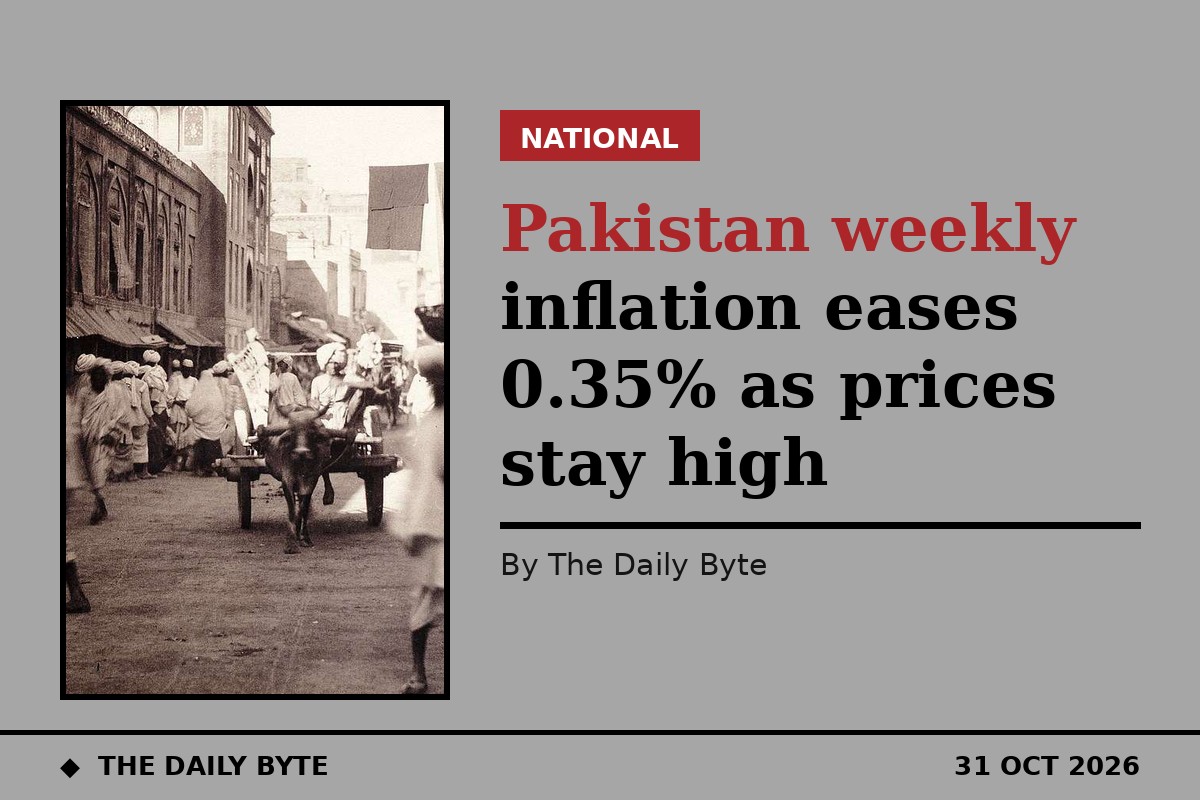
Pakistan's weekly inflation eased slightly in the week ended 29 October 2026, but households are still paying considerably more than they were a year ago, according to official figures. The Pakistan Bureau of Statistics (PBS) said its Sensitive Price Indicator (SPI) fell by 0.35% over the week, taking the index to 373.51 from 374.84 a week earlier.
The SPI tracks the prices of 51 everyday items in 50 markets across 17 cities, the quickest official read on essential prices. On an annual basis, the index stood 11.32% higher than in the same week of 2025, easing from 11.85% a week earlier.
What became cheaper — and what did not
The weekly fall was led by electricity charges for the lowest consumption group, which dropped 3.92%. Chicken prices fell 2.95%, eggs became 2.81% cheaper, wheat flour declined 0.83% and LPG fell 0.73%. Bananas, rice and pulse masoor also recorded small declines, while petrol eased 0.39%.
Not every item moved in the same direction. Tomatoes recorded the sharpest weekly rise, jumping 34.91% to an average of Rs 125.70 per kilo from Rs 93.17. Potatoes rose 3.27%, diesel increased 2.53% and gram pulse rose 2.11%. Across the 51 items tracked, 15 became more expensive, 12 became cheaper and 24 were unchanged.
Annual pressure remains high
The yearly picture remains difficult for household budgets. LPG showed the largest annual increase at 106.86%, followed by electricity charges for the lowest income group at 52.38%, diesel at 45.13% and petrol at 43.61%. Wheat flour was 34.87% higher than a year earlier and chicken 31.72% higher.
The annual increase was steepest for the highest-spending households, at 12.13%, compared with 8.07% for the lowest-spending group. The figures show a small weekly improvement, but energy and food costs remain well above last year's levels.