Pakistan Youth Jobless Rate 12.8% as NEET Hits 28.4%
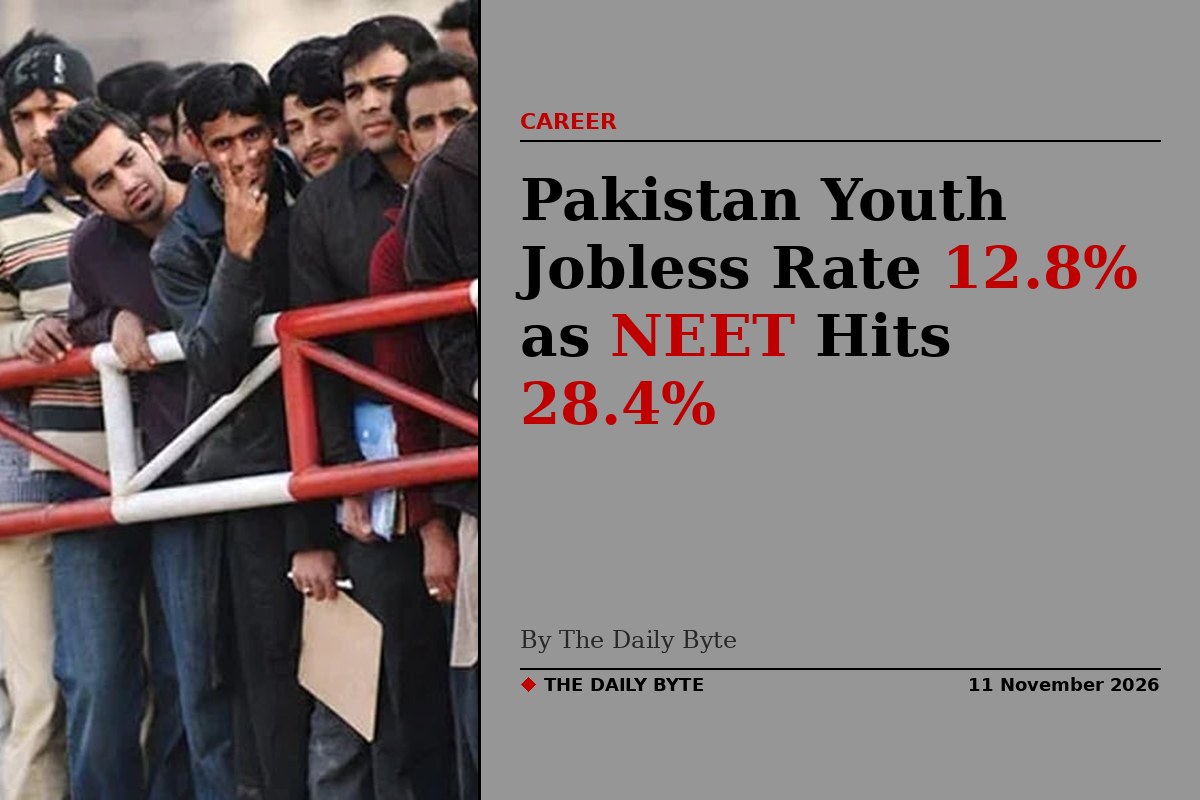
Pakistan's youth unemployment rate stands at 12.8 per cent, nearly twice the national rate of 7.1 per cent, and more than one in four young people are neither working nor studying, according to the country's latest labour figures. The numbers underline how hard it remains for young Pakistanis to find a first foothold in the jobs market.
The figures come from the Pakistan Labour Force Survey 2024-25, published by the Pakistan Bureau of Statistics, and were highlighted this week alongside the International Labour Organization's Global Employment Trends for Youth 2026 report. Pakistan has an estimated 46.3 million people aged between 15 and 24. Of these, about 20.6 million are in the labour force, and around 2.6 million are unemployed.
More than a quarter of young people are NEET
The most concerning figure is the share of young people not in employment, education or training, known as NEET. In Pakistan that share is 28.4 per cent, meaning more than one in four people aged 15 to 24 are disconnected from work and from learning. The figure has improved from 32.5 per cent in 2020-21, but it still points to deep barriers between young people and the opportunities they need to build skills and secure livelihoods.
Nationally, unemployment stands at 7.1 per cent, with labour force participation at 46.3 per cent, according to the Pakistan Bureau of Statistics. The youth rate of 12.8 per cent shows that the burden of joblessness falls far more heavily on the young than on the workforce as a whole.
A global youth jobs crisis
The picture in Pakistan mirrors a wider global trend. The ILO's Global Employment Trends for Youth 2026: Back to the Future report, released on 11 August, found that global youth unemployment reached 12.4 per cent in 2025, equal to about 67 million people aged 15 to 24. The global NEET rate rose to 20 per cent, covering more than 257 million young people worldwide.
Youth unemployment rose between 2023 and 2025 in eight of the world's eleven subregions, the ILO found, as slowing growth, weak job creation, geopolitical tensions and rapid technological change made entry into work harder. The report also estimates that 6.1 per cent of jobs held by young people aged 15 to 29 are in occupations highly exposed to artificial intelligence, with many of them in middle-skilled administrative and clerical roles where opportunities are already shrinking.
Skills and decent work in Pakistan
For Pakistan, the findings add urgency to the debate over skills and jobs. In July 2026, the ILO, the Punjab Skills Development Fund and the British Council held a high-level roundtable in connection with World Youth Skills Day, focused on aligning skills training with real labour market demand as digitalisation, artificial intelligence and climate change reshape work.
The ILO has called on governments to invest in quality education, lifelong learning, apprenticeships and stronger employment services, and to expand social protection, so that young people can move into decent, secure and productive work. Its Director-General, Gilbert F. Houngbo, has warned that young people shut out of decent employment are denied the chance to build secure futures, while countries risk losing talent, productivity and social cohesion.
With 46.3 million people aged 15 to 24, Pakistan has one of the world's largest youth populations. Turning that demographic weight into economic strength will depend on whether training leads to real jobs, and whether young people can find work that is secure, fairly paid and lasting.