Panama marks Independence Day after earthquake
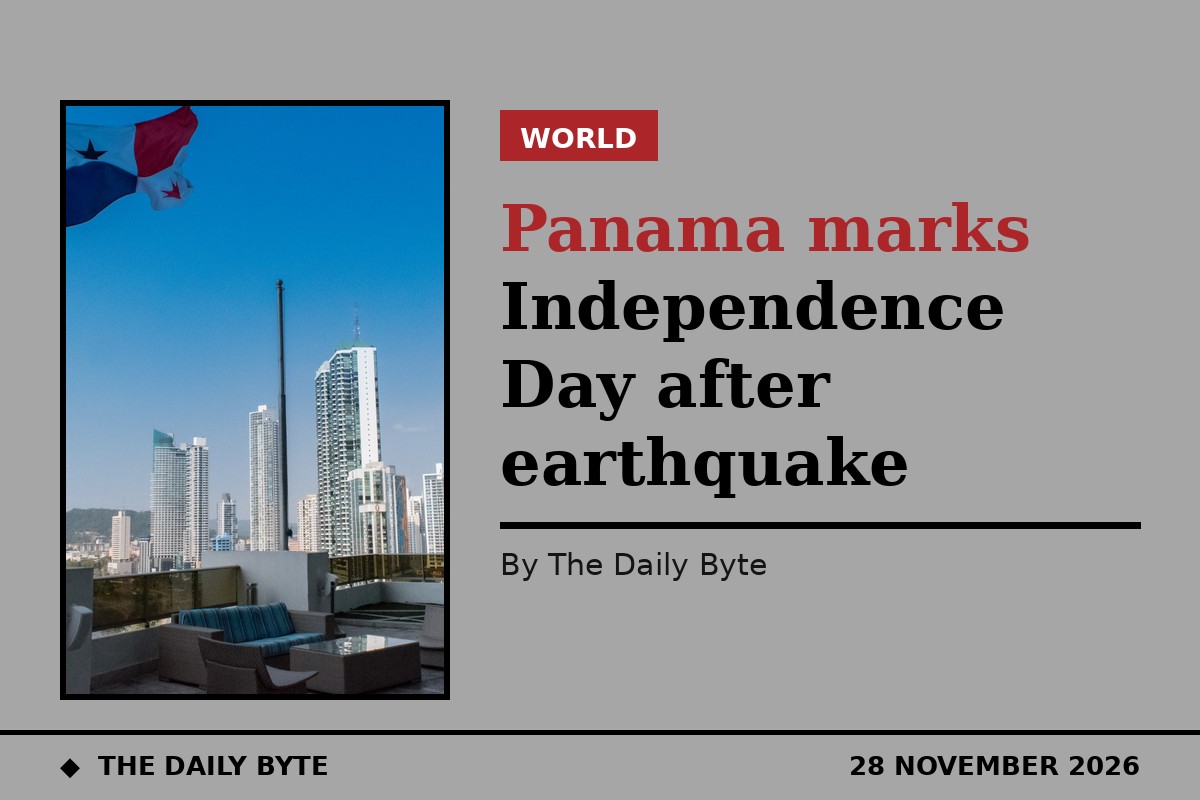
Panama marks Independence Day on Saturday, 28 November, closing a month of patriotic holidays with parades and school ceremonies across the country — but this year the celebrations come seven weeks after the strongest earthquake in the country's recent history, and the recovery is far from over.
The day marks Panama's independence from Spain, declared in 1821, and is the last of the November patriotic holidays, which began with separation from Colombia on 3 November. Parades are being held in Panama City and in provincial capitals, with school marching bands, folk music and civic ceremonies. In the highland town of Boquete, a ceremony in front of the municipal building is followed by a parade through the town's main street, with school bands and folk presentations from Veraguas province. Parades are also taking place in La Chorrera and Betania.
Central provinces miss out
But the programme is shorter than usual. Parades in the central provinces were suspended following the impact of the earthquake, and school bands that would normally march there have been limited to appearances elsewhere. The Instituto Rubiano, a school in San Miguelito whose 250-member band spent months rehearsing for the November parades, is appearing in Boquete and Tierras Altas instead, with the Tierras Altas appearance scheduled for today.
The earthquake struck on 9 October, a magnitude 7.7 shock centred near the Azuero peninsula in the south of the country. Three people were killed and 27 injured. Official figures compiled in early November recorded 4,633 homes lost entirely, 11,107 with moderate damage and 4,125 with minor damage, affecting 62,665 people in 19,666 families. Some 619 schools and 120 health facilities were affected, 13 of the health facilities lost entirely. In Penonome, the tower of the historic San Juan Bautista Cathedral collapsed, and the town of Tonosi, closest to the epicentre, lost water, electricity and road access. President Jose Raul Mulino declared a major disaster.
Recovery far from over
Seven weeks on, about 2,500 people are still living in shelters, down by more than half from the peak, according to the Secretaria de Metas on 21 November, and the first new homes are being built. The ground has not settled: more than 1,460 aftershocks have been recorded since 9 October, including three of magnitude 6 or more, and a magnitude 4.5 aftershock struck Los Santos province on 24 November. The pace of aftershocks has slowed from 50 to 100 a day in the first days to around eight a day by mid-November, but the shaking continues.
The recovery has also been slowed by money. By 11 November, less than 20 million dollars of a 100 million dollar emergency fund had been paid out, and families in the worst-hit areas are still waiting for shelter, water and food while rebuilding only now begins. For many in Azuero, where colonial churches and adobe homes bore the worst of the damage, today's holiday will be marked in damaged towns rather than in full celebration.
Panama's November holidays have always mixed ceremony with national pride. This year they also measure how far the country has come since the ground shook — and how much of the rebuilding still lies ahead.


