Panama Opens Talks to Restart Cobre Panama Copper Mine
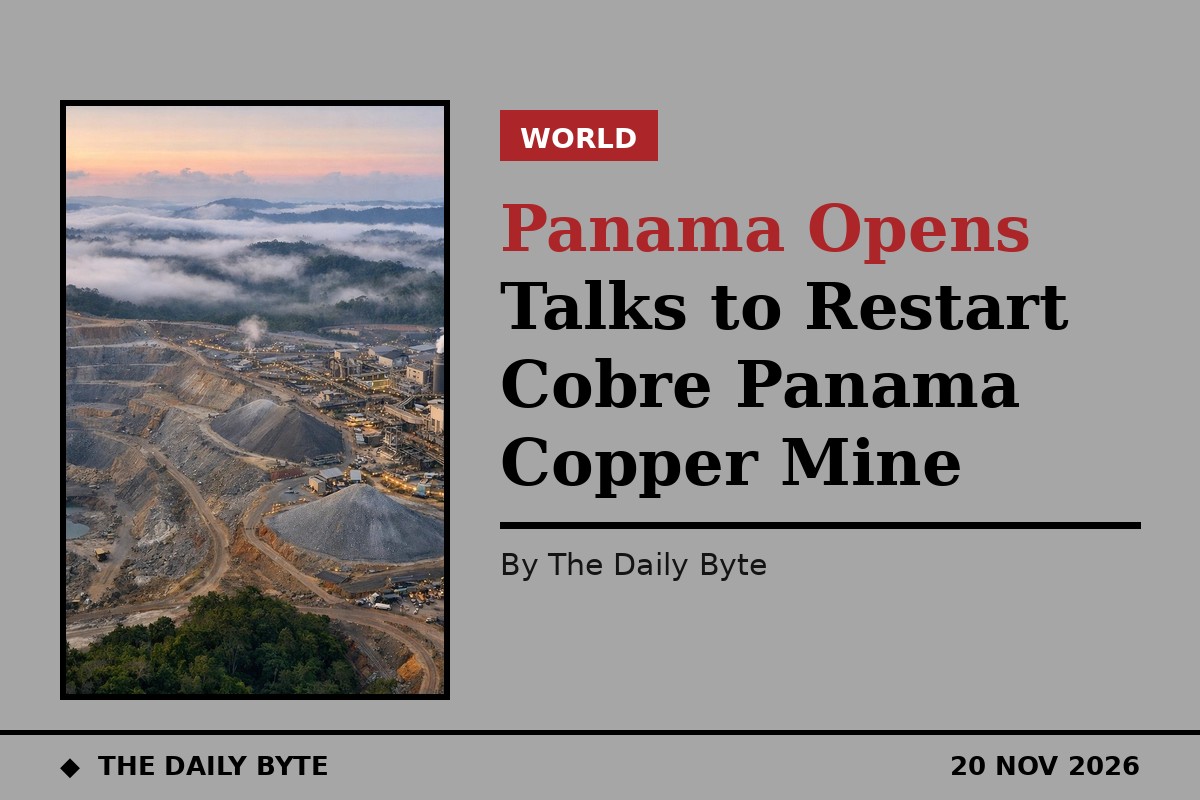
Panama has opened formal talks with First Quantum Minerals over a possible restart of the Cobre Panamá copper mine, one of the world’s largest, nearly three years after the country’s Supreme Court shut it down. President José Raúl Mulino announced the negotiations in a televised address on Monday 16 November, MINING.COM reported.
An interministerial team led by Commerce and Industries Minister Julio Moltó will negotiate a new agreement with Minera Panamá, First Quantum’s local subsidiary. The discussions will cover employment, economic benefits, environmental oversight and the resolution of outstanding arbitration proceedings against Panama. First Quantum welcomed the announcement and said it would engage constructively in the government-led process, which will also include public participation.
Five conditions for any deal
Mulino set out five principles governing the talks: Panamanian ownership of mineral resources, maximum economic benefits for the country, national sovereignty, strict environmental protection and full compliance with the Constitution and national laws. “The team’s primary focus will be to seek the resumption of mining activity only if the nation’s interests are protected and there are real benefits for the people,” he said. He stressed that any agreement would not be a mining concession, and that the government would determine the legal framework for future operations, with independent oversight and transparent reporting of extracted materials.
Any agreement must also include a company-funded final mine closure plan that cannot be extended, Mulino said, along with reforestation and measures to prevent environmental damage. The government is demanding strict environmental standards, independent oversight and public disclosure, as well as an end to all arbitration proceedings against Panama. A public participation process will run alongside the negotiations and conclude before any agreement is reached, according to Morningstar, reporting Dow Jones Newswires.
Why the mine matters
The mine closed in November 2023 after Panama’s Supreme Court ruled its operating contract unconstitutional, following weeks of widespread protests over environmental concerns and the terms of the agreement. The ruling triggered a prolonged dispute between the government and First Quantum, leaving the future of one of Panama’s most important industrial assets uncertain. First Quantum said a sustainable path forward must provide long-term stability for all parties.
When it was operating, Cobre Panamá produced about 331,000 tonnes of copper in 2023, roughly 1.5 per cent of the world’s mined copper, and contributed nearly 5 per cent of Panama’s economic output and 75 per cent of its goods exports, the company said. First Quantum shares jumped 8.2 per cent to C$32.22 in early Toronto trading after the announcement, giving the company a market value of nearly C$26 billion. The company estimates a restart could create 6,000 direct jobs and 30,000 indirect positions, with work for about 2,000 registered suppliers.
Stockpiles running down
The mine has not restarted. Under a separate authorisation, First Quantum is processing ore that was mined before the shutdown, and the company expects that to yield 30,000 to 40,000 tonnes of copper in 2026. Those stockpiles are expected to last only until around mid-2027, adding urgency to the talks. The talks follow a government-commissioned audit completed in June that gave Cobre Panamá an overall compliance score of 88 per cent, indicating broad adherence to environmental, legal and operational requirements.
A central question is how Panama increases its share of the mine’s economic benefits, whether through direct state ownership or higher taxes and royalties. Analysts at JPMorgan Chase told MINING.COM they thought the two sides would move closer to a 50 per cent government take in one form or another. Opponents of a restart protested in Panama City after the announcement, and no restart date or operating term has been given. Any deal must overcome the legal and environmental concerns that forced the closure while delivering enough economic benefit to win public support.


