Papa John's AI Agent Pays Without a Card in UK First
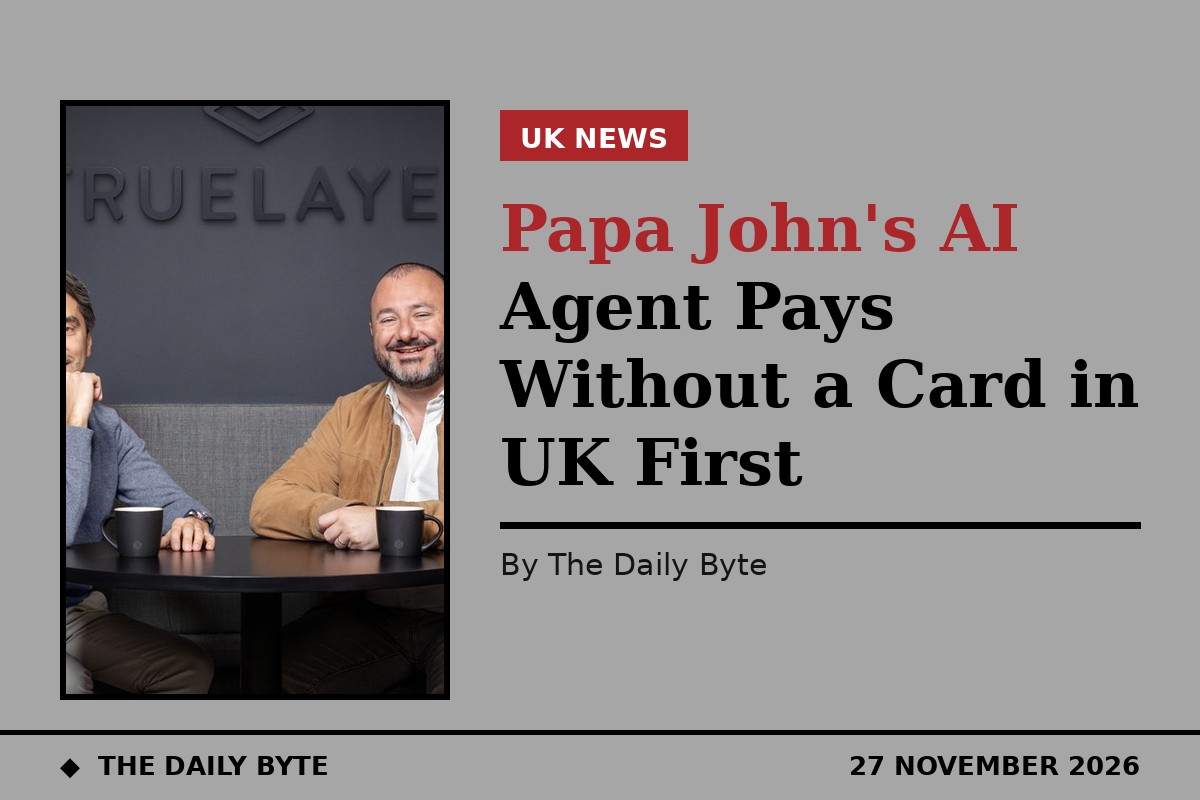
An artificial intelligence agent has ordered and paid for a pizza delivery in the United Kingdom without using a card, in what the companies behind the trial say is the first transaction of its kind in the country. The agent, working for Papa John's, helped a customer place an order for nine mini margherita pizzas and then paid for it directly from the customer's linked bank account, using open banking technology rather than a debit or credit card.
The trial was run by open banking provider TrueLayer together with Papa John's and Lloyds Banking Group. It was presented at a showcase held by the Financial Conduct Authority (FCA) on 26 November and conducted inside the regulator's Supercharged Sandbox, an environment where firms can test new financial technology under supervision. It also marked the first use of Lloyds' variable recurring payment (VRP) APIs for payments made by an AI agent. VRPs let a customer set up a single payment mandate, after which the bank checks each payment against limits the customer has agreed in advance.
The safeguards were central to the demonstration. Customers link a bank account to their Papa John's account instead of a card, and set a spending limit directly with their bank that the AI agent cannot exceed. Authorisation still happens inside the customer's own banking app, so no passwords or card details are shared with the agent. TrueLayer says the model shows how cardless payments can suit AI agents, because the bank remains the gatekeeper and the agent can only spend within the agreed cap.
Why the payments industry is watching
TrueLayer's chief executive and co-founder, Francesco Simoneschi, said personal agents are changing the way people shop and described agentic commerce as potentially more disruptive than e-commerce was in 2000. "Today it's pizza. Tomorrow it's everything else," he said, adding that agents will choose the payment method that is fastest, most secure and lowest cost, rather than the one people use out of habit.
The trial comes as AI agents are expected to handle a growing share of online shopping, from ordering groceries to booking travel. Card networks have long dominated online payments, and Pay by Bank has been promoted as a cheaper alternative for merchants because it avoids card interchange fees. Until now, though, it has lacked the one-click convenience of a saved card. Combining it with variable recurring payments and an AI agent closes much of that gap.
What is still to be settled
The payment is not yet available to customers. It was a controlled demonstration, and the companies have not announced a launch date. The work now feeds into efforts to create the standards needed to adopt agentic payments safely at scale.
One question remains open: who is liable if an AI agent makes a mistake. Card payments come with well-established consumer protections, and open banking will need to match or exceed them if autonomous purchasing is to become routine. The FCA warned financial firms earlier this week that AI agents must comply with existing regulations, a reminder that the technology is moving faster than the rules around it.


