Papua LNG Petition Delay Risks $14bn Project
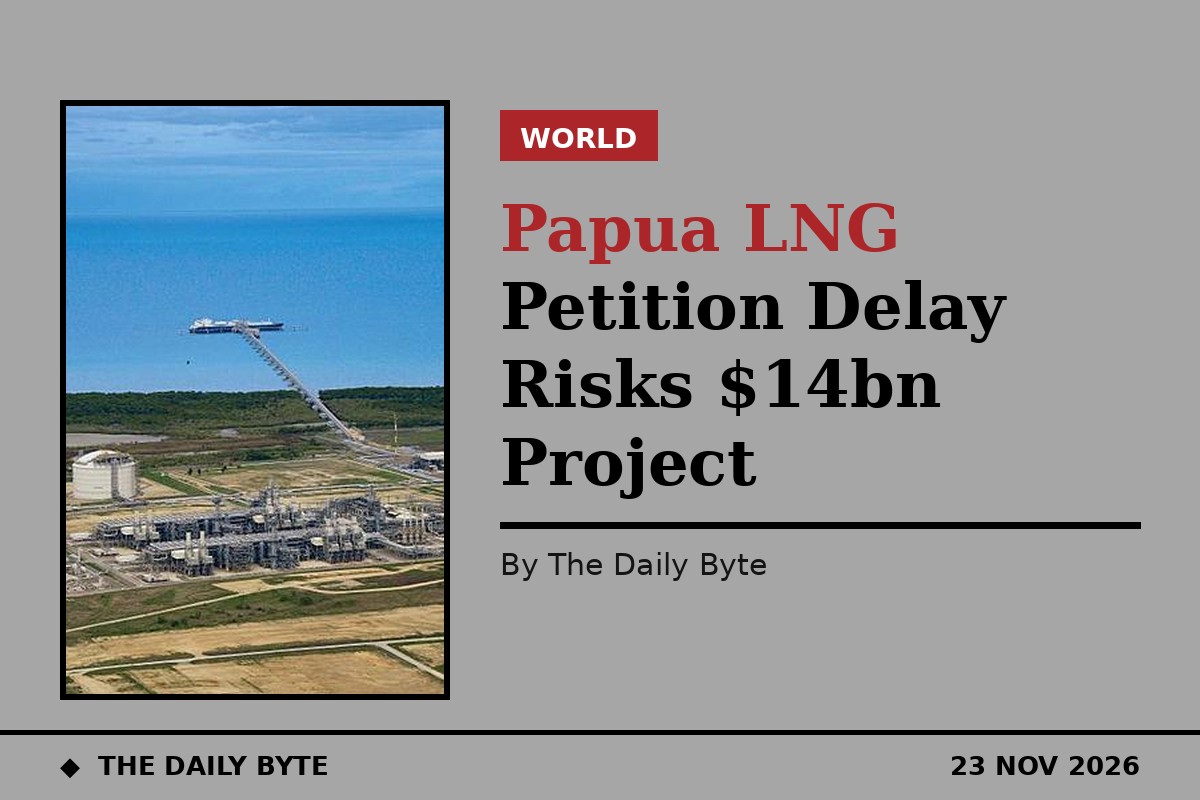
Papua New Guinea’s opposition leader has warned that the country’s US$14 billion Papua LNG project could be put at risk unless the government answers a petition from customary landowners, ten days after it was handed over without a formal response. With a deadline for the project’s final investment decision less than a month away, James Nomane says the clock is running out.
Mr Nomane, the opposition leader and MP for Kikori, renewed his call on Monday after landowners affected by the project’s upstream and mid-stream pipeline met him in Port Moresby on 12 November. The petition, presented by representatives of the landowners in Gulf Province, sets out twelve grievances and asks the government to respond formally, deal directly with the landowners and settle the disputes before they reach the courts.
A petition without an answer
Mr Nomane said the ten days that had passed since the petition was submitted without a reply were creating uncertainty around an investment Papua New Guinea needs. He warned that leaving the landowners’ grievances unresolved could put the project’s final investment decision, known as FID, at risk.
He also demanded that the full audit of the Papua LNG Development Forum be made public. According to Mr Nomane, K97.6 million — about 87 per cent of the funds he cited — remains unaccounted for. The landowners, he said, want to know where the money went, and the government should publish the audit rather than ask them to wait for it.
“Investors need certainty. Landowners need justice. The nation needs revenue. Protect the project, protect the people,” Mr Nomane said, in a statement summarising the opposition’s position.
The government’s defence
The government has defended the way the Development Forum was run. In Parliament, Finance Minister Thomas Opa confirmed that the state allocated K112 million for the landowner meetings, with more than 1,200 landowners hosted in Port Moresby, and said spending had stayed within the approved budget.
Petroleum Minister Jimmy Maladina has also defended the forum’s financial accountability and urged that the findings of the independent audit be awaited. That audit was commissioned by National Petroleum Authority chairman Hubert Namani, a step Mr Nomane publicly welcomed earlier this month.
The gap between the two sides is therefore not over whether an audit exists, but over timing and transparency. The opposition wants the full findings published now, before the investment decision; the government’s ministers argue that the audit process should be allowed to run its course.
Why the project matters
Papua LNG is Papua New Guinea’s next major resource project, and the stakes for the economy are high. A revised gas agreement signed in August set a firm deadline of 15 December for the developers to take their final investment decision. ExxonMobil is taking over as operator from TotalEnergies, and the project’s cost has been cut to around US$14 billion.
Mr Nomane framed the dispute in the context of the country’s public finances, saying debt is nearing K70 billion, about 52 per cent of gross domestic product, with interest payments of around K3.7 billion a year. In his view, a well-managed Papua LNG would bring the foreign investment, export earnings and jobs needed to ease that pressure and to fund clinics, classrooms and roads.
He said the proposed investment could bring much-needed foreign capital into the country, expand export earnings and provide employment for local communities, but cautioned that the economic benefits should not come at the expense of customary landowners whose concerns remained unresolved.
What happens next
Three things are now being watched ahead of the 15 December deadline: a formal government response to the landowners’ petition, the release of the Development Forum audit, and whether any landowner group turns to the courts. Any of the three could shape whether the project moves ahead on schedule.
For the developers, the immediate question is certainty. Investors weighing a US$14 billion commitment want to know that landowner issues are settled and that the regulatory path is clear. For the landowners, the question is whether the government will engage with them directly, as Mr Nomane has urged, rather than leaving their petition unanswered until the deadline forces a decision.
The opposition’s warning is that both interests point the same way: a project of this size cannot be built on unresolved grievances. The government’s answer, when it comes, will show whether it agrees.


