Paraguay charges ex-president Peña in ueno bank case
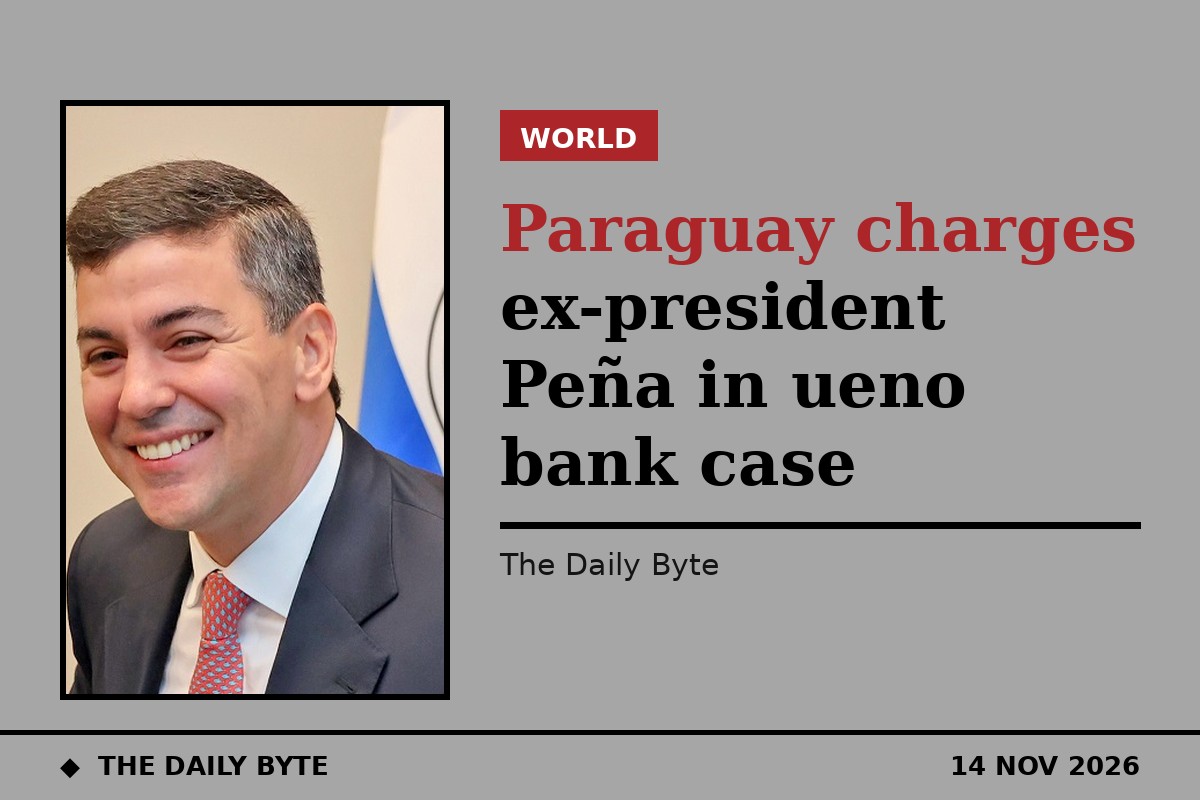
Paraguay prosecutors have added a criminal association charge against impeached former president Santiago Peña, widening the criminal case built around the collapse of digital bank ueno. The new charge was filed on Friday, 13 November, and also covers the former head of the central bank and four other former officials.
Peña and former central bank president Carlos Carvallo were already facing charges of breach of trust and administration for personal gain, and both are in pretrial detention. Both men deny wrongdoing. The criminal association charge was also brought against three former central bank board members and the former head of the banking regulator, according to the charging document.
Prosecutors allege Peña led the scheme
Prosecutors say the group worked to favour ueno and its parent company, Grupo Vazquez, and allege that Peña played a central role. “From the presidency of the Republic, Santiago Peña Palacios allegedly acted as the head of the organization,” prosecutors said in the charging document.
The document sets out what prosecutors describe as “systemic and coordinated” actions that blocked oversight of the bank between June and October 2026. It includes an organisational chart showing the alleged role of each person in the scheme. Prosecutors allege that Peña issued directives not to intervene in ueno and sought to suppress public warnings about the bank’s insolvency.
According to prosecutors, the officials involved knew the bank was heading into dangerous territory but still pushed to attract more customers. “They allegedly deliberately allowed the insolvent bank to carry out aggressive, large-scale marketing campaigns to attract deposits from new savers until the last minute,” prosecutors said.
Cash payments and clandestine meetings alleged
Prosecutors also allege that Peña held “clandestine meetings” at the presidential residence with the head of Grupo Vazquez and personally received illicit payments, including envelopes filled with 200,000 dollars in cash. Another official is alleged to have provided regulatory cover, while a further official is said to have manipulated technical oversight.
The case turns on Peña’s links to the group behind the bank. Until March 2025, Peña had been a business partner of Grupo Vazquez. After his election in 2023, he appointed Carvallo, ueno’s former president, to lead the central bank. Prosecutors allege that Peña then used his position as president to influence decisions by government agencies and state-owned bodies, keeping large amounts of public money deposited at ueno despite his financial ties to the lender.
Collapse that brought down a president
Ueno was launched in 2021 as a mobile-first bank aimed at Paraguayans poorly served by traditional branches. It grew quickly to about three million customers, nearly half of the country’s population of 6.5 million people. But internal regulatory reports warning of excessive lending to certain companies were leaked to local media, and public pressure mounted.
On 3 November, Paraguay’s central bank determined that ueno had breached minimum solvency requirements and placed the bank into resolution, its strongest measure short of immediate liquidation. Customers’ and depositors’ assets were temporarily frozen. The collapse triggered Peña’s removal from office: Congress impeached him within days, and he was replaced on 6 November by his vice president, Pedro Alliana. Peña was arrested shortly afterwards and is held in pretrial detention at a military facility.
Prosecutor Christian Benítez told reporters that criminal association and breach of trust count as “precedent” offences to money laundering, and that the expected sentence could reach 15 years in prison. A judge has yet to rule on the new criminal association count. Peña’s lawyer, Ricardo Preda, did not immediately respond to a request for comment.


