Paraguay raids ex-president Peña's home in bank probe
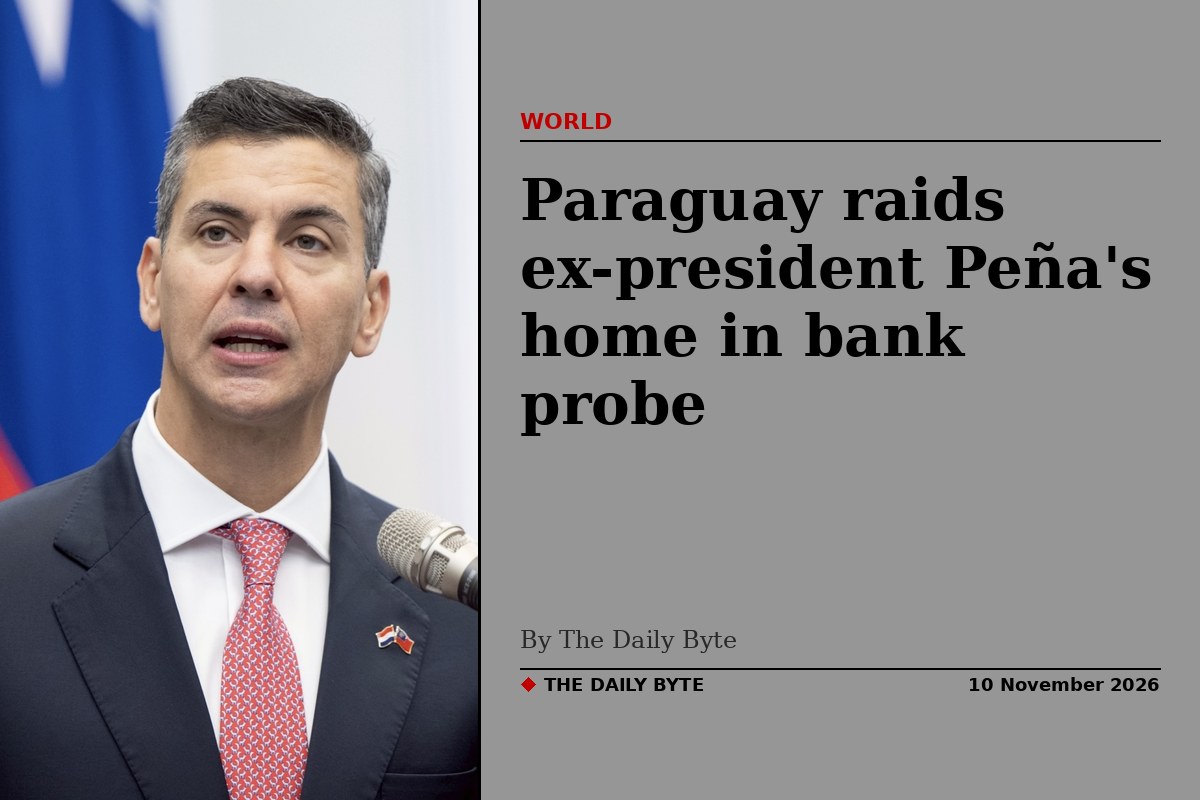
Paraguayan prosecutors have searched the summer home of former president Santiago Peña and found a vault hidden behind a false wall, as the new government asks the United States, Luxembourg and Argentina for help tracing assets linked to the collapse of Ueno Bank.
The raid in San Bernardino, about 50 kilometres from the capital Asunción, came two days after Peña was removed from office and ordered into pretrial detention over the bank's failure, which froze the savings of nearly three million customers. AsiaToday reported the raid and the asset-tracing requests, and Reuters reported the new government's moves to steady the country.
A vault behind a false wall
The search of Peña's residence in the Ciervo Cua area began shortly before 7pm on Sunday and was led by prosecutors Silvia Gonzalez, Christian Benitez and Elena Fiore, with police support. Inside one of the rooms, investigators found a fitted panel that concealed a corridor leading to an armoured door. They managed to open the first security door but were stopped by a second, which remained shut on Monday afternoon.
Local media reported that the second door was protected by a sophisticated system requiring facial or iris recognition, a fingerprint, a code and special keys. Those technical details have not been confirmed in an official statement: the Prosecutor's Office confirmed the search but did not mention the vault. Prosecutor Benitez said specialists would advise on the best way to open it, and that using explosives was only one option under consideration.
The house itself is part of the case. According to the indictment, Peña obtained two loans from Ueno worth about 500,000 dollars in 2024 to build the mansion, and his monthly mortgage payment of 38,000 dollars was six times his presidential salary. Prosecutors allege that while in office he used his influence to steer public money into the bank, although he had held shares in its parent company until March 2025.
Charges and detention
Peña has been charged with breach of trust and administration for personal gain, offences prosecutors say could each carry a prison sentence of up to 10 years. On Saturday, Judge Humberto Otazu ordered him held in pretrial detention at the Presidential Escort Regiment, a military facility in Asunción. Peña denies wrongdoing, and his lawyer, Ricardo Preda, said he would plead not guilty and cooperate with investigators.
Former central bank chief Carlos Carvallo, who previously headed Ueno, has also been charged and ordered into pretrial detention. Prosecutors have asked a judge to freeze the assets of both men, and six former Ueno directors have been ordered into pretrial detention. Prosecutors said on Monday they had already charged 27 people in the investigation.
Alliana moves to steady the country
Pedro Alliana, sworn in on Friday to serve the remainder of Peña's term until August 2028, spent his first days trying to show the government was functioning and savers would be repaid. On Monday he asked ministers, secretaries and the most senior state officials holding positions of trust to submit their resignations, saying his goal was to strengthen coordination and ensure more efficient management.
He has begun reshaping his cabinet, making new appointments to the Interior Ministry, the Public Works Ministry and his chief of staff's office, while the economy and foreign ministers stayed in their posts. Congress elected Senator Antonio Barrios to succeed Alliana as vice president, and senators unanimously approved economist Jorge Schreiner, nominated by Alliana, as the next president of the central bank.
On Sunday, United States Secretary of State Marco Rubio called Alliana, according to the new president. The central bank said it had returned about 160 million dollars to nearly 1.2 million people through a guarantee fund, and the fund must complete the guaranteed payments by 17 November.
How the bank collapsed
Ueno launched as a digital lender in 2021 and received permission to operate as a bank in November 2023, three months after Peña took office. Within three years it had become a major lender handling state pensions and the accounts of several government entities. By June, it held about 850 million dollars in public funds.
On 3 November, the central bank began proceedings to wind down the lender after finding that its solvency ratio had fallen below half the regulatory minimum. Regulators said the bank had made 146 million dollars in questionable loans to companies linked to its owner. Customers suddenly found they could not reach their money, and protests erupted across the country.
Peña offered his resignation on 5 November, but Congress refused it and removed him from office the next day, with all 44 senators present voting in favour. Opposition Senator Rafael Filizzola said on Friday: "We are facing the biggest corruption scandal in our democratic history." Prosecutors must still open the second door of the vault, and their requests to the United States, Luxembourg and Argentina will test whether money moved abroad can be found and brought back.


