Paraguay Teachers Strike Over Ueno Pension Funds
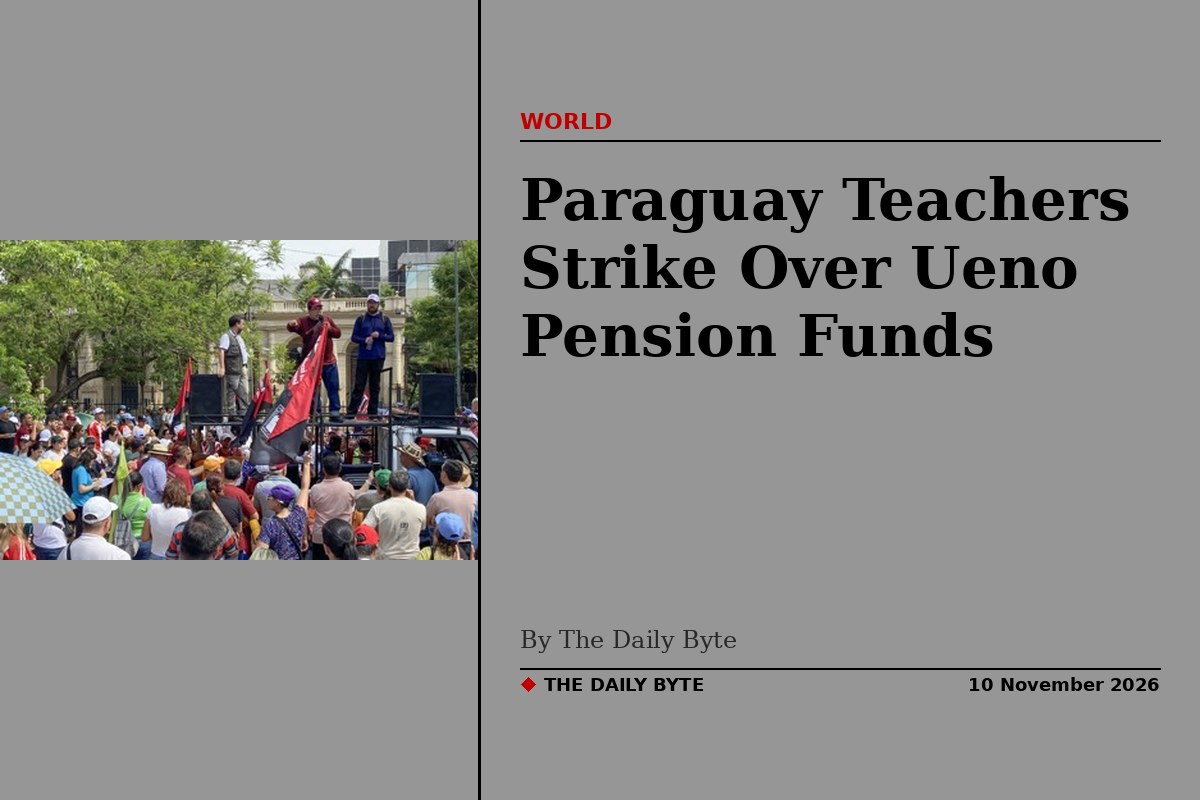
Public schoolteachers in Paraguay went on strike on Monday and took to the streets of several cities, demanding protection for about $60 million in pension funds deposited at Ueno Bank, the lender whose collapse toppled the country's president last week.
The strike, led by the Federation of Paraguayan Educators, was the first major protest to confront the new administration of President Pedro Alliana, who was sworn in on Friday after the Senate removed Santiago Peña from office over the bank's failure.
Why teachers walked out
Silvio Piris, president of the Federation of Paraguayan Educators, said teachers were worried about the fate of the pension money held at Ueno. "We want the return of this money to be a priority," he said.
The union is also seeking the recovery of about $355 million invested by the Social Security Institute, known as the IPS, which manages pensions and health services for most Paraguayan workers, as well as funds held by other pension institutions affected by the collapse. Lawmakers accuse the former government of allowing the institute to place the money at Ueno beyond legal limits.
Teachers are also demanding an 8 percent salary increase and greater education funding in the 2027 budget, above the 5 percent pay rise agreed with the government in September. The demonstrations took place in the capital, Asunción, and major cities across Paraguay's 17 departments, with the support of the National Union of Educators, the Education Workers' Organization and the National Union of School Directors.
The bank collapse that toppled a president
Ueno launched as a digital lender in 2021 and grew rapidly, attracting customers with mobile banking. Last Tuesday, Paraguay's central bank ordered the bank into a resolution process after finding its solvency ratio had fallen below half the required minimum. More than 3 million people, nearly 60 percent of the country's adult population, were frozen out of their bank accounts.
Three days later, the Senate voted unanimously, with all 44 senators present, to remove President Santiago Peña for misconduct in office. Legislators accused him of using his political influence to steer hundreds of millions of dollars in public funds into Ueno while regulators overlooked risky insider lending. Vice President Pedro Alliana took over and will serve the remainder of Peña's term until August 2028.
Peña was charged on Saturday with breach of trust and administration for personal gain, offences prosecutors say could each carry up to 10 years in prison. A judge ordered him held in pretrial detention at the Presidential Escort Regiment, a military base, while investigations continue.
Raids and the hunt for missing funds
On Sunday, prosecutors searched Peña's summer residence in San Bernardino, about 50 kilometres from the capital, and found a vault hidden behind a false wall. On Monday, prosecutors said they had asked the United States, Luxembourg and Argentina for help tracing and recovering assets linked to the collapsed bank.
The central bank said it had returned about $160 million to nearly 1.2 million people through a deposit guarantee fund between Thursday and Friday, and the scheme was widened to another group of clients on Monday. Deposits are guaranteed up to 75 monthly minimum wages, or about $37,000, and the fund must complete the guaranteed payments by 17 November.
The IPS said about 32,000 of its 90,000 pensioners had received their benefits through Ueno and were being transferred to other banks. The guarani has lost about 8 percent of its value against the US dollar since the bank was placed under resolution.
What happens next
Teachers have threatened to continue their action until their demands are met, and the country's largest teachers' union, with more than 40,000 members, had planned an indefinite national strike from Monday. For Alliana, sworn in only on Friday, the strike is the first test of a government that must restore confidence in the banking system, return frozen savings, and answer questions about how hundreds of millions of dollars in public money ended up in a failed bank.


