Paris Bans Protests Near Schools, Universities
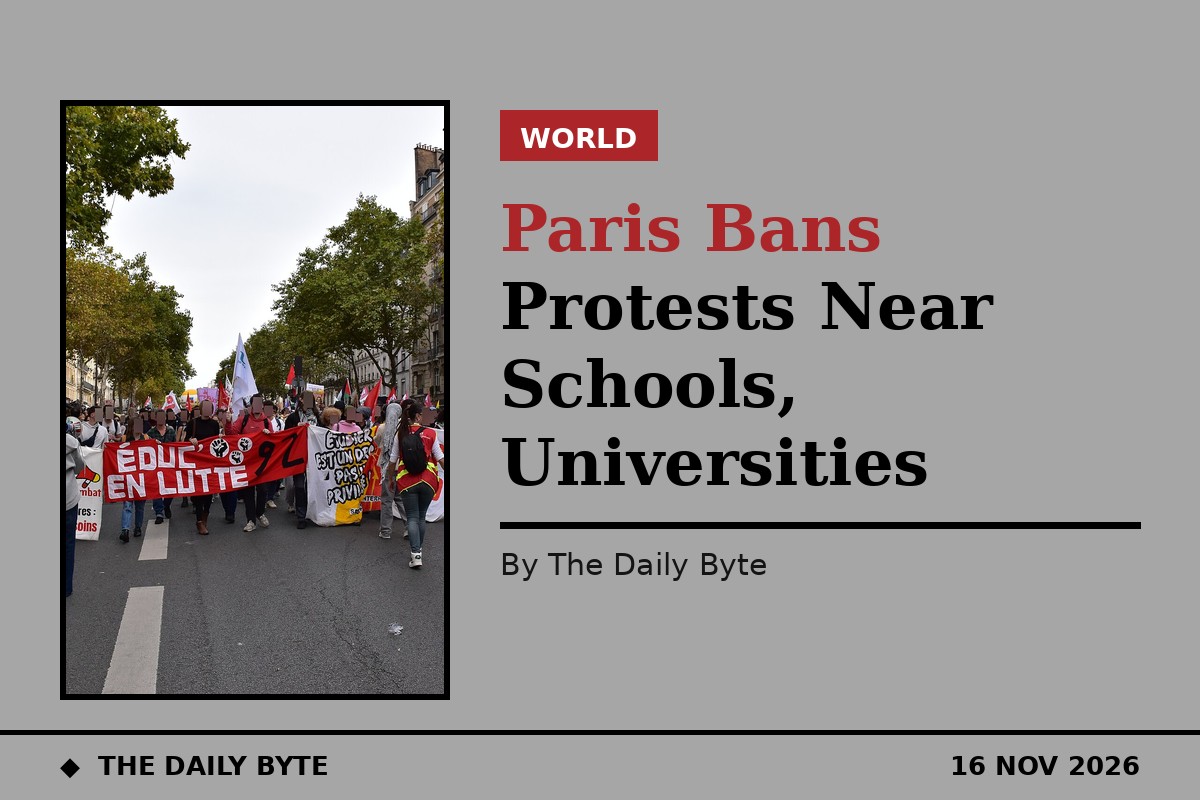
Police in Paris have banned protests near 10 secondary schools and five universities for five days, from Monday 16 November to Friday 20 November, as authorities try to contain weeks of blockades and unrest at educational sites across France. The order prohibits unauthorised gatherings or marches within 100 metres of the listed locations. Paris police chief Patrice Faure said the restriction was needed because of repeated disruptions and blockades at certain secondary schools and higher education institutions, along with ongoing violence.
Announcing the order, Faure said the blockades had led to damage to public property, attacks on members of the education community and confrontations with police. The ban was reported by The Munich Eye and by the BBC, which said the mayors of eight Paris districts had contacted the regional education authority to call for measures to secure the entrances and exits of blockaded schools. Reports name the affected sites as including the lycees Charlemagne, Montaigne, Racine and Balzac, as well as several Sorbonne and Pantheon-Sorbonne campuses.
Why the ban was imposed
The unrest began in September, when secondary school pupils began blockading school entrances to protest against poor conditions in their schools, including substandard classrooms and shortages of teachers. The movement then spread to universities, workers' groups and the yellow-vest movement protesting the rising cost of living, turning a dispute about schools into a wider wave of demonstrations across France. Faure said the order was a response to numerous disruptions and blockades around certain secondary schools and establishments of higher learning, and to persistent violence around them.
Arrests and Saturday's marches
Faure said on Sunday that 1,548 people had been arrested in Paris since the protests began. On Saturday 14 November, about 106,000 people took part in demonstrations across France, including roughly 24,000 in Paris, according to the interior ministry. It was the fifth Saturday in a row on which students, unions and yellow-vest activists took to the streets. The ministry said 219 people were arrested across the country on Saturday, including 45 in Paris, and that both the turnout and the number of arrests were much lower than previously.
A protest movement now in its third month
The Paris ban is the latest attempt by the authorities to draw a line around a movement that has now run for two months. What began as school blockades in mid-September has grown into regular Saturday demonstrations bringing together students, education unions, workers and yellow-vest activists, with demands ranging from better school resources to action on the cost of living. The government has promised a 0.6 percent rise in the minimum wage, which unions have rejected as inadequate, and further days of action have been announced.
What the ban does and does not cover
The order is limited in scope and time. It applies only within 100 metres of the 15 listed schools and universities, and only from Monday to Friday this week. Protests elsewhere in Paris are not covered by this order, and the ban itself expires on Friday 20 November unless it is renewed. Whether it eases the blockades, or simply moves the demonstrations elsewhere, will become clear as the school week unfolds, and the authorities will face the same question again if pupils and students return to the gates next Monday.


