Paris Education Strike: Students March to Place d'Italie
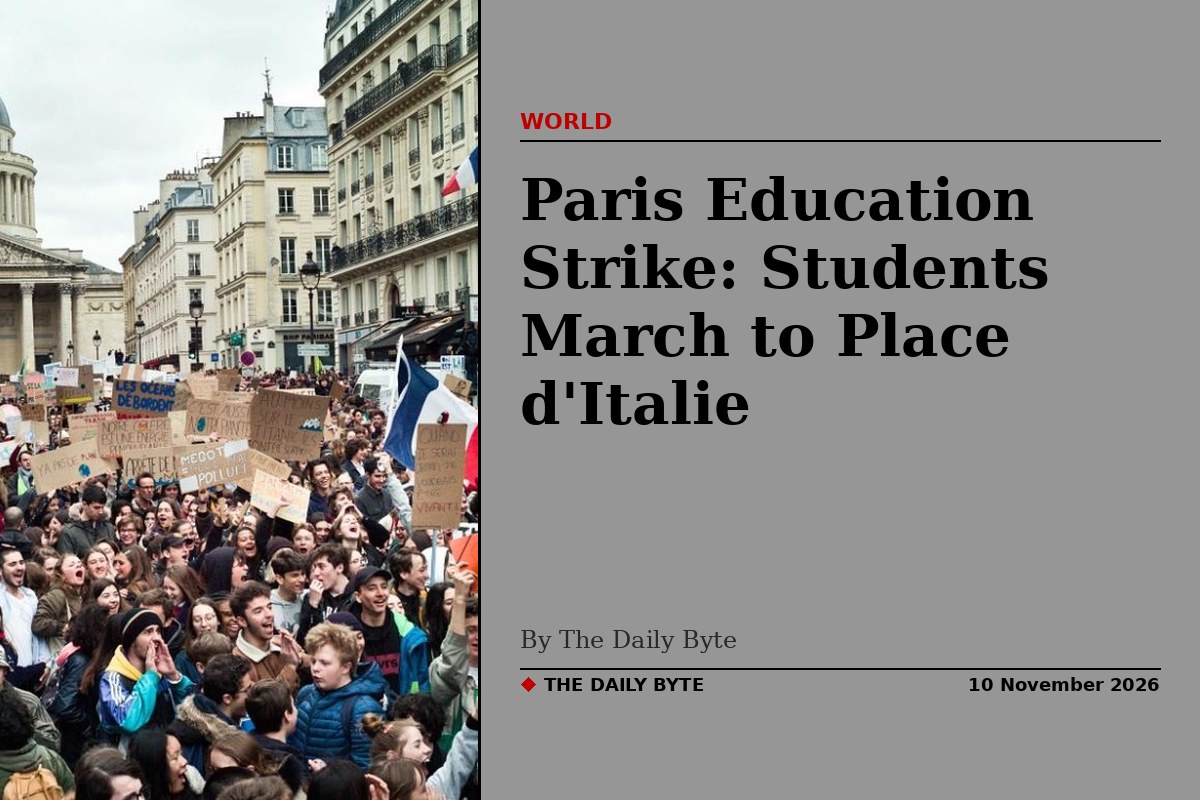
Teachers, school pupils and university students took to the streets of Paris on Tuesday, 10 November 2026, in a fresh day of education strikes and demonstrations, marching from the Panthéon towards Place d'Italie after talks with the government failed to end a protest movement that began in late September.
The Paris march, called by an inter-union grouping of school, student and education organisations, set off at 2pm, following a route authorised by the Paris police prefecture along Boulevard Saint-Michel, Boulevard de Port-Royal and Avenue des Gobelins. Several thousand people took part, according to the CLPRESS agency, which described a good-natured atmosphere on the march.
Demonstrations were also held in around fifty towns and cities across France, with high school blockades reported in the morning. The education ministry said 49 of the country's 3,700 high schools were blockaded at 9.30am, or 1.3 per cent of the total, although officials said the figure changed through the day.
What the protesters are demanding
The movement began in September with school and university students demanding the renovation of school buildings, more teachers and changes to university admissions. Pupils are calling for the end of Parcoursup, the national university admissions platform, a cap on class sizes, more places in BTS advanced vocational courses, university institutes of technology and health training, the creation of new teaching posts and the renovation of schools.
Teachers' unions are pressing for progress on pay and career advancement. The government has announced 500 additional teaching posts, a cap of 28 pupils per class in the second year of high school, and 15,000 more places in higher education. Student and school unions said after talks with Prime Minister Sébastien Lecornu on Monday that the announcements were not enough, and called for the demonstrations to continue.
The general secretary of Snes-FSU, the leading union for middle and high schools, Sophie Vénétitay, had anticipated lower participation than at the previous national mobilisation on 5 November, when the authorities counted 575,000 demonstrators and the CGT union put the figure at 1.6 million. Nearly 16 per cent of teachers were on strike that day, according to the education ministry.
Violence condemned as march goes ahead
French authorities condemned acts of violence against teaching staff and officials on Tuesday. In Chelles, near Paris, a local official was hit in the chest earlier in the day with a bottle filled with petrol in front of a high school. Interior Minister Laurent Nunez condemned the attack.
Education Minister Edouard Geffray said that as of Tuesday, 99 per cent of high school students were back in class. He and other ministers have repeatedly condemned attacks on staff during the blockades, while unions have stressed that the movement itself is peaceful.
The Paris police prefecture issued three orders on Monday partly banning demonstrations, refusing the route filed by the FSU union and a planned departure from Place de la Bastille, and instead authorising the Panthéon to Place d'Italie march and a stationary gathering on Boulevard de l'Hôpital. Intelligence reports cited in French media put expected attendance in Paris at between 2,000 and 4,000 people.
What happens next
Student unions have vowed to keep up the pressure, and a further nationwide public-sector strike is planned for Tuesday, 17 November, called by the CGT, UNSA and an inter-union group after a social policy conference they described as disappointing. Retirees are also due to demonstrate on Thursday, 19 November, making for a busy week on the French labour front.
For now, the education movement that started in schools in late September shows no sign of ending, with unions saying they will judge the government on concrete measures on staffing, class sizes and university places rather than on announcements.


