Parkmead Swings to £1.49m Loss as Gas Output Declines
Parkmead, the independent energy group, swung to a loss in its latest financial year as gas production declined and prices softened, but said a new drilling programme in the Netherlands and a growing renewables business should lift output from next year.
The AIM-listed company reported on Friday 20 November that it made a loss after tax of £1.49 million for the year ended 30 June 2026, against a profit of £7.35 million a year earlier. The swing largely reflects the previous year, when Parkmead booked an £11.8 million gain on the sale of assets, while this year's result was hit by lower gas volumes and weaker prices before new drilling comes on stream.
Group turnover fell to £3.4 million from £4.1 million. The company said the decline was caused by the natural fall in production from its mature Dutch gas fields and softer international gas prices, with the average realised gas price dropping to €36.5 per megawatt-hour from €40.1 a year earlier. Gross production across its Dutch portfolio was 1,600 barrels of oil equivalent per day. Operating costs were cut to £2.8 million from £3.5 million, and the loss per share was 1.36p, against earnings of 6.73p a year earlier.
Cash pile funds the drilling programme
Parkmead's balance sheet remains strong for a company of its size. Net assets stood at £25 million, or 23p per share, and total assets were £30.1 million. Cash and term deposits rose 18% to £16.1 million, and a further £3.9 million is due in February 2027 from the sale of its two UK North Sea oil exploration licences in 2025, taking total cash received from that disposal past £10.1 million.
The company also retains the chance of much larger payments from those licences without bearing any development costs. Contingent cash of up to £120 million could be received if field development plans are approved for the Skerryvore and Fynn Beauly prospects, worth up to £30 million and £90 million respectively. Serica Energy plans to drill the Skerryvore well in 2027, targeting gross unrisked prospective resources of 135 million barrels of oil equivalent, and the joint venture is legally committed to drilling it before the licence expires on 31 March 2027.
Executive chairman Tom Cross said the £16 million-plus cash pile gave the group the resources to fund its gas drilling programme and advance its large renewable energy projects, and described Parkmead as very well placed to exploit new growth opportunities.
New Dutch well due on stream in 2027
The centrepiece of the growth plan is the Netherlands, where drilling began in October 2026 on a second well at the Geesburg field on the Drenthe V licence. The well, known as GSB-02, is expected to deliver first gas in the second quarter of 2027, and Parkmead anticipates a significant increase in overall gas production once it comes on stream. Further drilling is also being planned for 2027 at the Drenthe VI licence, where the Hilgert North and Hilgert South prospects are being analysed.
Parkmead noted that international gas spot prices had risen sharply after the year end, to more than €80 per megawatt-hour in October 2026, which should benefit the next financial period. The group remains unhedged, so its revenue moves directly with European gas prices.
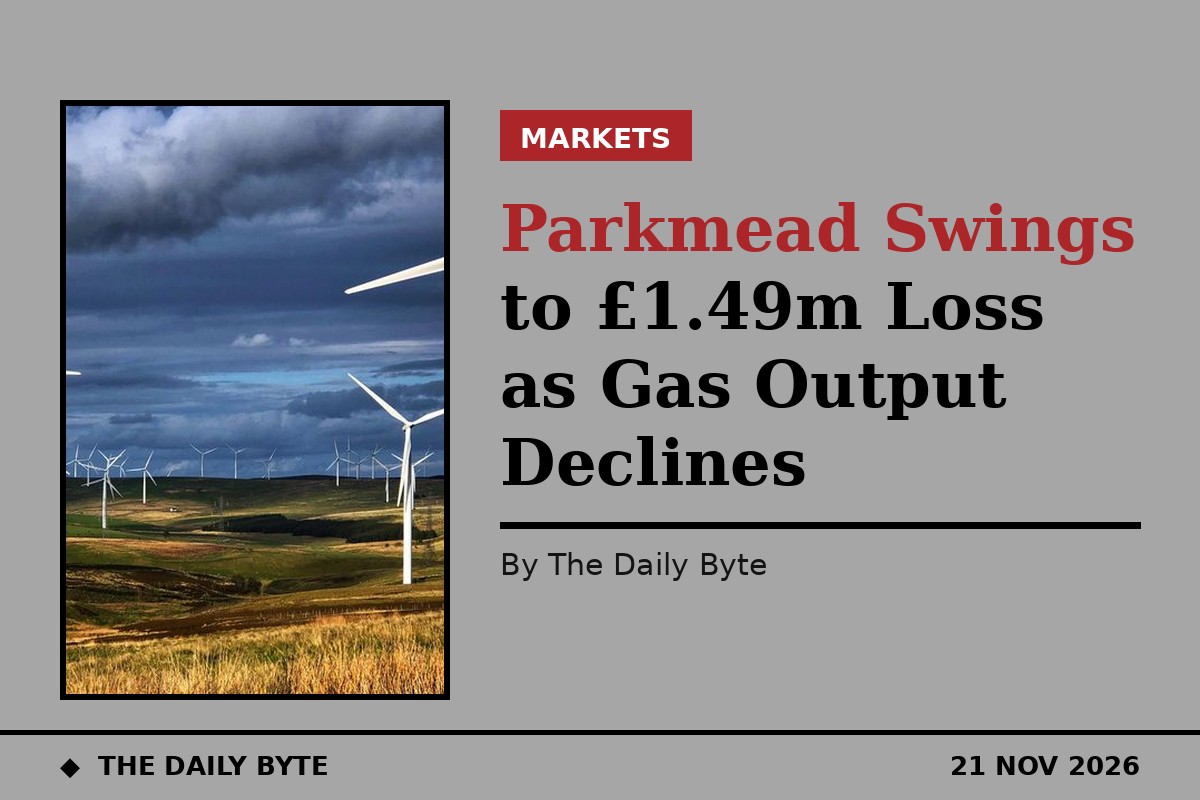
Renewables provided a growing share of the business. Non-hydrocarbon revenue rose for a third consecutive year to 19% of total revenue, from 15% a year earlier. Electricity generation at Parkmead's wholly owned Kempstone Hill wind farm rose by more than 10% to 3,005 megawatt-hours, with average operational uptime of 95%, and the company has since agreed a new power purchase agreement at £100.27 per megawatt-hour, up from £87.62, for the year to 30 September 2027.
Parkmead is also advancing the Glenskinnan Renewable Energy Park in Scotland with developer Galileo Empower, a scheme of up to 98 megawatts of wind capacity across 12 to 14 turbines, alongside 20 megawatts of solar power and 30 megawatts of battery storage. Parkmead's own land at Pitreadie is expected to host more than half of the proposed capacity, and a planning application under Section 36 is due to be lodged with the Scottish government after further public consultation.