Hanson's One Nation faces biggest test in Victoria vote
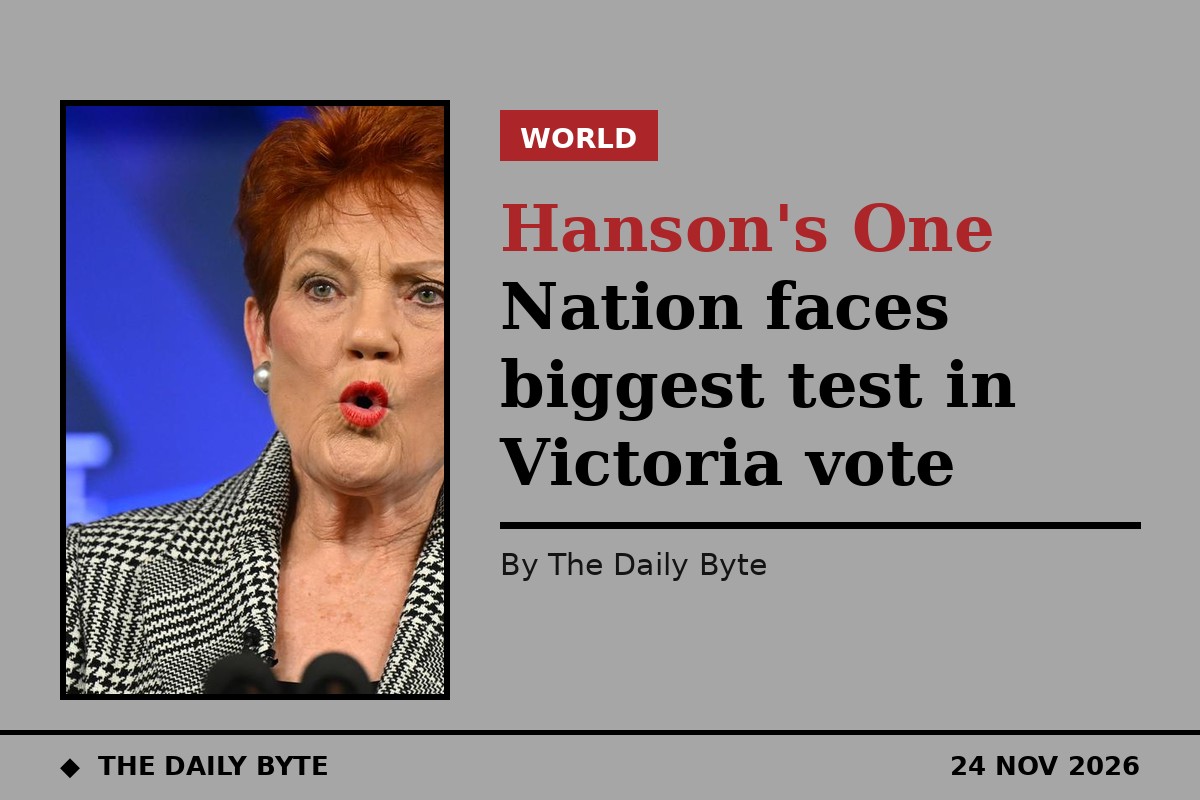
Australia's populist One Nation party faces its biggest electoral test yet on Saturday, when voters in Victoria decide whether to end 12 years of Labor government and hand the balance of power to Pauline Hanson's resurgent movement. The state election on 28 November will show whether One Nation can turn a surge in support into seats in a mainland parliament.
Victoria, Australia's second most populous state, has been governed by the centre-left Labor Party since 2014. Polls now point to a heavy defeat for Premier Ben Carroll's government, with voters angered by rising living costs, state debt, immigration and a shortage of jobs. The Liberal-National coalition is favoured to win, but One Nation's rise is the story of the campaign.
One Nation won just 6 per cent of the vote at the federal election in May 2025. Since then it has climbed sharply in the polls, and now leads or nearly leads most national opinion surveys. In Victoria, the party is projected to win seats for the first time, with Reuters reporting that polls suggest it could take as many as 10 of the 88 seats in the lower house, up from the single seat it holds now.
Polls point to a Labor defeat
The most recent polling underlines how far the contest has shifted. A RedBridge Group and Accent Research survey published by the Australian Financial Review put the coalition on 33 per cent of the primary vote, One Nation on 23 per cent and Labor on 22 per cent, a record low for the party, with the Greens on 15 per cent. On a two-party preferred basis, the coalition led Labor 58 to 42.
A separate Roy Morgan SMS poll of 1,563 voters, conducted on 18 and 19 November, found a similar pattern: the coalition on 31 per cent, Labor on 22.5 per cent and One Nation on 20 per cent, with the coalition ahead 55 to 45 on two-party preferred terms. Roy Morgan's analysis projected One Nation to win three seats in eastern Victoria, in Hastings, Morwell and Pakenham, while the coalition was projected to take Bass.
Even if One Nation does not win government, a bloc of seats would give it a say over which laws pass, should the coalition fall short of a majority in its own right. That prospect has made Hanson, the party's firebrand leader, the central figure of the campaign despite her party never having held power in a state parliament.
Cost of living ahead of immigration
Although One Nation is best known for its hard line on immigration, polling suggests its support is driven at least as much by household finances. Shaun Ratcliff, principal of polling firm Accent Research, found the party dominating in outer metropolitan areas, with living costs ranking ahead of immigration for its supporters.
That frustration was on display in the Macedon Ranges north of Melbourne, where classic car mechanic Joe Aprile told Reuters that high taxes and rising costs threatened his family business. Aprile, who voted Labor at the last state election, said he would vote One Nation this time.
One Nation's Victorian leader, Warren Pickering, is himself tipped to win a Labor-held seat on Melbourne's outskirts. The party's rise mirrors gains by populist and right-wing parties in Britain, Germany and elsewhere, but its test in Victoria is more concrete than a poll rating: on Saturday, voters will decide whether the surge becomes seats, and whether a party that has long sat on the fringes of Australian politics becomes a force that governments must negotiate with.


