Peers to quiz experts on UK emergency preparedness
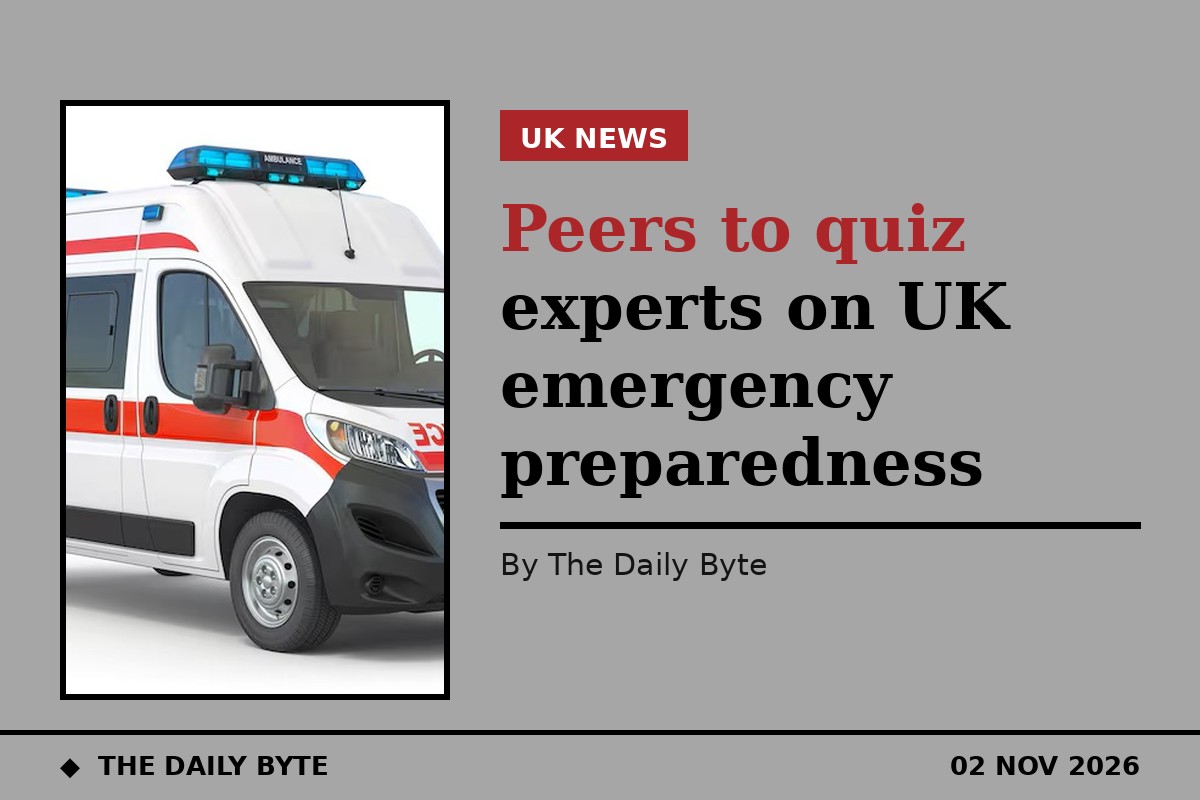
A parliamentary committee will examine how prepared households are for emergencies, in an oral evidence session on Monday 2 November. The Joint Committee on the National Security Strategy is holding the session as part of its inquiry into societal resilience.
Who gives evidence, and what is asked
The session, scheduled for 4.45pm, will hear from the co-chair of the National Consortium of Societal Resilience, also chief resilience officer at Suffolk Resilience Forum, and a professor of crisis and disaster management at Bournemouth University. Peers and MPs will ask how well communities understand the risks facing the United Kingdom, whether the government's Be Ready campaign is likely to change behaviour, and whether enough guidance, funding and support is in place locally.
The Be Ready campaign in numbers
The Be Ready campaign, launched on 22 October, encourages households to be self-sufficient for three days if food supplies or utilities are disrupted. Updated household advice includes three days of bottled water and non-perishable food, and signing up to the Priority Services Register where eligible. The committee's briefing cites an August survey finding that a third of households had supplies for a day or less, and only 4 percent had enough bottled water for three days or more.
Local planning and past lessons
The session will also look at how resilience is managed locally. Local Resilience Forums coordinate action plans for crisis management, including for organisations likely to respond first to major incidents. The government has said only 13 percent of people feel prepared for an emergency that could cut them off from the services they rely on.
Sources: UK Parliament Committees, Societal resilience: a national conversation - oral evidence, 2 November 2026; House of Commons Written Statement HCWS409, Strengthening community resilience across the UK, 22 October 2026.