Pentagon Accuses Canada of Defence Shortfalls Over F-35
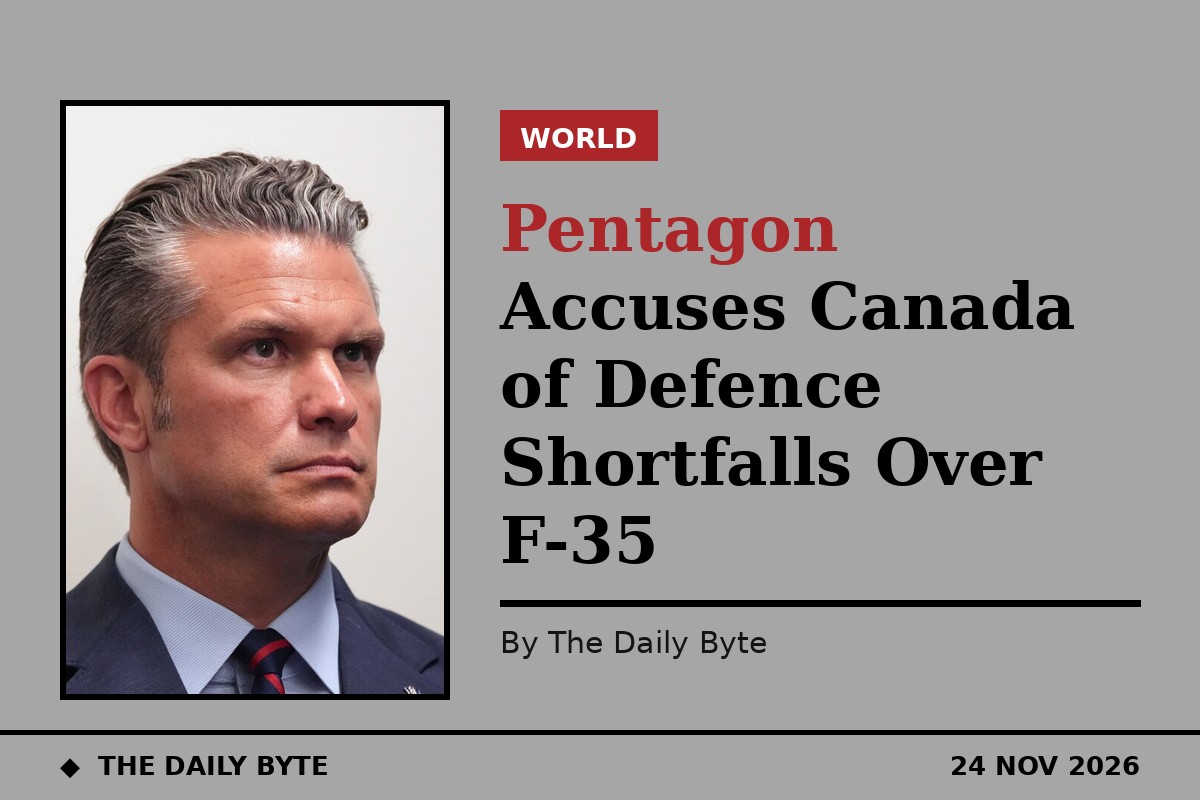
The Pentagon has publicly accused Canada of failing to become a credible partner in the defence of North America, in an unusually blunt assessment that deepens a growing strain between the two longtime allies. The criticism was set out in a United States Department of War fact sheet posted online on Monday, 23 November, and it focused on military readiness, defence spending and Ottawa's review of its planned purchase of American-made F-35 fighter jets.
The document said Canada had not yet made the difficult choices needed to modernise its armed forces and meet its commitments to NATO and to the joint North American Aerospace Defense Command, known as NORAD. "Canada's defense shortfalls speak for themselves," the fact sheet said. "Canada must get serious and focused." The language was striking because it was aimed not at an adversary but at a neighbour and treaty ally with which the United States shares the defence of the continent.
Readiness figures at the centre of the dispute
At the heart of the Pentagon's case were readiness figures for the 2025-26 fiscal year. The fact sheet said only 41.9 per cent of Canada's air force fleet was serviceable, while 53.9 per cent of its naval fleet was serviceable and the army's operational readiness stood at 48 per cent. Washington argued that those levels limited Canada's ability to contribute to the air defence of North America and to monitor the maritime approaches to the continent.
The submarine fleet drew particular attention. Only one of Canada's four ageing Victoria-class submarines is seaworthy at any given time, a point Prime Minister Mark Carney has himself acknowledged. Ottawa has since named Germany's Thyssenkrupp Marine Systems as the preferred supplier for up to 12 replacement submarines, although contract negotiations are still to follow. Canada's own Department of National Defence has acknowledged equipment problems while reporting that 61 per cent of its military units were ready for operations, a different measure from the serviceability figures cited by the Pentagon.
The F-35 review and spending targets
The fact sheet also criticised Ottawa's review of its planned purchase of 88 F-35 jets. The Pentagon warned that a mixed fighter fleet could worsen personnel shortages and create uncertainty for NORAD, which the two countries operate together. Carney put the purchase under review after President Donald Trump threatened Canadian sovereignty and imposed tariffs, and Canada has examined Swedish-made Gripen fighters, which could bring manufacturing work to Canada.
On spending, the Pentagon said Canada had reached NATO's previous target of 2 per cent of gross domestic product on defence and had joined allies in pledging to reach 5 per cent by 2035, including related security investments. Its latest budget projects combined defence and security spending of 4.1 per cent of GDP by the 2027-28 fiscal year, but core defence spending of only 2.6 per cent. Canada's parliamentary budget watchdog has said the path to 5 per cent remains unclear, and the Pentagon accused Ottawa of deferring the largest increases needed to reach the target until after the 2029 federal election.
A wider chill in military ties
The public rebuke followed a classified directive from US Defense Secretary Pete Hegseth that, according to Republican Senator Mike Rounds, largely restricts American officials' participation in Canadian think tank events and social engagements. Rounds said the directive was not expected to affect joint military operations or intelligence sharing. The Trump administration had already barred Pentagon officials from the Halifax International Security Forum under 2025 restrictions on think tank participation.
Tensions had already been visible earlier in the year. In May, Pentagon policy chief Elbridge Colby announced a pause in the Permanent Joint Board on Defense, a bilateral advisory body established in 1940, accusing Canada of failing to make credible progress on its defence commitments. At the Halifax forum, its president, Peter Van Praagh, warned on Friday that the United States could no longer be counted on as a predictable leader of the democratic world. Colby, by contrast, praised Germany's military buildup on Sunday as a "tectonic shift" and called Poland a "true model ally", while also praising Romania's plan to reach 5 per cent by 2031.
Canada's military did not immediately provide a substantive response, according to the Associated Press to the Pentagon's criticism. The episode leaves Ottawa facing a difficult choice: accelerate defence spending and settle the fighter question on Washington's terms, or accept a period of open friction with its closest security partner. Relations have already been battered by the trade war and by Trump's threats to make Canada the 51st state, and the fact sheet suggests the defence argument will not be settled quietly.


