Fujimori Pushes Bukele-Style Prison Reform in Peru
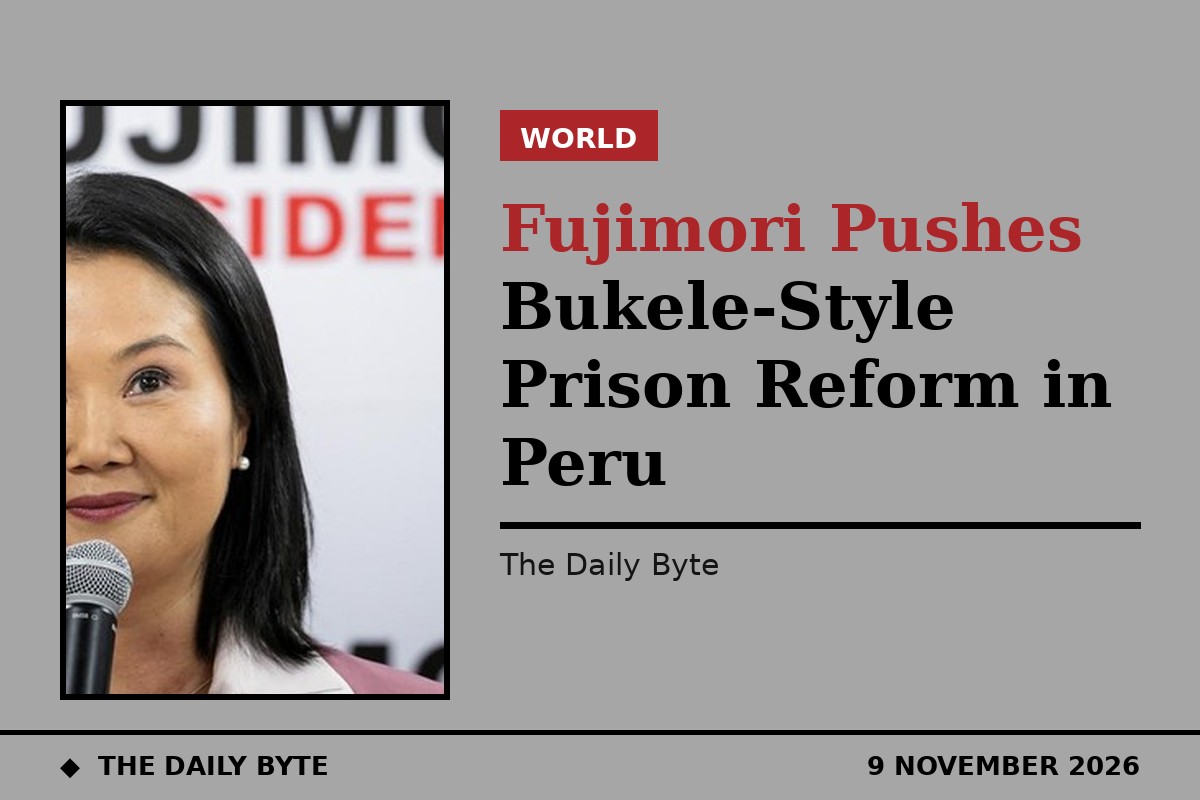
Peru has taken a major step in its crackdown on prison crime, authorising the Armed Forces to reinforce security around prison perimeters under a new decree. The move is part of a wider overhaul of the country's prison system being pursued by President Keiko Fujimori, who has looked to El Salvador's hardline model for inspiration.
Legislative Decree 1742, passed on 8 November, allows the military to support prison security in high-security facilities. Its stated aims are to stop weapons and illicit substances entering prisons, to neutralise unauthorised drones, and to provide technical support to block clandestine telecommunications inside jails.
Two mega-prisons planned
Alongside the decree, Fujimori has announced plans to build two new mega-prisons: one for high-risk offenders and another for lower-risk inmates. The lower-risk facility is expected to include productive workshops and a prison labour programme known as "Cero Ocio", or "Zero Downtime".
The president first set out the plans during a state visit to El Salvador, where she met President Nayib Bukele and toured the Terrorism Confinement Centre, known as CECOT. Speaking alongside Bukele on 29 October, she said Peru would build prisons similar to the Salvadoran mega-prison and adopt parts of his approach to isolating and controlling inmates.
Deadly clash prompted the overhaul
The reforms follow a violent confrontation between inmates at El Milagro prison in Trujillo, in northern Peru, on 1 November, which left three people dead and several others injured. Fujimori visited the facility the following day and ordered a nationwide reorganisation of the prison system.
She said the confrontation was believed to have started over disagreements between criminal groups about the appointment of a new prison delegate, and she instructed the justice minister to prepare a complete register of prisoners across the country, including their classifications, so inmates could be redistributed between facilities.
Under the new measures, prisoners considered highly dangerous, including people convicted of murder and leaders of criminal organisations, will be transferred to Challapalca prison in the southern department of Tacna. Fujimori has acknowledged that tightening prison security, including blocking communication signals and strengthening perimeter surveillance, has caused resistance among some inmates.
Crime wave behind the crackdown
The crackdown comes as Peru faces a sharp rise in violent crime. According to data from the National Death Information System, annual killings rose from 678 in 2017 to a record 2,253 in 2025, an increase of roughly 230 per cent. Between January and October 2026, 1,763 homicides were recorded across the country, an average of nearly six a day.
Fujimori, who assumed office in July, made the fight against crime one of her main campaign promises. Her government has also created a unified command of police and military personnel to combat criminal violence. Supporters of the Bukele model point to El Salvador's sharp fall in gang violence, while critics warn that the approach has drawn international allegations of human rights abuses in Salvadoran prisons. Fujimori has said the measures gathered during her visit will be assessed within Peruvian law.


