Peru's Giant Waves Peak, Shutting 96 Ports Along Coast
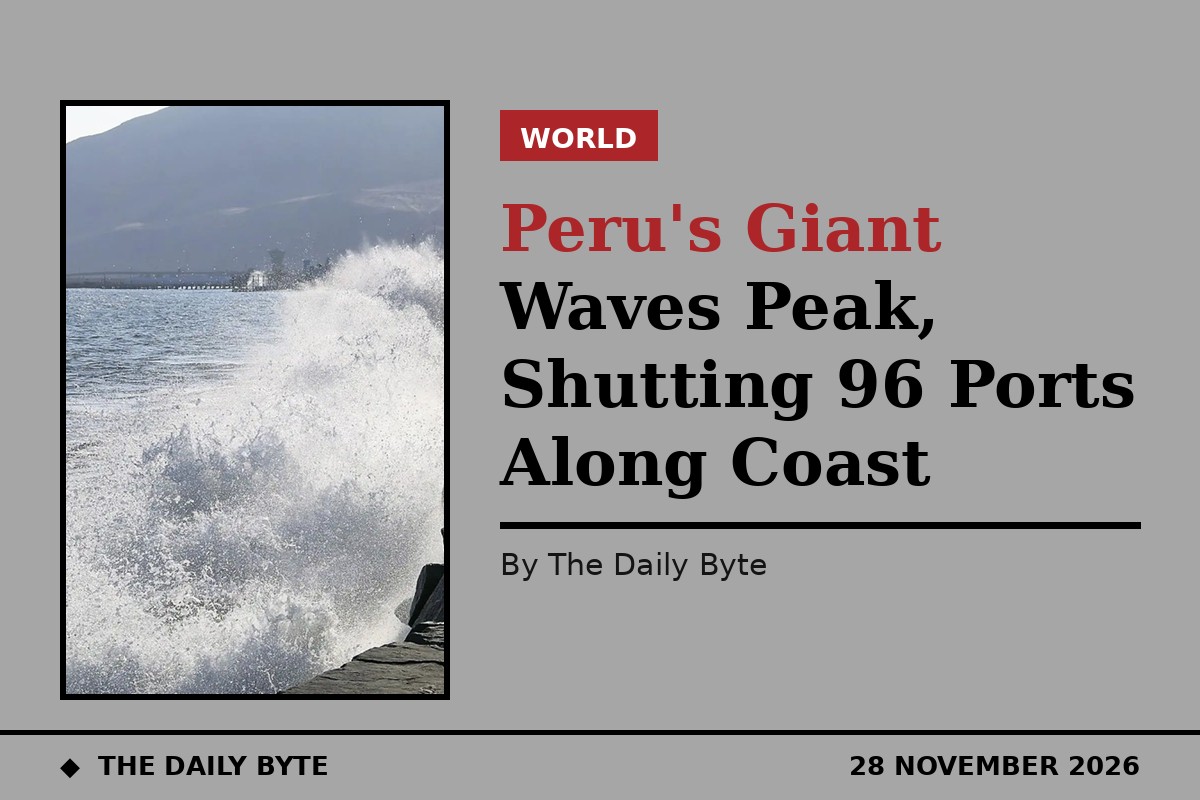
Waves two to three times their normal height are battering Peru's coast at their peak on Saturday, with about 96 ports, coves and terminals shut as a precaution and the Navy warning that the swell will not ease until Sunday.
Peru's Navy hydrography directorate says the anomalous swell will be at its strongest from Friday afternoon through Saturday, with breakers reaching two to three times their usual height along the central and southern coast.
Ports shut from Tumbes to Tacna
The national emergency centre reported that 95 ports, caletas, piers and terminals were closed as a preventive measure, disrupting shipping, fishing and port operations along the whole coast. The Navy's latest count put the figure at 96. An earlier snapshot from the coastguard listed 58 facilities fully closed and 47 partially closed.
The closures include the Chancay megaport north of Lima, operated by COSCO Shipping, whose four multipurpose berths are all on the official closure list. Callao, the country's largest port, is partially restricted, and restrictions also affect Paita and Chimbote in the north and Matarani and Ilo in the south.
Lima's Costa Verde battered
In Lima, the swell has damaged the Costa Verde, the cliff-top coastal road. The city closed the right-hand lane and the adjoining footpath from 5am on Thursday, after waves damaged more than 50 metres of retaining wall and about 70 metres of pavement near Waikiki beach in Miraflores. The district has restricted nine beaches from Friday to Sunday morning, and emergency repairs worth 2 million soles have begun at La Pampilla in Callao.
Communities from Tumbes in the far north to Tacna in the far south are already reporting lost beach area, damage to roads and homes, and falling tourism income.
Why the sea is so high
The Navy's hydrography directorate measured a sea-level anomaly of 51.1 centimetres off Callao on Tuesday, a rise officials link to ocean warming and the thermal expansion of the water column. Sea-surface temperatures in parts of the coast are running more than 6 degrees Celsius above seasonal norms, and the full moon is pushing high tides higher still. Officials link the episode to the El Nino weather pattern and a coastal El Nino warming of Peru's normally cool waters.
No deaths or injuries had been reported in connection with the swell, according to the reporting checked by Peruvian outlets.
When it eases
The Navy's updated warning, Special Notice No. 51-26, runs until Sunday 29 November. The swell is expected to ease to light levels over the weekend, with ports reopening one by one as each local port captaincy judges it safe. With further erosion and repair work likely, officials warn that transport and recovery costs could keep rising even after the waves drop.


