Peru Proposes Life Terms for Rogue Police, Soldiers
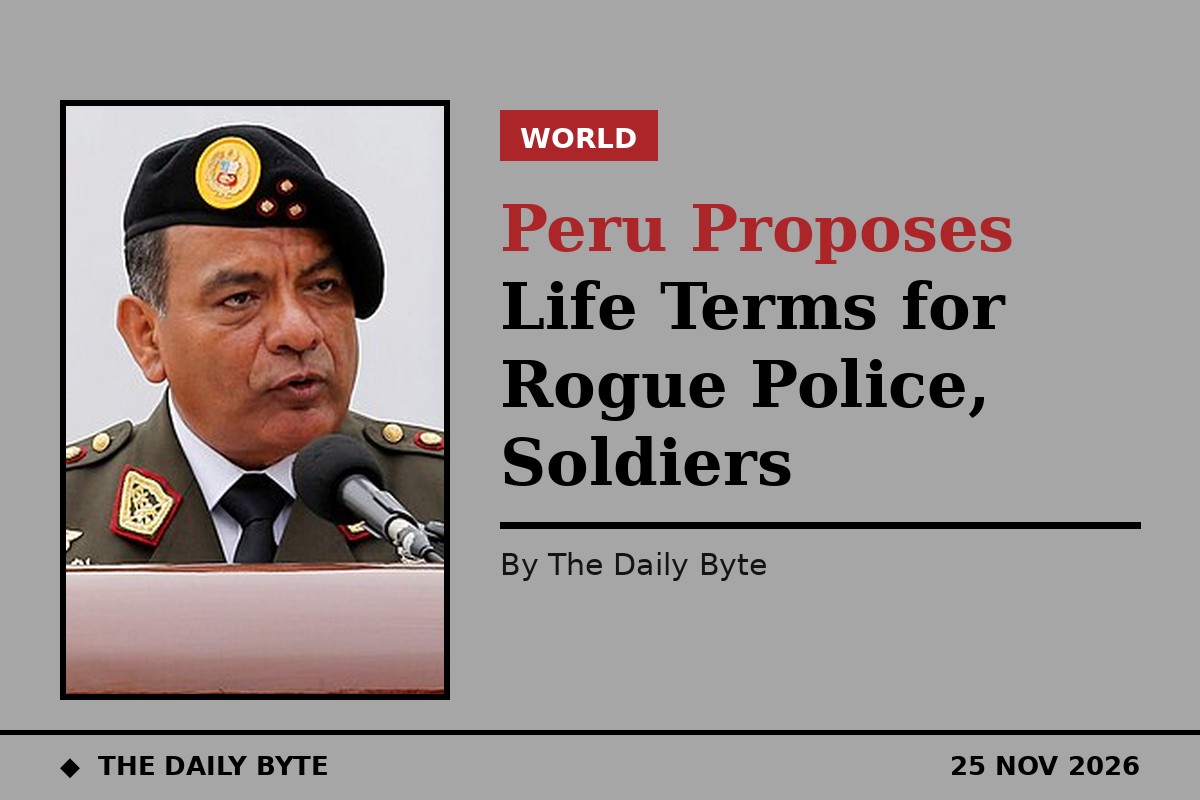
Peru's government has proposed life imprisonment for police officers and soldiers who join criminal organisations or supply them with weapons, ammunition and explosives, in a hardline measure aimed at rooting out gang infiltration of the security forces. Interior Minister Cesar Astudillo Salcedo announced the proposal on Tuesday, 24 November, after presenting it to the National Defence and Internal Order Commission of the Chamber of Deputies.
"We are proposing life imprisonment for police and military personnel who are colluding with or join criminal gangs, criminal organisations, or who supply weapons, ammunition, equipment and explosives to these criminal gangs," Astudillo told reporters after the session in Lima.
The measure forms part of a broader reform plan for the National Police of Peru under President Keiko Fujimori, who took office on 28 July 2026 after winning the presidential election in June. Astudillo said the authorities had recently identified several officers involved with criminal organisations, and that the harshest possible penalty was needed for members of the institutions charged with public safety who instead help the gangs.
Proposal still faces debate in Congress
The proposal is not yet law. Astudillo left it with the Defence Commission for evaluation and debate, and lawmakers will be free to put forward differing positions as it is discussed. The commission is the body within the lower house responsible for reviewing legislation on security, defence and policing, and any bill would still have to clear a vote before it could take effect.
The plan would build on a penal reform passed in July 2026 that already allows life sentences in some cases involving officers linked to organised crime, according to reports of the proposal. Astudillo's initiative would widen that punishment to cover officers and soldiers who take part in criminal organisations or arm them, regardless of the specific offence committed.
Astudillo also used his appearance before the commission to report on his management of the Interior Ministry, including progress on the police reform plan, the purchase of new equipment and technology to fight crime, and changes to how officers are deployed and disciplined across the country.
Training reform and ankle bracelets
Alongside the tougher sentences, Astudillo announced changes to the training of National Police officers, with greater emphasis on technology and on officers who fully uphold democratic principles and know how to connect with the population they serve. "We need to deepen that curriculum much more," he said.
He also addressed the use of electronic ankle bracelets, saying they should remain an alternative to overcrowded prisons, but that their operation needed review after local media reported that people wearing them had left their authorised zones without the authorities intervening. "We have seen that they are not so effective," he acknowledged, adding that the system "seems not to have worked, or to be working badly, and it has to be put right".
Astudillo said the authorities were working to reduce crime, and argued that dismantling gangs and arresting their leaders would slow the rise in offending. "Every gang dismantled, every organisation captured, every leader captured, will necessarily stop that increase, with complete certainty," he said.
Lawyers question the proposal
The proposal has already drawn criticism from some lawyers, who question whether life imprisonment for officers is constitutional and whether it should also reach senior commanders and political and civilian authorities involved in corruption, rather than rank-and-file officers alone. One criminal lawyer argued that if the measure became law and were challenged before the Constitutional Court, it would be declared unconstitutional, while others noted that membership of a criminal organisation by a public official is already an aggravating factor under the Penal Code.
Crime and extortion have dominated Peruvian politics this year, and the Fujimori government has made tackling organised crime its central promise. Whether Congress accepts the life-sentence proposal, and in what form, will be decided in the commission's debate in the coming weeks.


