Peru and Thailand sign free trade deal at APEC
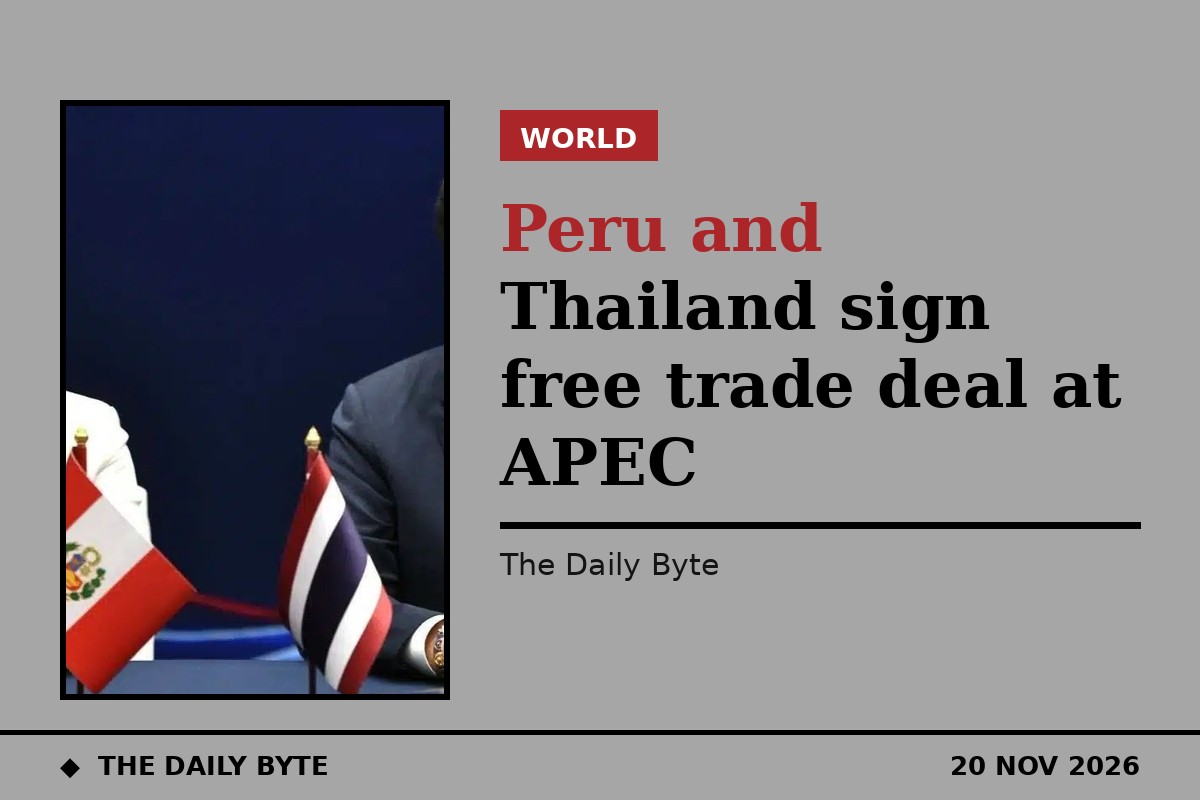
Thailand and Peru have signed a comprehensive free trade agreement at the APEC summit in Shenzhen, ending more than a decade of stalled talks and opening a new trade route between South-East Asia and Latin America.
The agreement was signed on Wednesday 19 November 2026, during the 33rd Asia-Pacific Economic Cooperation (APEC) Economic Leaders’ Meeting in Shenzhen, China. Thailand’s Deputy Prime Minister and Commerce Minister, Suphajee Suthumpun, signed the agreement with Peru’s Minister of Foreign Trade and Tourism, Rogers Martín Valencia Espinoza.
Thai Prime Minister Anutin Charnvirakul and Peruvian President Keiko Sofía Fujimori Higuchi witnessed the ceremony, underlining the political weight both governments attach to the deal.
A decade of talks, resumed last year
Negotiations had been on hold since 2014 before resuming in 2025, and the signing follows a push by both sides to finalise the pact this year. The agreement now covers trade in goods and services, as well as closer business and investment ties.
The deal is not yet in force. Thailand’s Commerce Ministry must first submit it to Parliament for approval and complete the remaining domestic procedures, with businesses expected to begin benefiting from the agreement in 2027.
Suphajee said the agreement would help Thai businesses access new markets and establish partnerships with Peruvian companies. She added that the Commerce Ministry would expedite the necessary procedures to bring the agreement into force and enable businesses to benefit from the expanded trade framework.
What the deal covers
Thailand expects several export categories to benefit, including vehicles and automotive components, tyres, machinery, construction materials, dietary supplements and processed food products. Agricultural and seafood exports such as catfish, tilapia, pineapples, papayas and other processed fruits have also been identified as potential growth areas.
Thailand’s main exports to Peru already include vehicles and parts, canned and processed seafood, washing machines and dryers, machinery and rubber products. Imports from Peru include seafood, natural gas, fruit and vegetables, metal ores and agricultural products.
Peru’s infrastructure development is expected to create additional demand for Thai machinery, construction materials and industrial products. Plastics and veterinary supplies for pets are among the other sectors offering potential export opportunities.
The development of Peru’s Chancay Port, north of Lima, is also expected to strengthen commercial connectivity between Asia and Latin America. Improved shipping capacity, shorter transit times and potential logistics cost savings could support Thai exporters seeking to expand their presence in Peru and neighbouring markets.
Trade is already growing fast
The agreement comes amid growing trade between Thailand and Peru, which reached US$555.24 million from January to September 2026, up 33.66% from the same period last year, according to the Commerce Ministry.
Peru is Thailand’s fourth-largest trading partner in South America, behind Brazil, Argentina and Chile, and ranks 60th among its trading partners worldwide. The agreement forms part of Thailand’s strategy to diversify export destinations amid global trade uncertainties and increasing competition, aiming to improve market access for Thai products and expand services-sector opportunities.
For Peru, the deal opens preferential access to a Thai market of more than 72 million people, and gives its exporters a firmer foothold in South-East Asia after ten years of on-and-off negotiation.
Sources: Asia Manufacturing Review; Thailand Live News.


