Petrol Price in Pakistan Falls to Rs332 a Litre
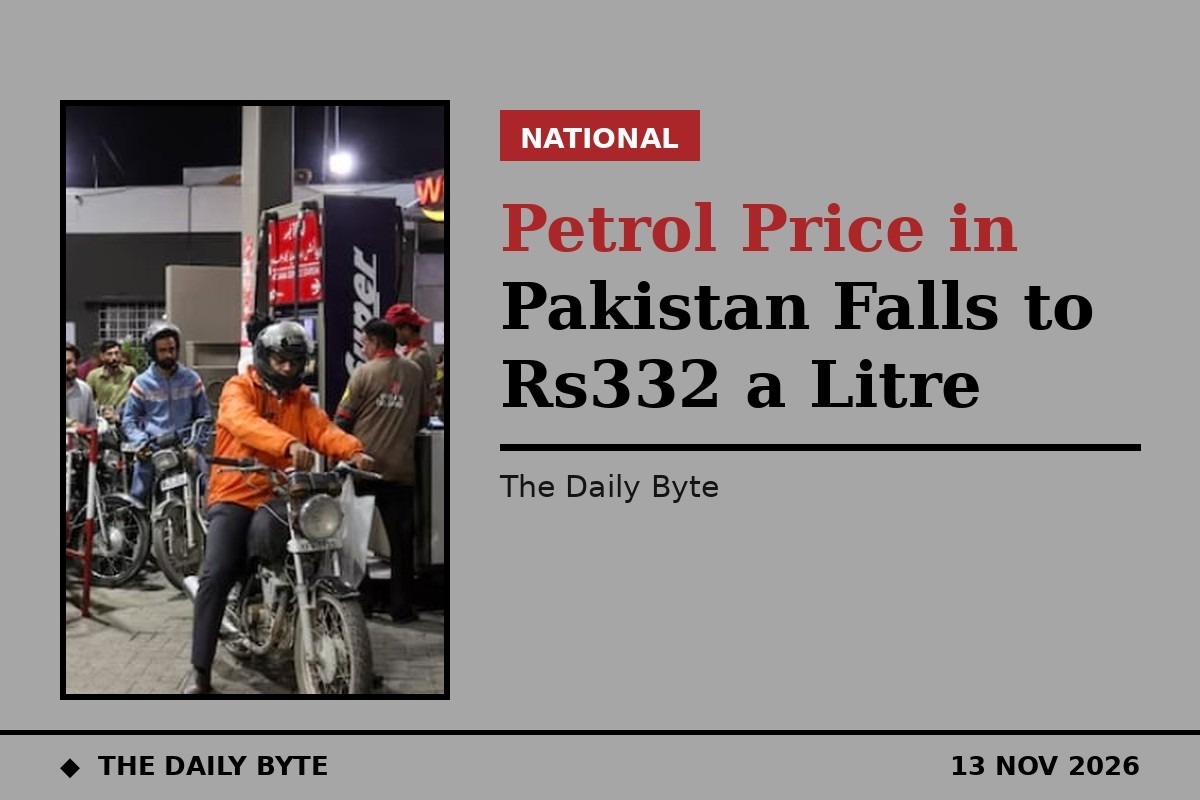
Petrol became cheaper across Pakistan for the eighth day in a row on Friday, 13 November 2026, as the federal government cut the price by Rs3 a litre to Rs332, while high-speed diesel fell by Rs4 a litre to Rs360. The Oil and Gas Regulatory Authority (OGRA) issued the notification late on Thursday, and the revised rates took effect from Friday morning.
The latest reduction continues a run of daily cuts that began at the start of the month. Petrol has now fallen by Rs45.91 a litre in eight days, from Rs377.91 on 2 November to Rs332 today. High-speed diesel has dropped by Rs42.96 over the same period, from Rs402.96 to Rs360 a litre. The previous revision, on Wednesday, had set petrol at Rs335 and diesel at Rs364.
How much have fuel prices fallen in November?
The steady decline has brought the most sustained relief at the pump in months. Day by day, the reductions have been small — typically Rs3 or Rs4 a litre — but together they add up to a cut of nearly 12 per cent on petrol since 2 November. For motorists, commuters and transporters, the cumulative fall is now large enough to show up in weekly fuel bills, even though prices remain far above the levels seen earlier in the year.
Diesel users have seen a similar pattern. High-speed diesel, the fuel that powers most trucks, buses and farm machinery, has come down from Rs402.96 to Rs360 a litre in the same eight-day window. Because diesel costs feed directly into the price of moving goods, the fall is likely to ease some pressure on transport costs if the trend holds.
Why are petrol prices changing every day?
The cuts are being made under OGRA's new daily pricing mechanism, which came into effect on 2 November. Under the system, fuel prices are revised every morning on the basis of a seven-day rolling average of international oil benchmarks, so changes in global prices reach Pakistani consumers far more quickly than under the old fortnightly review.
OGRA has also begun publishing daily petroleum prices on its official website, in a move the regulator says is intended to improve transparency and let consumers track changes as they happen. The daily rhythm cuts both ways, however: just as prices have fallen for eight consecutive days, they can rise again at the next revision if international benchmarks move upwards.
Taxes still make up a large share of the price
Despite the relief, taxes and duties remain a heavy part of what drivers pay. The government is collecting Rs114 a litre in taxes and duties on petrol and Rs100 a litre on high-speed diesel, according to official figures reported alongside the latest notification. That means more than a third of the petrol price at the pump is made up of government levies rather than the cost of the fuel itself.
The notified prices are ex-depot rates, so what a driver actually pays can differ slightly from district to district because of the freight margin, and hi-octane, CNG and LPG prices vary by company and location. Motorists should therefore check the rate displayed at their local station, which should reflect the Rs332 and Rs360 figures from Friday.
What it means for households and businesses
The eighth consecutive cut offers modest but real relief to households facing high living costs, and to small businesses and transporters whose margins depend on fuel. Whether the relief lasts will depend on international oil markets and on the government's tax policy, both of which can change the direction of the daily revisions at short notice.
For now, the direction is clear: petrol at Rs332 a litre and diesel at Rs360 is the lowest either fuel has cost since the daily mechanism began. The next revision, due on Saturday morning, will show whether the run of cuts extends to a ninth day. The News first reported the revised rates, and ARY News confirmed the same figures in its headlines, with both outlets citing the OGRA notification.