Phenytoin 100mg tablets in short supply in UK
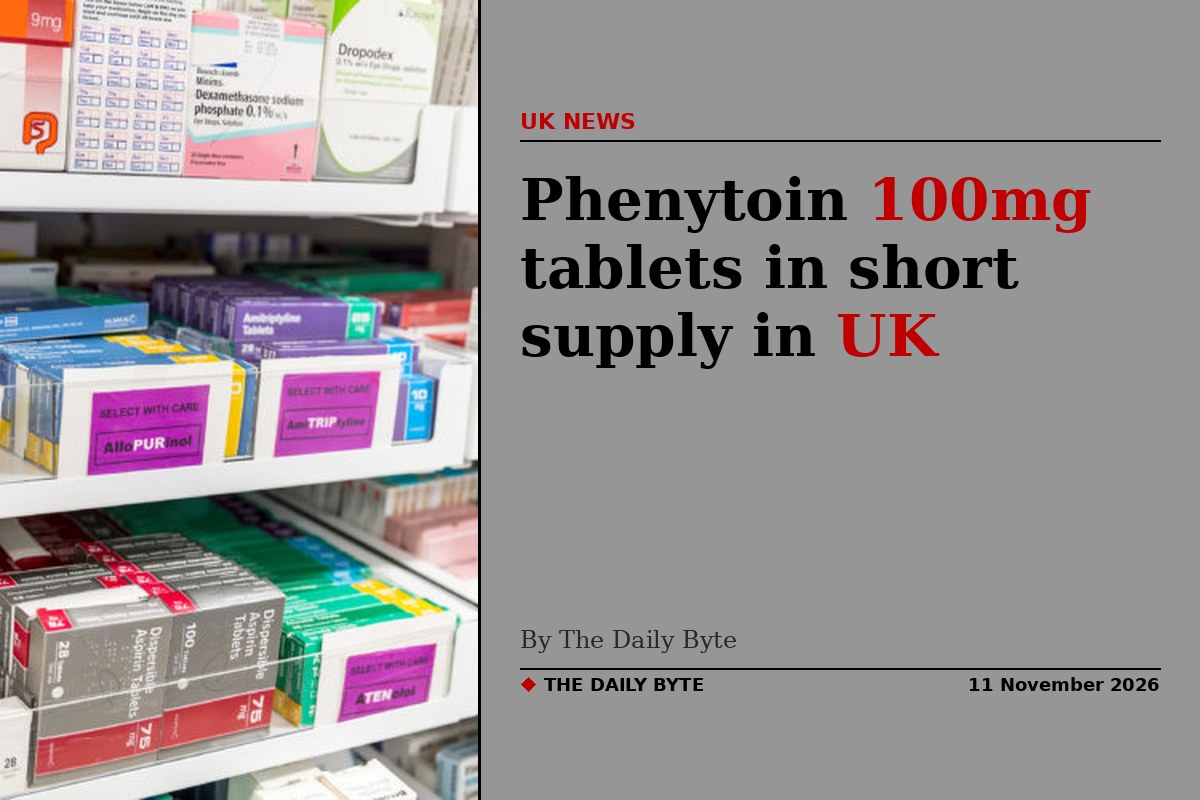
One brand of an epilepsy medicine is out of stock in the UK until late November, the Department of Health and Social Care (DHSC) has told pharmacies. Phenytoin 100mg tablets made by Teva are unavailable, according to a medicine supply notification issued on Tuesday 10 November 2026.
The notice, numbered MSN/2026/053, is classed as Tier 2, meaning it is assessed as having a medium impact. It was published by Community Pharmacy England, which shares DHSC supply notifications with pharmacies across the country.
An alternative brand remains available
Pharmacies are not left without any supply of the medicine. The notice states that phenytoin 100mg tablets made by Aurobindo Pharma, sold under the Milpharm name, remain available and can support an increase in demand while the Teva product is out of stock.
A copy of the notification, including supporting information, has been sent to all pharmacy NHS email addresses, so pharmacy teams should already have the details they need to manage prescriptions during the shortage.
Phenytoin is a long-established anti-epileptic medicine, used to prevent seizures in people with epilepsy. It is available in tablets and capsules, including 100mg tablets, and is usually taken twice a day. NHS guidance notes that it has a narrow therapeutic range, which means the amount in the body needs to be kept within a fairly tight band for it to work properly.
Why brand matters for this medicine
The shortage is particularly sensitive because guidance from the medicines regulator, the MHRA, says patients taking certain anti-epileptic medicines, including phenytoin, should stay on the same manufacturer’s product where possible. Switching between brands can change how much of the drug the body absorbs, which can affect seizure control.
That does not mean patients will go without treatment. Where the usual brand is unavailable, pharmacists and prescribers can arrange a suitable alternative, and the DHSC notice points to the Aurobindo Pharma product as the brand able to meet demand in the meantime.
Patients who are affected should speak to their pharmacist or GP rather than changing their dose or stopping the medicine suddenly. NHS patient information for phenytoin warns against stopping it abruptly, because doing so can bring on seizures.
How medicine shortages are tracked
Medicine supply notifications are the DHSC’s way of telling the NHS and pharmacies about a problem with the supply of a particular product, including how long it is expected to last and what alternatives exist. The notices are shared through Community Pharmacy England and can also be viewed on the Medicines Supply Tool run by the DHSC and NHS England, which gives up-to-date information about supply issues and any changes to resupply dates.
Shortages of individual brands are not unusual, and most are resolved when the manufacturer’s stock is replenished. In this case, the notice gives late November 2026 as the expected end of the shortage, unless it is updated. The DHSC tool will carry any change to that date.
More detail is published by Community Pharmacy England: Medicine Supply Notification, Phenytoin 100mg tablets (Teva). Patients who cannot obtain their usual prescription should contact their pharmacy, which can check current availability and advise on the next step.