Philippine Rice Imports Near Record as Demand Surges
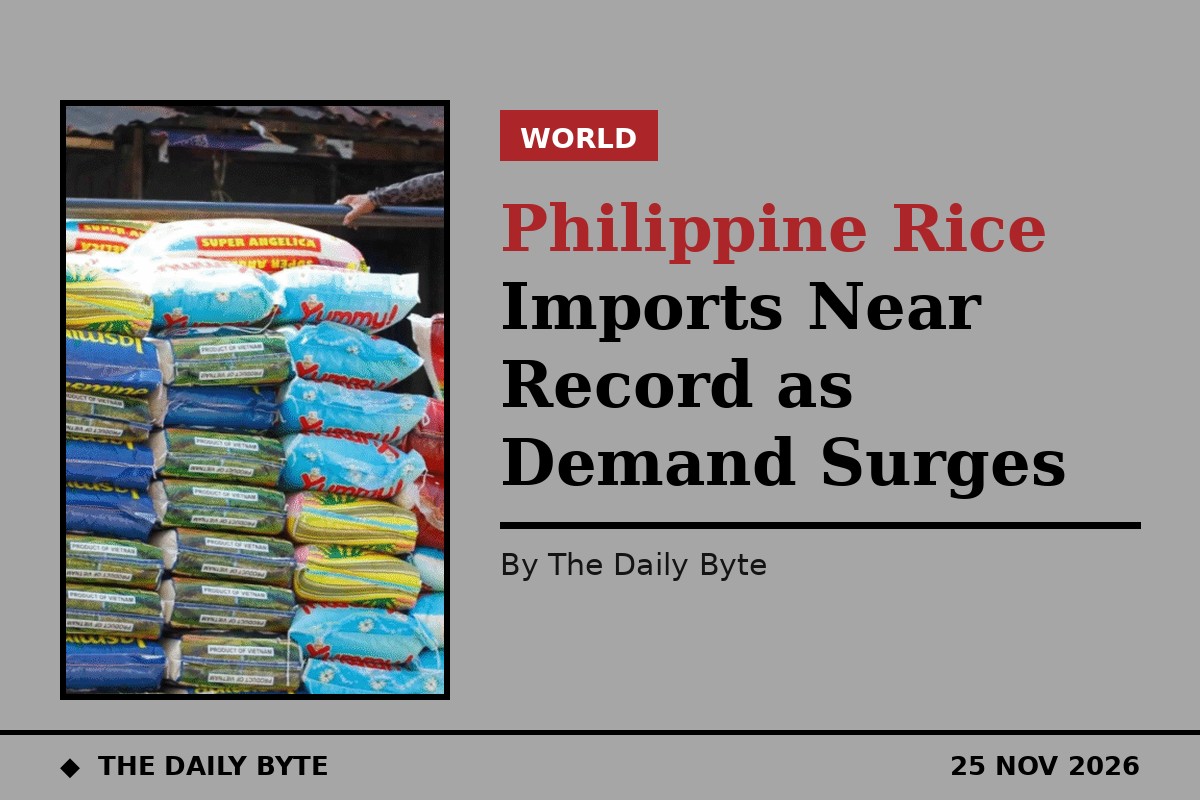
The Philippines is on course to set a record for rice imports this year after shipments reached 4.62 million metric tonnes by early November, already well above the total for the whole of 2025.
Latest data from the Bureau of Plant Industry showed that rice imports reached 4.62 million tonnes as of 5 November, up 36 percent from the 3.39 million tonnes recorded for the entirety of 2025. The volume is just under 200,000 tonnes short of the current all-time high of 4.81 million tonnes set in 2024, and the Department of Agriculture expects imports to reach about five million tonnes this year to plug a projected decline of more than one million tonnes in local production.
Vietnam supplies six in ten tonnes
The Philippines bought almost 61 percent of its imported rice from Vietnam, with shipments reaching 2.81 million tonnes, already above last year’s full-year volume of 2.76 million tonnes. Thailand supplied 709,594 tonnes, roughly four times the 176,865 tonnes recorded last year. Myanmar ranked third with 514,084 tonnes, followed by Pakistan with 350,326 tonnes, Cambodia with 189,468 tonnes and India with 43,118 tonnes.
The buying follows an easing of import restrictions. The Philippines suspended imports of 5 percent broken white rice in early July and stopped issuing sanitary and phytosanitary import clearances for shipments from Vietnam, Thailand and Myanmar in September. Imports of lower-grade rice, including 15 to 25 percent broken varieties, have now resumed, according to SteelMint’s 25 November market update, with trade sources telling Platts that renewed demand from Filipino buyers is supporting interest in regional supplies.
Prices remain firm. Vietnamese fragrant 5 percent broken rice was assessed at around 559 US dollars a tonne free on board on 17 November, while Thai 25 percent broken white rice stood near 472 dollars a tonne and Myanmar 25 percent broken rice around 458 dollars a tonne.
Harvests squeezed by costs and dry weather
Domestic production is under pressure from both farm economics and the weather. Agriculture Secretary Francisco Tiu Laurel Jr said higher fertiliser expenses have discouraged many farmers from planting palay, or unmilled rice, resulting in weaker harvests. Production has been further weighed down by dry conditions caused by the ongoing El Nino phenomenon, which is forecast to intensify before the end of the year. The weather event had already wiped out 129,757 tonnes of palay output as of 20 November, equivalent to 4.05 billion pesos in losses, according to the Department of Agriculture.
The United States Department of Agriculture projected that Philippine rice imports could reach 5.5 million tonnes this year before expanding further to 5.7 million tonnes in 2027. The United Nations’ Food and Agriculture Organization expects the Philippines to import about 5.2 million tonnes this year and the same volume next year. In terms of consumption, the FAO projects the country will use 17 million tonnes this year, slightly lower than the USDA’s estimate of 17.6 million tonnes.
Market watchers describe the regional balance as tight but not yet critical. Official figures already showed imports at 4.49 million tonnes as of late October, and the authorities have signalled that total purchases may exceed five million tonnes this year to offset the expected production shortfall and maintain comfortable public and private inventories. Continued strong buying from Manila has reinforced trade flows from Vietnam and Thailand, while also creating openings for Pakistan, Myanmar and Cambodia as alternative, often more competitively priced, origins.


