Philippines and Australia Sign New Defence Pact
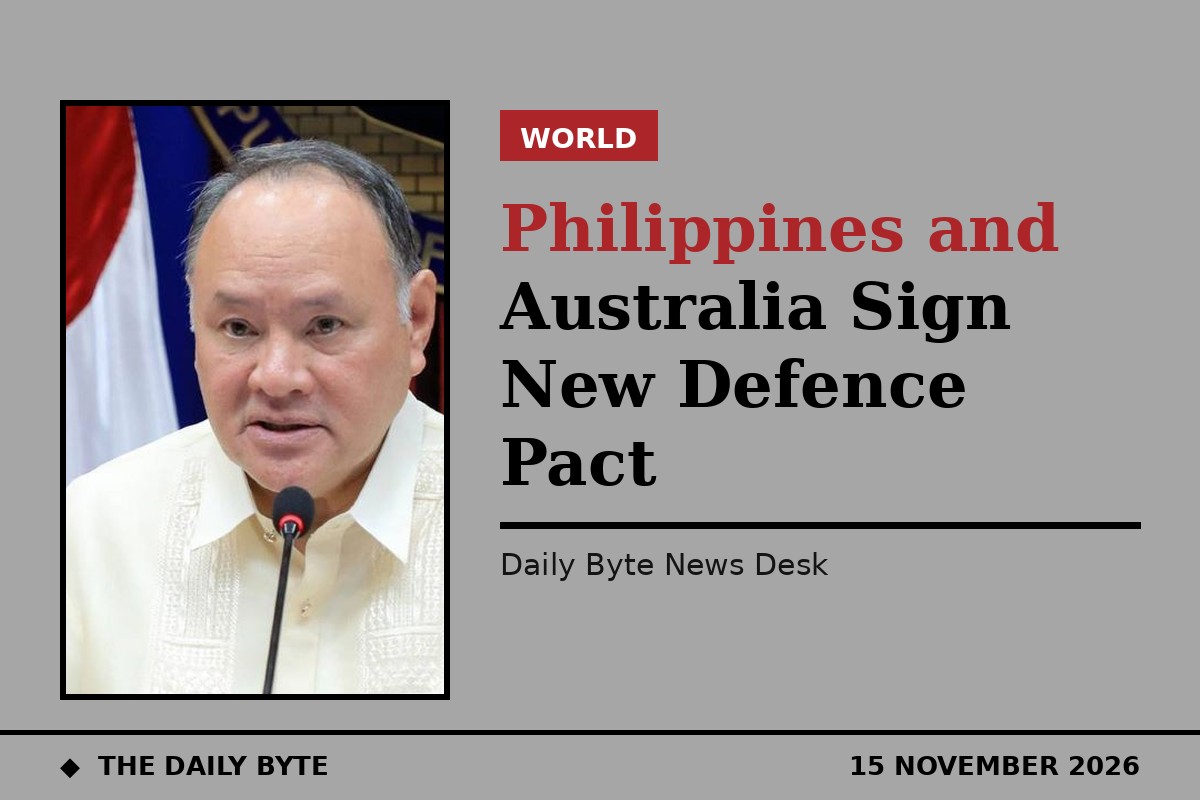
The Philippines and Australia have signed a renewed defence cooperation arrangement in Manila, updating a framework that has governed their military relationship for three decades. The agreement was signed on Sunday, 15 November, at the Eva Macapagal Cruise Terminal in Manila South Harbor, in a ceremony witnessed by Australian Prime Minister Anthony Albanese.
Philippine Defence Secretary Gilberto Teodoro Jr. signed the arrangement with Australian Ambassador to the Philippines Marc Innes-Brown. The new Defence Cooperation Arrangement modernises a memorandum of understanding on defence cooperation first signed in 1995, and it is designed to make the two countries' existing Status of Visiting Forces Agreement, known as SOVFA, work more smoothly in practice.
An anti-red tape measure for joint operations
Teodoro described the arrangement as an anti-red tape measure for the visiting forces agreement, which was signed in 2007 and entered into force in 2012. He told reporters that procedures which once took many steps would now be far simpler. "Rather than 100 steps to do a single thing, it will just now take 10," he said, adding that the deal would let the two sides "work faster" by streamlining coordination.
The practical gain, Teodoro said, is speed. Australian troops helping in a Philippine disaster will no longer have to clear a long list of permits, and coordination of maritime patrols with the Philippines and other like-minded nations will be faster. The arrangement also opens the way for closer cooperation between maritime, air and land forces, as well as humanitarian assistance and disaster response.
Deterrence in the South China Sea
Teodoro said the agreement would bolster the Philippines' "credible deterrence posture" in the South China Sea, including in the waters Manila calls the West Philippine Sea. "Our stance in the West Philippine Sea, of the President, is all entitlements are Philippine entitlements," he said. The Philippines has been broadening its network of security partnerships while maintaining its long-standing alliance with the United States, in the face of what Manila describes as aggressive Chinese behaviour in the disputed waterway.
China claims sovereignty over nearly all of the South China Sea, overlapping with the exclusive economic zones of the Philippines, Brunei, Indonesia, Malaysia and Vietnam. Australia has consistently backed a 2016 ruling by an international arbitral tribunal that China's sweeping claims have no basis under international law, a decision Beijing rejects. Beijing maintains that its actions in the South China Sea have been lawful and professional, and it routinely opposes Manila's joint military activities with allied partners.
Maritime awareness, drones and training
Albanese said the arrangement would enhance maritime awareness and information sharing, and increase strategic dialogue, training, interoperability and defence infrastructure development. He also announced additional Australian investment in maritime domain awareness, including drone technology, equipment and training aimed at improving the detection of maritime and cybersecurity threats.
The Australian government has backed the partnership with a programme worth A$160 million over ten years, from 2024 to 2034, to strengthen regional monitoring and information sharing. Albanese said the partnership involved up to 200 defence activities a year and between 2,500 and 3,000 Australian Defence Force personnel. In August 2026, Australia, the Philippines and the United States conducted a maritime cooperative activity within the Philippine exclusive economic zone.
What the pact does not do
The arrangement is a cooperation framework, not a mutual defence treaty, and it does not create an automatic obligation for either country to intervene in a conflict. It builds on a Statement of Intent on Enhanced Defense Cooperation signed by Teodoro and Australian Deputy Prime Minister and Defence Minister Richard Marles on 22 August 2025, and on a bilateral relationship elevated to a strategic partnership in September 2023.
The signing took place as Albanese attended the 49th ASEAN Summit in Manila, where leaders are discussing energy security, trade tensions, territorial disputes and regional conflicts. The Philippines holds the ASEAN chair this year. For more detail, see the Philippine News Agency report and the Reuters report.


