Philippines Fields BrahMos Missiles in Luzon Drill
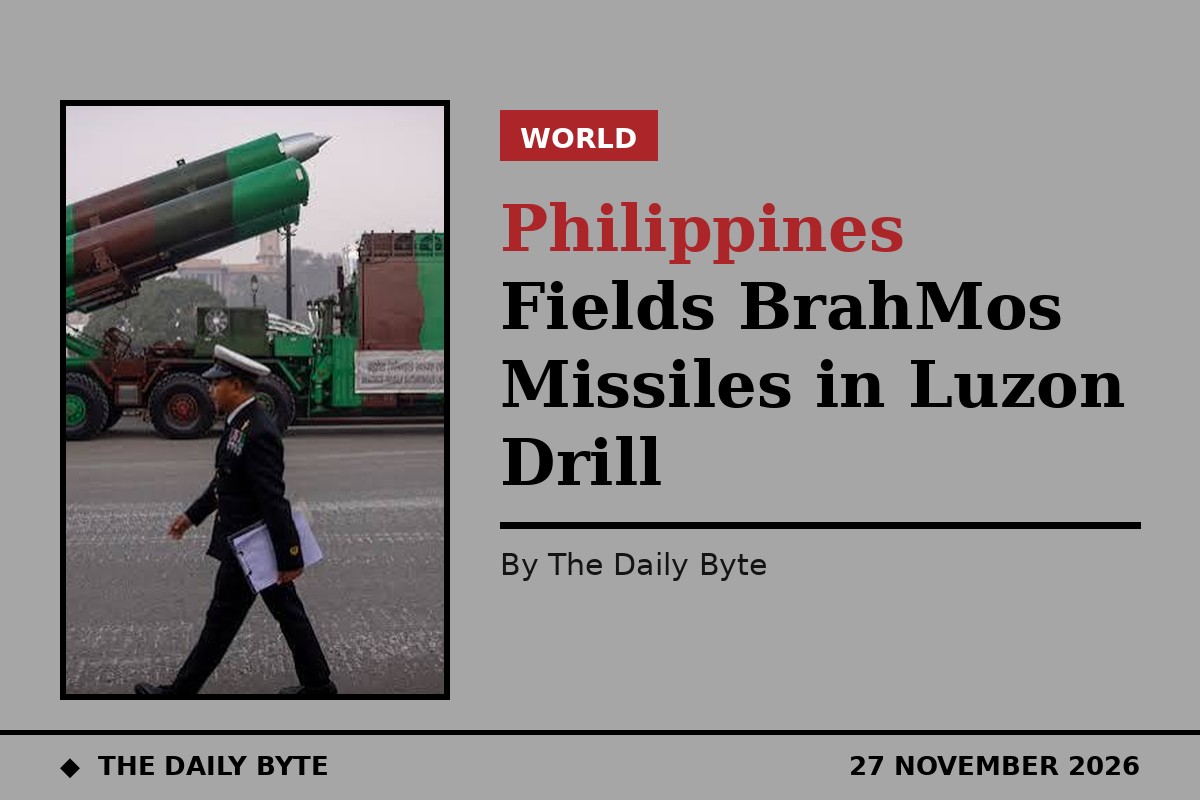
The Philippines has fielded its Indian-made BrahMos shore-based anti-ship missile battery in its annual joint military exercise, the first confirmed field deployment of the system by Manila, as the drills to secure the Luzon Strait draw to a close.
The Philippine Marine Corps' Coastal Defence Regiment deployed the battery during the Armed Forces of the Philippines' joint exercise AJEX DAGIT-PA 10-2026, which ran from 17 to 27 November. The battery took part in a joint maritime strike activity alongside naval vessels, testing the military's ability to coordinate land-based missile operations with ships and aircraft.
The exercise, known in full as Dagat-Langit-Lupa, meaning sea, air and land, was held across Northern Luzon, Palawan, the National Capital Region and the Western Command area. Its stated aim was to strengthen the Philippines' ability to secure its vital maritime approaches, particularly the Luzon Strait, the waterway between Taiwan and the Philippines, and to prevent hostile forces from advancing through strategic waterways.
According to an Armed Forces of the Philippines release on the drill, the high-intensity exercise tested the military's ability to conduct coordinated maritime strike operations through joint command and control, integrated air and naval capabilities, and long-range anti-ship systems. Air-defence systems were moved to Northern Luzon and special forces operated on Fuga Island as part of the drills.
From rehearsal to field deployment
The deployment marks a step beyond rehearsal. During the Balikatan exercises with the United States earlier in 2026, Philippine Marines practised BrahMos targeting and firing procedures without launching a missile. This year's DAGIT-PA is the first confirmed deployment of the system in the field, and the first outside a bilateral drill with a partner nation.
The Philippines became the first foreign customer for the BrahMos missile system after signing a 375-million-dollar contract with India in January 2022 for three shore-based batteries. The first battery was delivered in April 2024. The supersonic cruise missile, jointly developed by India and Russia, is now the centrepiece of Manila's coastal defence plans.
Manila is now reported to be considering a much larger follow-on purchase, including about five more BrahMos systems and nearly 60 missiles, in a deal said to be worth between 700 million and 800 million dollars. The figures have been reported by Indian media and have not been confirmed by either government. The Philippines is also reported to be exploring additional Indian weapons, including Akash air-defence systems and Pinaka rocket launchers, although financing terms are said to remain under discussion.
Defence ties deepen as talks continue
The deployment comes as defence cooperation between India and the Philippines continues to deepen. On Friday, the two countries held their fourth Service-to-Service Talks in New Delhi, led by India's Headquarters Integrated Defence Staff and the Armed Forces of the Philippines, reviewing ongoing military engagements and identifying new avenues for tri-service cooperation in training, maritime security, defence technology and emerging domains. The two sides held their third round of the talks in Manila in September 2024.
Manila is also building a permanent Marine Corps base in Northern Luzon that is intended to host BrahMos missiles in future, turning the current exercise into a rehearsal for a fixed coastal-defence layer on the strait. Forward-deployed United States Marines have been helping their Philippine counterparts develop maritime strike tactics, including in an activity in Northern Luzon in September that involved the notional targeting of a Chinese navy surface group with BrahMos missiles.
The exercise is explicitly framed around securing the Luzon Strait against spillover from a possible Taiwan contingency, and it has drawn attention in Beijing. Chinese state media has given the deployment little comparable attention, although some commentators have discussed the threat the missile poses to Chinese naval vessels in the South China Sea.


