Philippines Resumes Rice Buying From Asian Suppliers
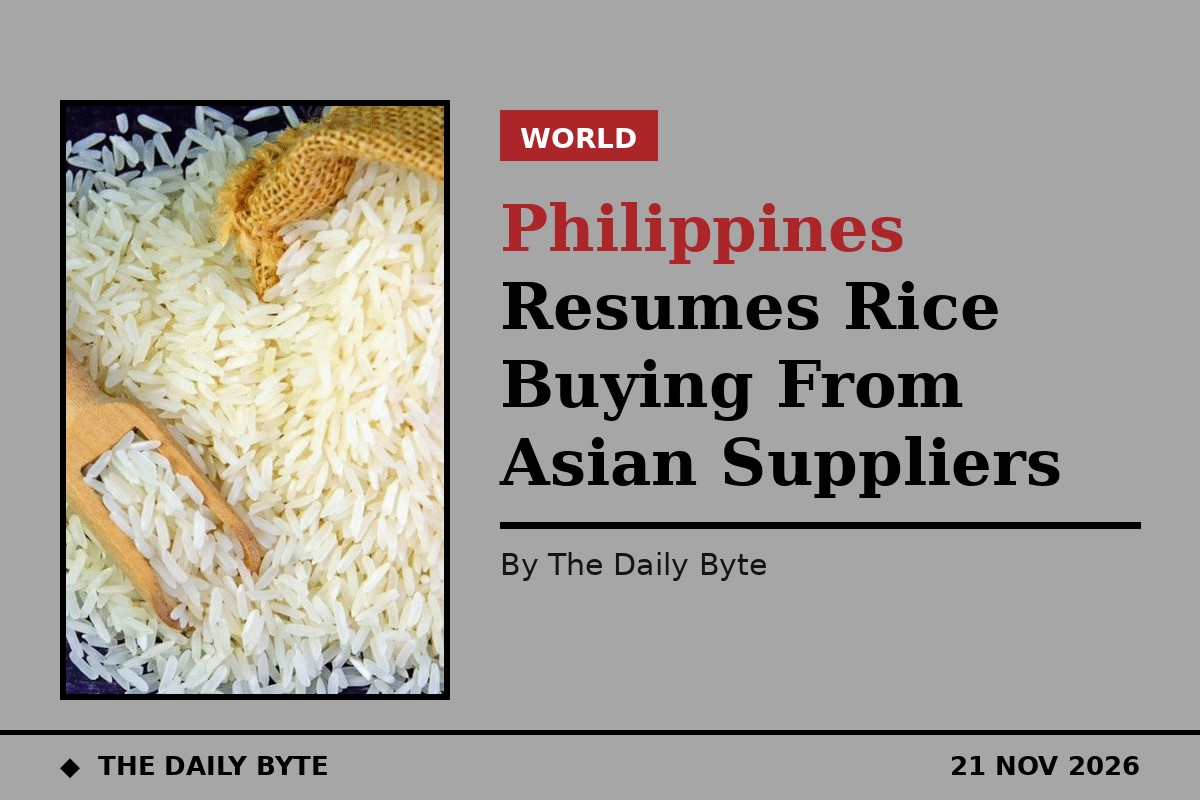
The Philippines has resumed buying rice from Vietnam, Thailand and Myanmar after easing the import restrictions it imposed earlier this year, bringing one of the world's largest rice importers back into the Asian market and lifting regional prices.
Philippine buyers are back in the international rice market, lifting near-term demand for supplies from the three origins and helping to keep Asian export prices firm, according to trade reporting based on S&P Global Platts assessments. The move follows a partial rollback of earlier import restrictions and comes at a time of elevated Vietnamese quotes and tightening exportable supplies.
The Philippines had tightened controls in two steps. In early July 2026, the government suspended imports of 5% broken white rice from all origins, encouraging buyers to switch to cheaper grades containing 15 to 25% broken grains. In September, the authorities also stopped issuing sanitary and phytosanitary import clearances for rice shipments from Vietnam, Thailand and Myanmar. Imports of lower-grade rice from these countries have now resumed, supporting a recovery in trading activity.
Vietnamese prices stay high as buyers shop around
Recent resumed buying has reinforced already firm Asian export prices. Vietnamese fragrant 5% broken rice was assessed around 559 US dollars per metric tonne FOB on 17 November, up 3 dollars per tonne day-on-day, while Thai 25% broken white rice stood near 472 dollars per tonne FOB and Myanmar 25% broken around 458 dollars per tonne FOB, according to trade assessments.
Philippine importers have already confirmed renewed purchases from Vietnam, particularly fragrant DT8 rice containing 25% broken grains. One buyer reported plans to purchase 5,000 metric tonnes of this rice in December at approximately 550 dollars per tonne FOB.
But the high Vietnamese offers are already nudging some importers towards cheaper grades and alternative suppliers. Indian and Pakistani 25% broken white rice remain the cheapest major Asian origins at about 389 dollars per tonne FOB, a substantial gap below the premium Vietnamese grades. Some Filipino buyers consider current Vietnamese offers too expensive relative to earlier deals and are redirecting part of their demand to more affordable sources, notably Pakistan, to keep import costs and downstream retail prices in check.
Quota picture remains unclear
Trade sources indicate that at least for some import programmes there may be quota ceilings, reportedly around 300,000 metric tonnes through February for certain channels, although other buyers suggest that volumes from Vietnam are not currently capped, pointing instead to price as the main limiting factor. The mixed picture adds uncertainty, but confirms that official discretion over quotas and clearances remains an important driver of short-term trade volumes.
Vietnam faces limited near-term supply availability through February, which, together with robust demand from the Philippines and other buyers, is helping to keep its export quotations elevated. Thailand and Myanmar are also seeing support from stronger Southeast Asian buying, while India and Pakistan are capitalising on their price advantage in 25% broken white rice to attract cost-sensitive demand.
El Nino keeps pressure on Philippine supply
Inside the Philippines, policymakers are balancing the need for imports to stabilise domestic stocks and prices with pressure from local farmers for protection, creating a fluid policy backdrop that could still shift again if global prices spike. A strong El Nino remains in place and is expected to persist into the first half of 2027, keeping a background risk of moisture stress in some regions.
Over the coming weeks, the return of the Philippines to the market is likely to keep Asian export prices under upward pressure, particularly for Vietnamese fragrant and 25% broken grades and Thai and Myanmar 25% broken white rice. The extent of price gains will depend on how aggressively Philippine importers seek to rebuild stocks, how quickly they diversify into lower-cost origins, and whether the government decides to lean again on administrative controls to curb domestic inflation.
Should Vietnamese offers climb further and supplies remain tight into early 2027, more Philippine volumes are likely to shift towards Pakistan and India. Conversely, any renewed policy tightening or quota limitations by Manila could briefly cool demand, but at the risk of exposing the domestic market to tighter local supplies and possible spot price spikes if weather or logistics issues emerge.


