Pill Use Falls Sharply Among Young Women in Britain
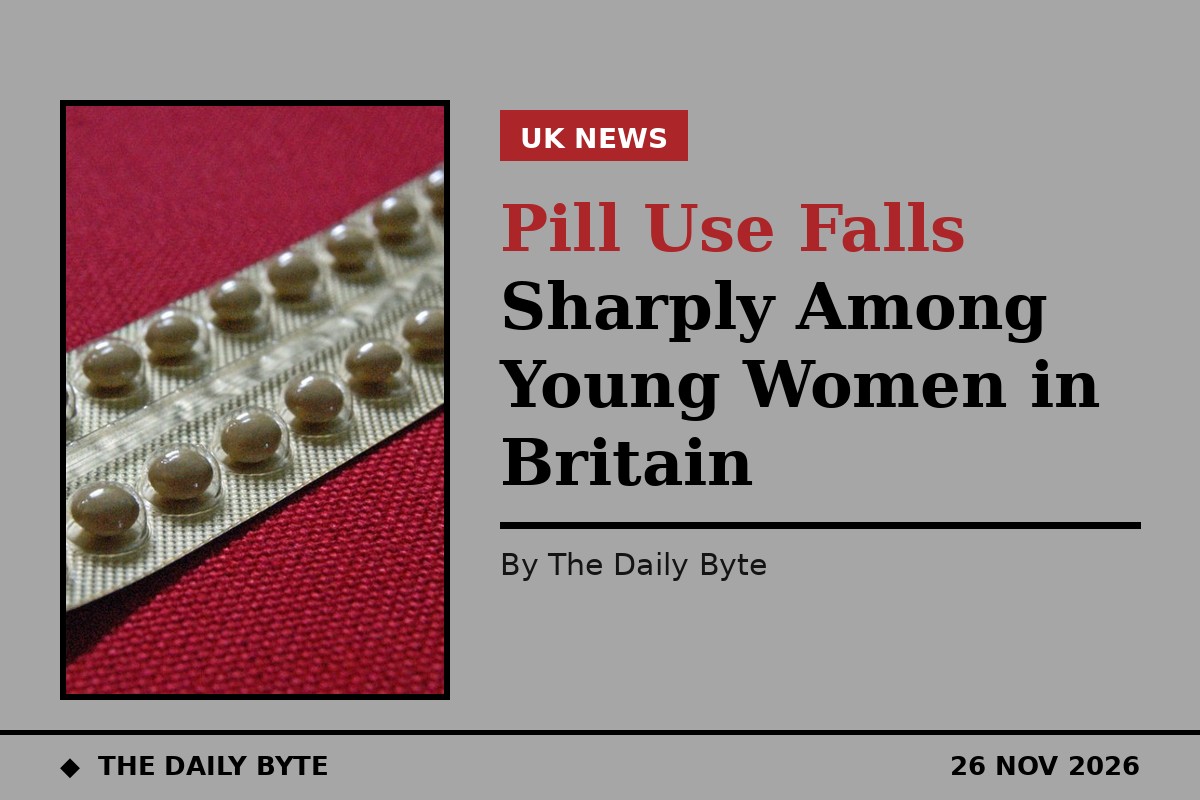
Use of the contraceptive pill has fallen sharply among young women in Great Britain over the past decade, according to a major once-in-a-decade survey of sexual attitudes and lifestyles.
The fourth National Survey of Sexual Attitudes and Lifestyles, known as Natsal-4, found that use of hormonal contraception among women aged 16 to 24 fell from 64.6 per cent to 50.3 per cent over the past decade. The fall was largely driven by women no longer taking the pill.
The findings, published in The Lancet, also show that almost one in five women in Great Britain who are at risk of an unintended pregnancy are not using an effective method of contraception. At the same time, use of the hormonal coil rose from 4 per cent to 10 per cent across all age groups.
Researchers say the shift reflects growing "hormone hesitancy" — a reluctance to use hormonal methods because of concerns about their effects on physical and mental health, libido and fertility. They say social media has helped to spread those concerns, and that similar falls in pill use have been seen in other Western countries, including France and Australia.
Dr Neha Pathak, a clinical research fellow in sexual and reproductive health and one of the study authors, said it was the first decade in which such a large decline had been seen.
The survey, one of the largest studies of sexual behaviour in the world, questioned around 6,700 people aged 16 to 59 across England, Scotland and Wales between September 2022 and January 2024. It was carried out by researchers from University College London, the London School of Hygiene and Tropical Medicine, the University of Glasgow and the National Centre for Social Research.
A wider shift in attitudes
The survey found other marked changes in how people in Britain think about children. The proportion of women aged 16 to 44 without children who said they definitely did not want children more than doubled, from 7.7 per cent to 16.6 per cent.
Dr Zara Haider, president of the College of Sexual and Reproductive Healthcare, said the doubling in women saying they definitely did not want children was striking, and underlined the need for clear, accurate information about all contraceptive options.
The findings also point to a gap in protection. Around 19 per cent of women at risk of an unintended pregnancy reported not using an effective method of contraception, a figure little changed from a decade ago. Two in five pregnancies in the past year were either unplanned, at 12 per cent, or met with mixed feelings, at 30 per cent.
The researchers say the fall in hormonal contraception use has not been matched by a rise in other reliable methods. While coil use has grown, it has not filled the gap left by the pill, and the study found the decline was greatest among women without a degree, Black women and women living in deprived areas.
What the survey cannot explain
The study's authors caution that a survey of this kind can document change but cannot prove what is driving it. Dr Wendy Macdowall, one of the authors and an associate professor at the London School of Hygiene and Tropical Medicine, said it would be tempting to blame a single factor such as the online environment, but that multiple complex factors were likely at play, especially for young people.
The Natsal survey has run once a decade since 1990. Its latest round also found that adults under 45 are now having sex on average twice a month, compared with four times a month in 1990, and that a third of 16 to 24-year-olds have never had intercourse.
Health experts say the contraception findings matter because unintended pregnancy carries real health and social consequences, and because the women most affected are often those with the least access to advice. The researchers call for better, evidence-based information about contraceptive choices, including honest discussion of side effects, so that women can make decisions based on facts rather than fear.


