Poland and Czechia Join CESEC Energy Group
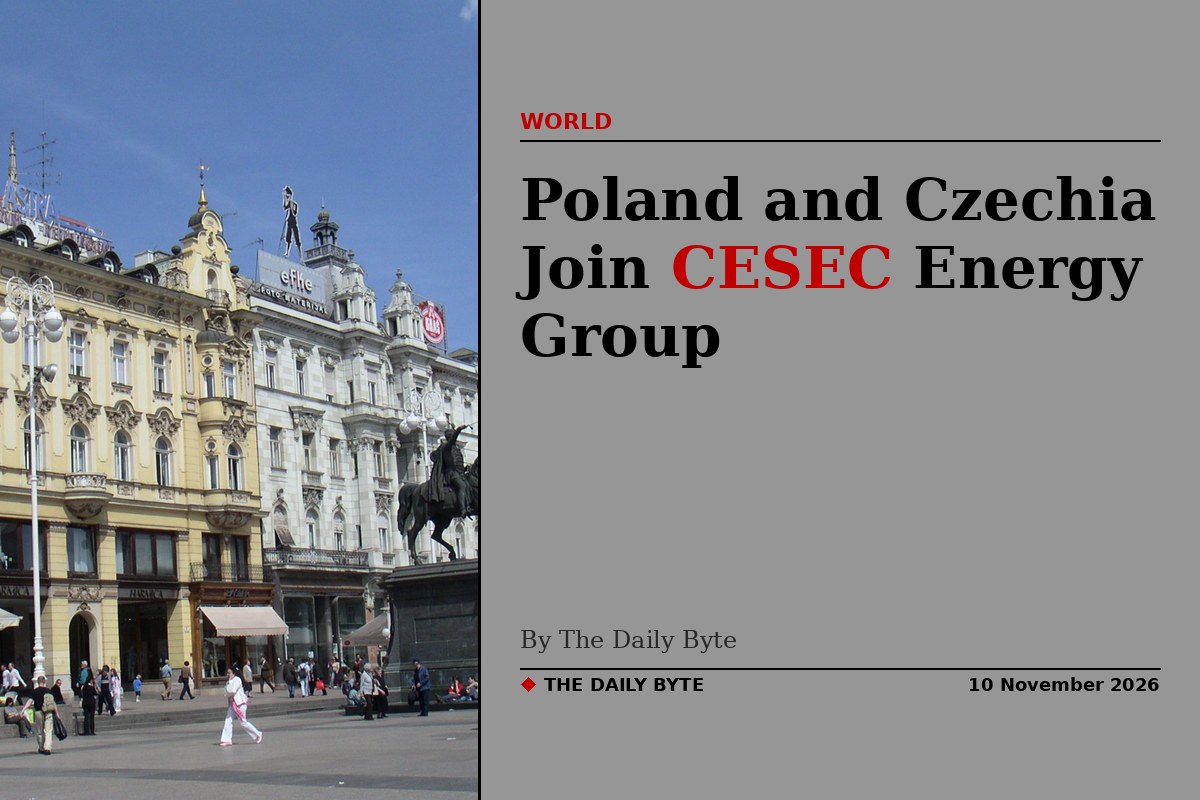
Poland and Czechia have joined the Central and South-East European Energy Connectivity group, known as CESEC, after energy ministers met in Zagreb on 6 November and formally welcomed the two countries as members. The European Commission said the enlarged group showed a strong commitment to work jointly to strengthen electricity links, diversify energy supplies and increase energy security across central and south-eastern Europe.
The ministerial meeting took stock of progress on cross-border energy infrastructure and measures to deal with high energy prices. Ministers adopted two updated action plans, one covering electricity and renewable energy and the other covering gas, including renewable and low-carbon gases such as hydrogen and biomethane.
What CESEC does
CESEC was set up in 2015 to work collectively in the region to develop the cross-border infrastructure needed to diversify gas supplies and strengthen security of supply. In 2017 its scope was extended to include electricity and renewable energy. The European Commission coordinates the forum.
The European Union countries in CESEC are now Austria, Bulgaria, Croatia, Czechia, Greece, Hungary, Italy, Poland, Romania, Slovakia and Slovenia. Albania, Bosnia and Herzegovina, Kosovo, Montenegro, Moldova, North Macedonia, Serbia and Ukraine are members as Energy Community contracting parties, taking the group to 19 countries in total.
Prices and electrification
Dan Jorgensen, the European Commissioner for Energy and Housing, represented the Commission at the meeting. He said high energy prices were a clear signal of the financial, security and strategic cost of EU dependence on polluting fossil fuel imports, and that diversifying supplies, deploying homegrown clean energy and electrifying the economy were the right measures.
Discussions reflected concern about persistently high energy prices in the region and explored immediate and longer-term measures to ensure strategic projects progress swiftly, businesses remain competitive and communities are shielded from the worst of the effects. A particular focus was the way the gas market functions and the need to use existing electricity infrastructure more efficiently, using smart solutions and additional cross-border electricity connections to shield consumers from volatile prices.
The Commission's Electrification Action Plan, published in July, points to the need to increase the share of energy from an electrified energy system from 23 percent today to 46 percent by 2040. The Commission also renewed the mandate of Professor Klaus-Dieter Borchardt as CESEC Coordinator, who will continue to promote interconnectivity and the functioning of central and south-east European energy markets.
Black Sea gas on the agenda
Ministers in Zagreb also discussed access to natural gas from the Black Sea and the diversification of supply. Hungary is negotiating to buy gas produced in Romania's Black Sea Neptun Deep field, with production planned from 2027, and to take part in carrying it onwards to other states in central and eastern Europe. Hungary's economy and energy minister, Istvan Kapitany, said the talks with his Romanian counterpart would continue in Bucharest in two weeks, and that Hungary would be able to give up Russian gas if necessary by October 2027, the deadline set by the European Union.
Frequently asked questions
What is CESEC? The Central and South-East European Energy Connectivity group, set up in 2015 to build cross-border energy infrastructure, diversify gas supplies and strengthen security of supply.
Which countries have just joined? Czechia and Poland, welcomed at the ministerial meeting in Zagreb on 6 November 2026.
How many countries are in the group now? Nineteen: 11 European Union members and eight Energy Community contracting parties, including Ukraine and Moldova.


