Poland Independence March Draws Thousands in Warsaw
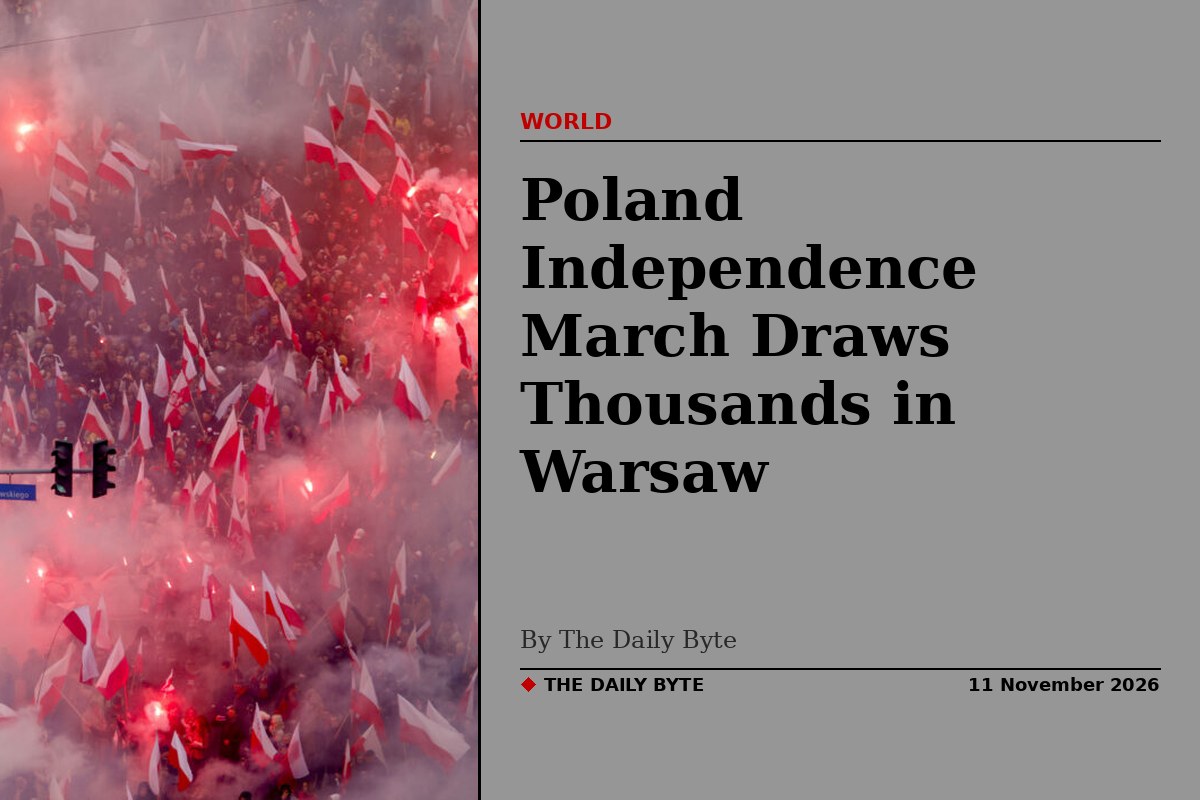
Poland deployed extra police across Warsaw on Wednesday as thousands of far-right supporters gathered for the annual Independence Day march, held this year against a tense political backdrop after a mass shooting in Krakow. The march, which takes place every 11 November to mark Poland regaining independence in 1918, set off under tight security, with officers drafted in from outside the capital and concrete barriers placed on streets around the starting point.
Prime Minister Donald Tusk appealed for restraint ahead of the event, as political divisions sharpened following the attack in Krakow on Saturday, in which a gunman killed six people in the city's Main Market Square. Ministers outraged nationalists by saying the attacker may have been motivated by far-right ideology, a claim that has fuelled anger in the days since. The motive has not been established, and prosecutors have said it is too early to draw firm conclusions.
Record turnout expected in Warsaw
Organisers of the march said they expected a record turnout, with some estimates from the organisers put as high as half a million people, compared with around 100,000 last year. Thousands had already gathered under cloudy skies in a central square by early afternoon, many carrying large Polish flags, ahead of the march setting off from Dmowski Roundabout at 14:30.
The march was due to follow Jerozolimskie Avenue and the Poniatowski Bridge before ending on the meadows by the National Stadium, where an Independence Stage had been set up. This year's gathering is being held under the motto "A Pole is the host in Poland", and organisers said foreign nationalists would also take part, including members of Spain's Revuelta youth movement, which is linked to Vox, and Hungary's far-right Mi Hazank party.
President Karol Nawrocki announced last week that he would take part in the march, as he does every year. Organisers urged participants not to exploit the event for political ends, while Tusk ruled out a ban and asked marchers to refrain from aggression and to show respect for the police securing the route.
Security tightened after Krakow attack
Police said they had deployed more officers from outside the capital in Warsaw, declining to give numbers, and searched areas near the starting point. The interior minister signed a regulation banning the carrying of weapons in Warsaw on Wednesday, even unloaded, while the regional governor banned the carrying and use of pyrotechnics. Police are also monitoring for possible copycat threats following the Krakow attack.
The Independence Day march has long caused friction between right-wing parties and the now-ruling centrists, who say it is a platform for racism and antisemitism. Participants deny those allegations and describe the event as a patriotic celebration. Authorities have in the past attempted to stop the march after clashes between some participants and their opponents or police.
Constitutional row adds to tensions
The march also comes during a deepening dispute over Poland's Constitutional Tribunal. The row escalated in late October when a judge suspended the head of the tribunal, Bogdan Swieczkowski, and his deputy, accusing them of obstructing judges elected by parliament. President Nawrocki denounced the move as an illegal takeover and demanded that Tusk reverse it before Independence Day, threatening to use all his presidential powers to defend the constitutional order.
Organisers cited what they describe as uncontrolled migration and the dispute over the tribunal among the grievances driving participation. With the march under way and security forces on high alert, the day is being watched closely as a test of whether Poland's most divisive annual street event can pass off without serious incident.
Sources: Reuters and Rapporteur.


