Port of Santos Ransomware Exposes Latin America Surge
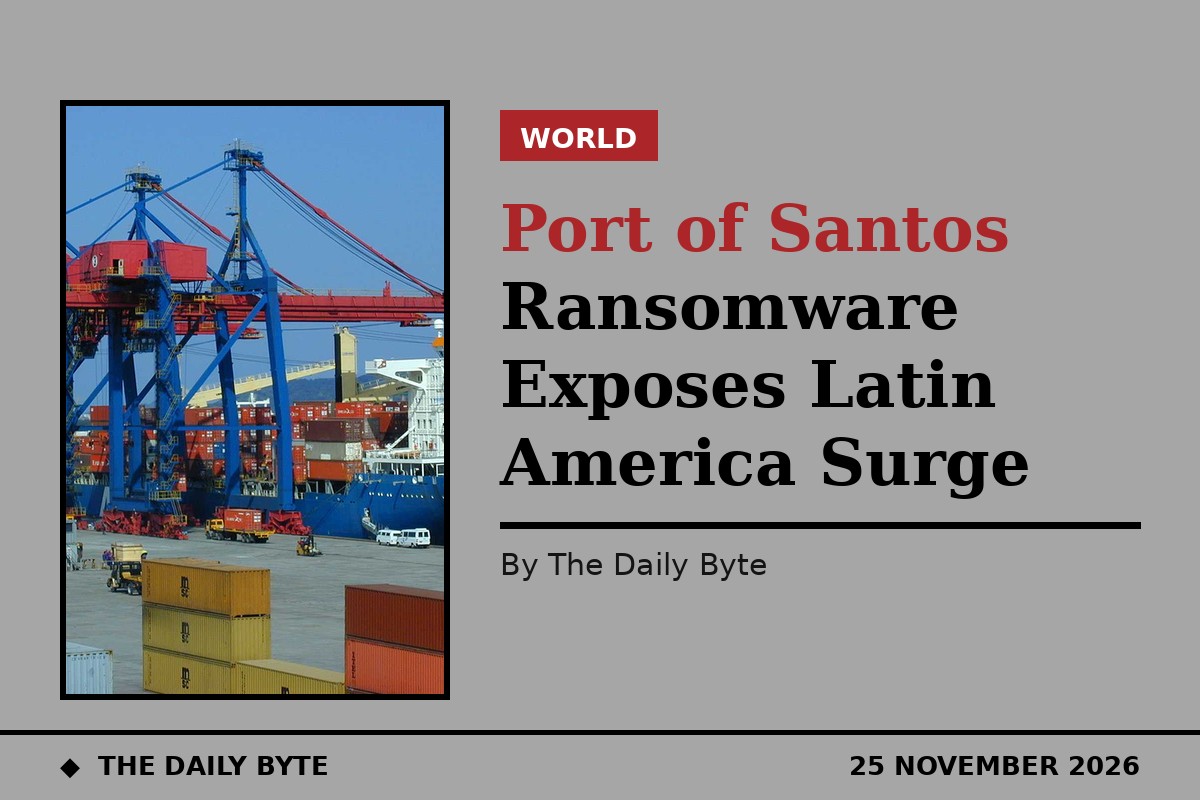
A ransomware attack on the Port of Santos in Brazil, the largest port in South America, has become the latest example of a surge in cyberattacks hitting industry across Latin America. The port authority restored its affected systems on Monday, 24 November, more than two weeks after the attack encrypted its data — and new figures show industrial ransomware cases in the region rising sharply.
The attack struck on 6 November, when a power outage took down the data centre serving the Santos Port Authority. When systems rebooted, staff found data encrypted. The authority's website, internal systems and online services used by port customers were affected, including its enterprise resource planning systems. A spokesman for the authority, Paulo Silveira, told Dark Reading the incident was a ransomware attack, but said the perpetrators remain unidentified.
Port kept moving despite the attack
Physical operations at the port were not disrupted, mainly because the authority switched to alternate processes. Staff served port users by email, personal mobile phones and third-party systems while the main platforms were down. Ships kept arriving and departing, cargo kept moving, and trucks and trains continued to enter the complex.
The authority said it recovered all of its backups, although some data was lost after 31 October and is being rebuilt from other records. It received no ransom demand, according to the authority, and has not determined whether any data was accessed. Brazil's Federal Police opened an investigation on 10 November, and port security was raised after the incident.
Silveira said the intruder was already inside the systems and probably gained entry through a malicious email or an infected website. "The cyber-attack is under investigation, and the method of intrusion and the party responsible are still being traced," he said.
Ransomware cases jump across the region
The Santos attack is part of a wider pattern. In the third quarter of 2026, industrial organisations in South America suffered at least 82 claimed ransomware incidents, up from 64 in the second quarter, according to cybersecurity vendor Dragos — the largest percentage increase of any major region. Brazil recorded the most targeted organisations, with 22 incidents, while Peru and Argentina recorded 16 each and Colombia 11.
Overall, organisations in Latin America face an average of 3,483 cyberattacks per week, according to the report, not far behind Africa's 3,834. The attacks are not only opportunistic ransomware: nation-state actors are also targeting governments and companies in the region to gather intelligence on politics, Dragos said. A second report, by Chilean telecommunications firm Entel Digital, found that organisations in Brazil, Mexico and Argentina made up nearly two-thirds of ransomware victims in the region.
Pipelines and factories also hit
Ports are not the only targets. Argentine pipeline company Oldelval suffered a cybersecurity incident that affected its administrative systems, according to filings with the National Securities Commission, although the company said the movement of oil and crude was not hampered. Manufacturing remains the most targeted industrial sector in South America, accounting for 57 percent of attacks on industrial firms this year, Dragos said.
Analysts cautioned that even attacks described as limited to administrative systems can have operational consequences. Ransomware groups often do not need to reach operational technology to stop work, said Dragos analyst Abdul Alamri, because they can paralyse the enterprise IT, planning and virtualisation systems that operations depend on — or force a company to halt production as a precaution. Statements that only administrative systems were affected "should be read with caution," he said.
The Santos incident underlines the point: the port never stopped, but only because staff fell back on phones, email and a federal paperless-port system while its own platforms were rebuilt over 18 days.
Sources: Dark Reading and Security Tribune.


