Portugal housing protests enter fifth week
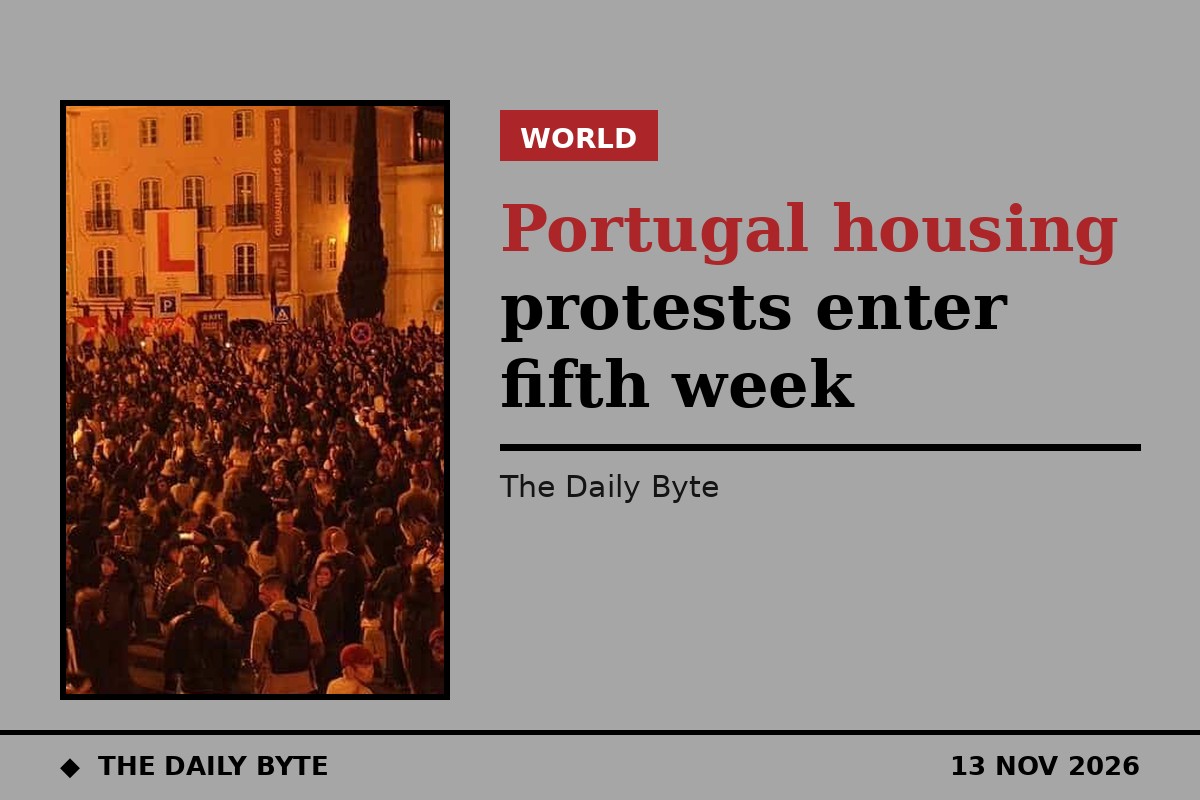
Protests over Portugal's housing crisis have passed 30 days, with an encampment still standing in Porto and activists in Lisbon shifting to mobile protests, as demonstrators prepare to meet Prime Minister Luis Montenegro's representatives on Friday.
The protests began on 10 October over a proposed change to rental legislation put forward by the centre-right PSD government. Encampments known as the Acampada de Lisboa and the Acampada do Porto were set up in Lisbon's Rossio Square and Porto's Praca D. Joao I, and have become the visible centre of a movement that now spans teachers, pensioners, students, trade unionists and housing collectives.
Police moved to clear the camps in the early hours of Sunday 1 November, removing around 100 tents from the two squares. More than 100 people were injured in Lisbon and Porto, with 10 protesters taken to hospital after being hit with batons and chased by police dogs, according to reports. Thousands poured into the squares in solidarity in the days that followed.
What the rental bill would change
At the heart of the dispute is a rental law reform approved in general terms by parliament on 30 September. The proposal would allow landlords to start eviction proceedings after two months of unpaid rent, down from the current three months. It would also give landlords freedom to set initial rents on new contracts without current limits, allow up to three months' rent to be paid in advance, and remove caps on security deposits. Existing contracts would not be directly affected.
The government argues the changes will increase supply by making the market more attractive to landlords. The bill also includes protections for elderly tenants and those with contracts dating from before 1990, and landlords of properties rated F or G on energy certificates would have three years to carry out improvements or face rent restrictions.
Protesters say the changes would make tenants more vulnerable in a country where housing costs rose 41.5 per cent between 2020 and 2025, the sharpest increase in the European Union. Campaigners say that in Lisbon the average rent for a one-bedroom flat is worth 116 per cent of the average salary, putting a home beyond the reach of many workers on local wages.
Six demands from the encampments
Beyond the rental law, the movements have presented six core demands: a rent ceiling system; an end to evictions and demolitions without alternative housing; an expansion of public housing; the use of vacant buildings for housing; restrictions on property acquisition by real estate funds; and genuinely affordable rent caps.
Teresa Mamede, a spokesperson for the Acampada de Lisboa, said the prime minister's offer of talks with opposition parties did not address their demands. "We did not hear any reason to demobilise," she said. "We will continue this fight."
Montenegro invited the Socialist Party and the far-right Chega party for talks on Thursday 5 November. The Socialist Party said the prime minister had finally recognised that the housing crisis "cannot be solved by police", while Chega confirmed it would attend, with leader Andre Ventura calling for a "law of equilibrium" in rents.
General strike called for 21 November
The movement has also spread beyond the squares. In the week before the latest reports, students blockaded three high schools in Lisbon and Porto in solidarity with protesters in France. Trade unions and tenant collectives from seven countries, including Portugal, Belgium, Spain, France, Greece, Italy and the United Kingdom, have agreed to hold coordinated protests from 20 to 22 November.
Portugal's CGTP trade union federation has called a general strike for 21 November, after pressure from rank-and-file trade unionists alongside the street movement. The government's 2027 budget proposal allocates 2,003 million euros for affordable housing programmes, including 1,071 million euros for public housing rehabilitation and construction and 917 million euros for rental support programmes such as Porta 65+.
With the encampments still in place and no resolution yet between the protest movements and the authorities, the campaigners say they will keep up the pressure until the rental bill is withdrawn and their demands for affordable housing are met.


