Portugal PM refuses opposition tax cuts
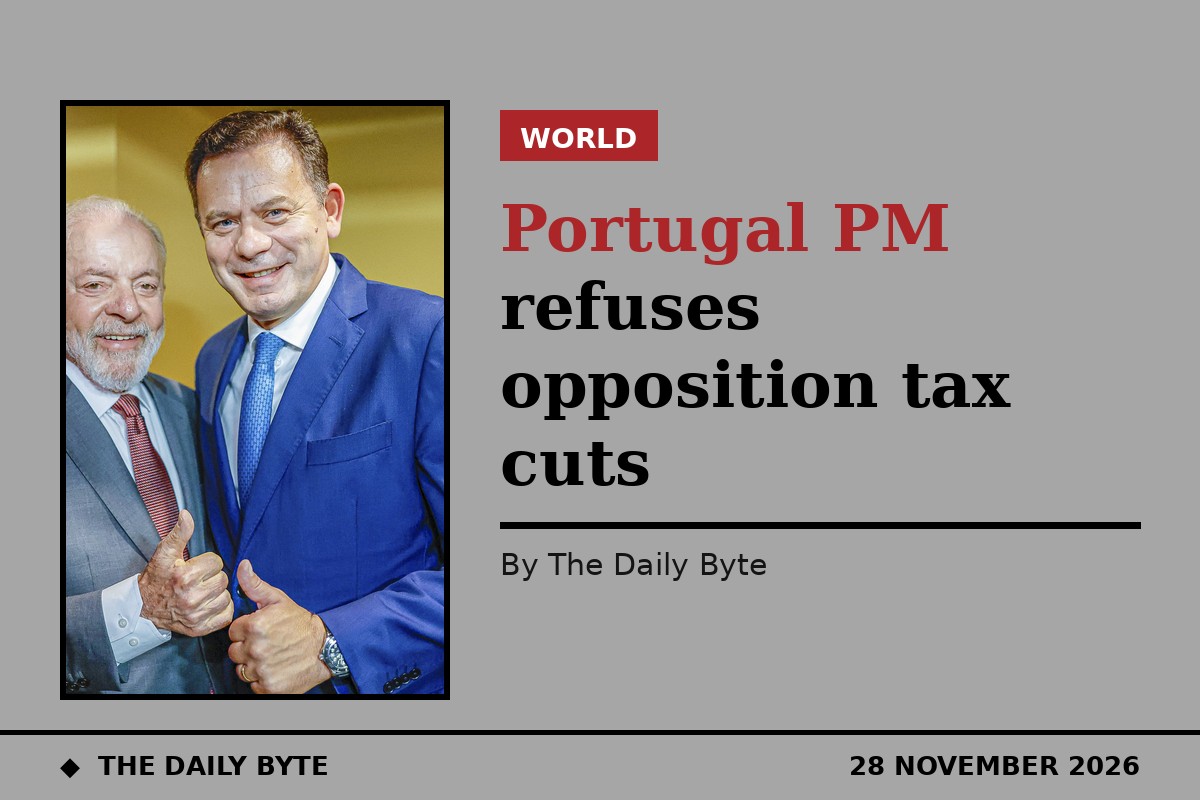
Portugal's Prime Minister Luís Montenegro has said his government will not implement tax cuts imposed by the opposition during the passage of the 2027 budget, setting up a fresh confrontation with parliament days after the spending plan was approved.
Speaking to broadcaster RTP late on Wednesday, Montenegro said Portugal still aims for a budget surplus in 2027, and that the deficit now forecast in the approved document reflects the impact of the opposition measures if the government were to do nothing.
Parliament approved the centre-right government's 2027 budget on Tuesday, but only after opposition parties rewrote parts of it. The Socialists abstained in the final vote, a step that averted a political crisis for the minority government, yet joined the far-right Chega party in pushing through tax cuts that wiped out an initially projected surplus of 0.1 per cent of gross domestic product and replaced it with a forecast deficit of 0.2 per cent.
The tax cuts in dispute
The changes include scrapping the 6 per cent value added tax on essential foods in the first quarter of 2027 and capping fuel taxes for the year. The government estimates the measures will cost about 800 million euros in lost tax revenue.
Montenegro singled out the zero rate on essential goods among the measures his government will refuse to enact. The amendment left the government to choose the basket of foods to which the zero rate would apply, from 1 January to 31 March 2027. Montenegro told RTP the government would not draw up that list, so nothing would change at the till. “The government does not agree with this policy, does not agree with this decision, and will not carry out, within its own sphere of competence, what it is not obliged to do,” he said.
A second change is also being set aside. The opposition package repealed the 10 per cent income tax rate on rents of up to 2,300 euros a month, a rate the government brought in to draw homes into the rental market at moderate prices. Montenegro said landlords would keep the 10 per cent rate, arguing that the repeal was linked to the food VAT measure and that by not carrying out the first, the government was not obliged to carry out the second. He read the opposition's pension bonus rule in the same way, as a recommendation rather than an order.
Court challenge left open
The government has not ruled out turning to the Constitutional Court. It plans to review possible legal steps on 15 December, keeping open the option of challenging parts of the budget framework. Constitutional lawyers have questioned whether ending the landlords' rate early could breach the principle that people can rely on the state's word, since the regime was meant to last until the end of 2029.
The dispute has already drawn in the other institutions of state. President António José Seguro has said the government and parliament should use the coming days to settle their different readings before the text reaches Belém, the presidential palace, where he will decide whether to sign it or ask the court to look at it first. The speaker of parliament, José Pedro Aguiar-Branco, called party leaders to an extraordinary meeting on Thursday afternoon to look at whether the government is actually obeying the 2027 budget. Chega wants an urgent debate on Friday.
Nothing changes yet for shoppers or landlords. On the government's reading, 1 January arrives with no list of foods at zero VAT and the 10 per cent rate still in place. But the budget's final text still has to be given its final wording in parliament and sent to the president — and with both sides reading the same law differently, the row over who gets the final word on Portugal's taxes is only beginning.


