Portugal MPs Vote to End Mortgage Early-Repayment Fees
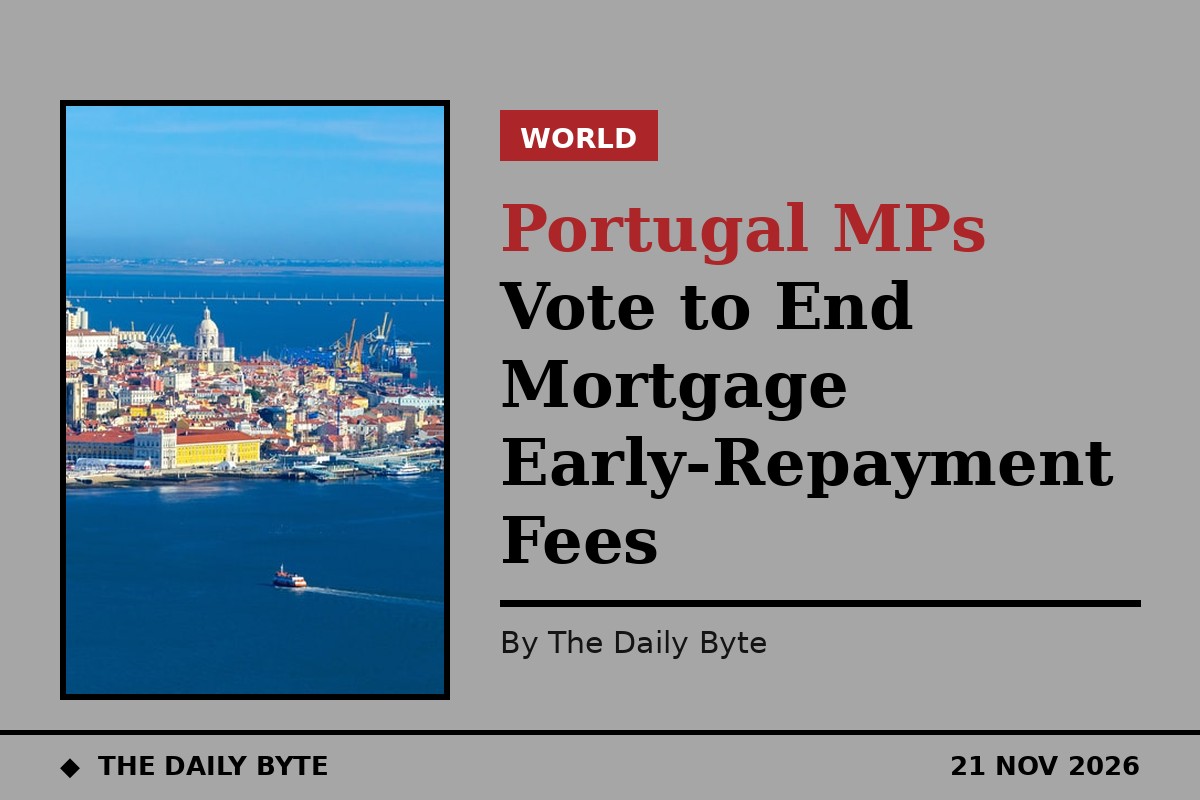
Portugal's MPs voted on Wednesday 19 November to scrap the fee banks charge when borrowers pay off a variable-rate mortgage early, and to order the government to create a state guarantee for tenants renting at affordable rents. Both measures were approved on the first day of committee votes on the 2027 state budget, against the government's wishes, and neither is law yet: the amended budget faces its final vote in parliament on Tuesday 24 November.
The fee itself is small but widely resented. Banks can currently charge up to 0.5% of the capital repaid early on a variable-rate home loan, under Decreto-Lei 74-A/2017, which caps the charge at 2% on fixed-rate loans. The committee first approved a proposal from the governing PSD and CDS-PP parties suspending the fee until 31 December 2027. It then went further, passing a Socialist Party amendment, backed by the far-right Chega party, that makes the exemption permanent by changing the decree-law so banks may not charge "any fees or charges" for full or partial early repayment made while a variable rate applies. Banks could still pass on documented third-party costs, such as land registry and notary payments, and taxes. Fixed-rate borrowers are not covered, and on mixed-rate loans the exemption applies only to repayments made during the variable-rate period.
A state guarantee instead of a guarantor
The second measure obliges the government to create a Public Guarantee of Security in Residential Renting during 2027. It would cover unpaid rent and damage to the home caused by the tenant, and apply to leases within affordable-rent limits. Joining would be voluntary. The aim is to reduce or replace the guarantors, large deposits and other private guarantees landlords commonly demand before letting a home. The guarantee does not write off a tenant's debt: when it is triggered, the state pays the landlord and can then claim the money back from the tenant. Who qualifies, what it covers and its limits are left to the regime the government must still design, and no separate sum was set aside for it, as it sits within the budget's existing ceiling for state guarantees.
Sixty-two amendments in a day
The two votes were part of a wider opposition push in the committee stage. MPs approved 62 amendments on Wednesday, 50 of them from opposition parties. Late in the day, PSD parliamentary leader Hugo Soares announced his party was changing its vote on five housing amendments from Chega and PAN that had initially been rejected, so they passed. They included a "Chave Sénior" programme of extraordinary rent support for pensioners on low incomes, a national public housing programme to help essential workers settle where they are needed, and PAN's proposal for housing support for homeless people.
The mortgage fee has been a live argument for weeks. The Socialist Party pledged on 16 November to end the charge from 2027, through its budget amendment or, failing that, a Chega bill that passed its first reading on 30 September. The governing AD coalition's own amendment would only have suspended the fee for 2027, and a Socialist attempt to abolish the charge in the 2026 budget failed. The minority government does not hold a parliamentary majority, so it needs the Socialists or Chega to let the budget through, and both have used the committee stage to press their demands. What happens next turns on the final vote on 24 November: if the budget passes as amended, early repayments during variable-rate periods would carry no bank fee from 2027 onwards, while tenants will see nothing change until the government designs the rent guarantee during next year.


