Portugal public sector strike disrupts services
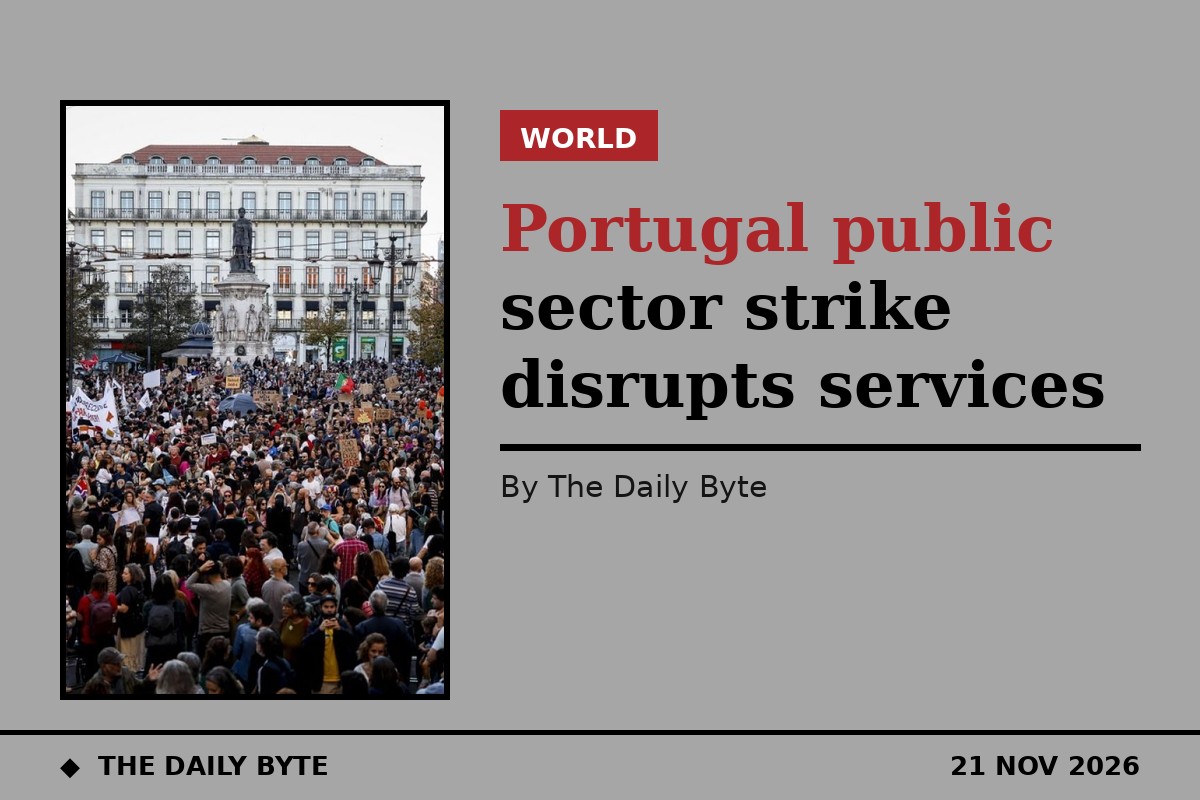
Portugal's public sector ground to a near halt on Friday 20 November as a nationwide strike by public administration workers closed many schools, cut hospitals to minimum services and disrupted town halls, rubbish collection and public counters across the country.
The 24-hour stoppage was called by the Frente Comum, the Common Front of Public Administration Unions, which is affiliated to the CGTP trade union confederation. It was timed to fall four days before parliament's final vote on the 2027 State Budget, set for 24 November, in an attempt to force the government back to the negotiating table on pay.
What the unions are demanding
The Frente Comum is demanding a pay rise of at least 15 percent, with a minimum increase of 150 euros, for every public sector worker. It also wants the lowest public sector salary raised to 1,150 euros from January, the daily meal allowance increased to 13 euros, and a 35-hour working week for all.
Its coordinator, Sebastiao Santana, said the strike would be called off only if the government negotiated the 83 proposals the front delivered on 30 September. He accused the government of having no real will to negotiate, saying it had not moved from its starting point through four rounds of talks.
What stands is the multi-year deal signed in January with FESAP, the Federation of Public Administration Unions, which provides a rise of 2.3 percent, or 60.52 euros, in 2027 and a meal allowance of 6.30 euros. Santana cited the government's latest proposal on the meal allowance as an example of the gap, saying it offered an increase of 15 cents on its first proposal, taking the allowance to 6.45 euros. He called the offer ridiculous, adding that public workers have some of the lowest wages in Europe and have been losing purchasing power for more than a decade and a half.
Schools and hospitals hit hardest
Doctors, nurses, teachers and local government workers all joined the stoppage, filing their own strike notices alongside the Frente Comum. The doctors' federation FNAM, the nurses' union SEP, the teachers' federation FENPROF and the local government union STAL all took part.
In Lisbon, Santana said on Friday morning that participation had been strong since overnight and that the first effects were already being felt in health, education and rubbish collection. In hospitals, only minimum services were running, with the greatest constraints on consultations and scheduled surgery, according to Joana Bordalo e Sa, vice president of FNAM. She described the action as a strike for patients and for the National Health Service.
In education, the FENPROF secretary general, Jose Feliciano Costa, said a significant number of schools were on strike, particularly in Greater Lisbon, and Santana said many schools were closed across the country. The strike also hit justice services, Social Security offices and Loja do Cidadao citizen service desks, and in Madeira eight schools closed and 40 others were partly disrupted.
Protests continue into the weekend
The unions say the dispute is not over with Friday's strike. Teachers will join the CGTP's national demonstration in Lisbon on Saturday 21 November, and a rally is planned outside parliament on 24 November, the day of the final budget vote. Local government workers have filed a second strike notice for 21 November so their members can attend the march.
The government has offered civil servants a 5 percent rise in travel allowances from November. The Frente Comum says that does not come close to its demands, and that the date of the strike was chosen deliberately to influence the budget debate rather than to fall on the day of the vote itself.