Pound falls for sixth day as dollar firms
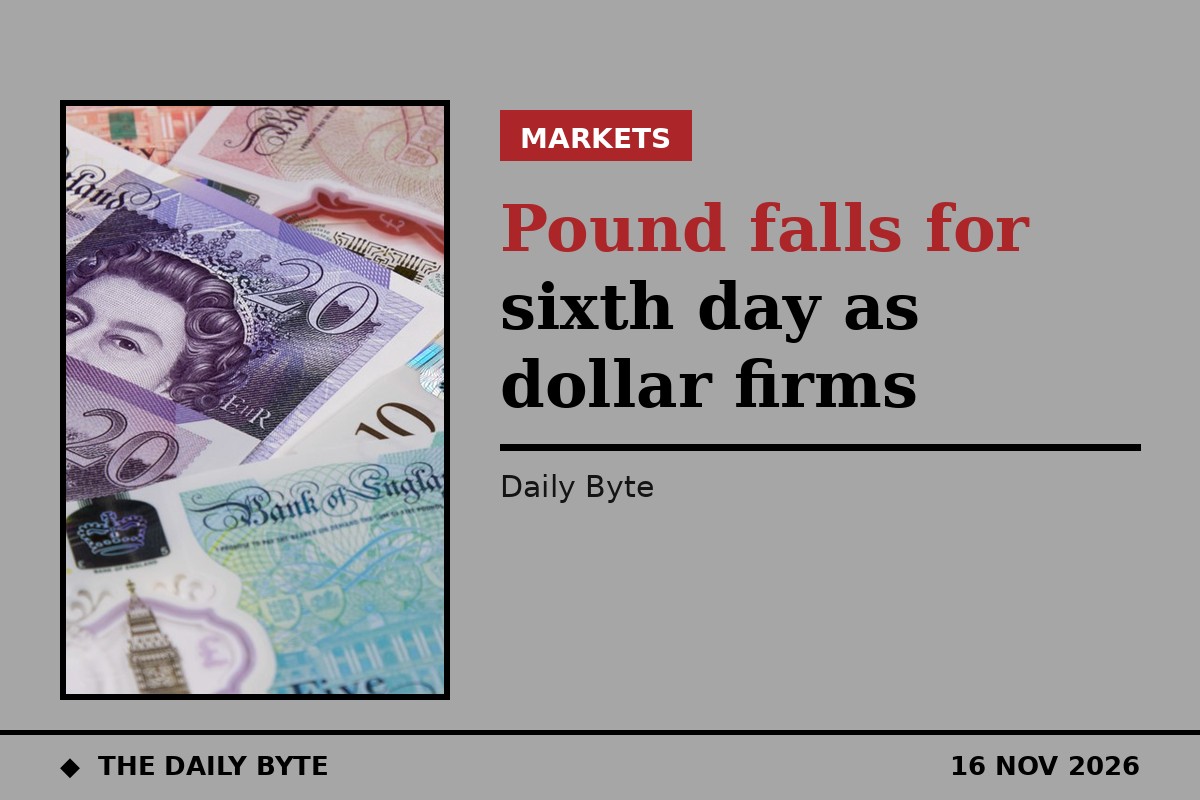
Sterling fell for a sixth consecutive day on Monday, as the dollar extended its rally on bets that the US Federal Reserve will raise interest rates further. The pound was down 0.14 per cent against the dollar at 1.3193 dollars in late morning trade in London, while the euro slipped 0.10 per cent to 1.1011 dollars.
The dollar's strength has built steadily since last Tuesday, when firmer than expected US inflation data pushed up expectations of further Federal Reserve tightening and sent bond yields higher. Two-year US swap rates have risen 35 basis points since Fed policymaker Christopher Waller floated the idea of a 50 basis point increase and core consumer price inflation came in above forecasts.
A rally that is hard to fight
Currency strategists say the dollar's momentum is proving difficult to resist. "The rally is hard to fight," ING foreign exchange strategist Francesco Pesole said, as the greenback gained against almost every major currency. The pound and the euro fell broadly in step against the dollar, with the euro-sterling rate flat on the week at 0.8345.
Other market snapshots through the morning told the same story at slightly different levels, as is normal while trading continues. The pound was quoted at 1.3216 dollars in early trading, against 1.3219 dollars at the London close on Friday, and a mid-market reference rate put it at 1.3211 dollars at 10.21 GMT. The euro, meanwhile, was testing the key 1.1000 level against the dollar, a point strategists describe as important support.
HSBC's technical view is that sterling remains in a downtrend, with support at 1.3108 and resistance at 1.3414. A fall through support would open the way to further losses, while a recovery above resistance would be needed to change the picture.
Rate expectations on both sides of the Atlantic
The move also reflects a shift in expectations about UK interest rates. Bank of England chief economist Huw Pill told the Financial Times, in an interview published on Saturday, that the Bank will probably need to raise rates further in 2027, on top of an increase in December. That would take the Bank in the opposite direction to the cuts many investors had expected earlier in the year.
Economists polled by Reuters on 11 to 13 November take a slightly different view of the timing: 64 of the 65 economists surveyed expect the Bank to hold its rate at 4.00 per cent when it meets on 17 December, and to raise rates in early 2027 instead. The gap between the two views underlines how uncertain the path of UK rates has become, and that uncertainty is itself weighing on the pound.
Higher US rates tend to support the dollar because they offer investors a better return on dollar assets, while a weaker pound pushes up the cost of imports into the UK, adding to inflation pressure. For households and businesses, the immediate effects show up in the cost of foreign travel, imported goods and fuel priced in dollars.
What to watch next
Traders will now watch US economic data and further comments from Federal Reserve officials for clues about whether a larger rate rise is genuinely on the table, and the Bank of England's December meeting for its decision on UK rates. Sterling has now fallen on six straight trading days, and with the dollar's rally still gathering pace, the pound's slide may not be over yet. Sources: Finwire; Exchange Rates UK, mid-market rates at 10.21 GMT; AJ Bell, early market roundup.