Pretoria Protesters Demand Ban on Nigerians
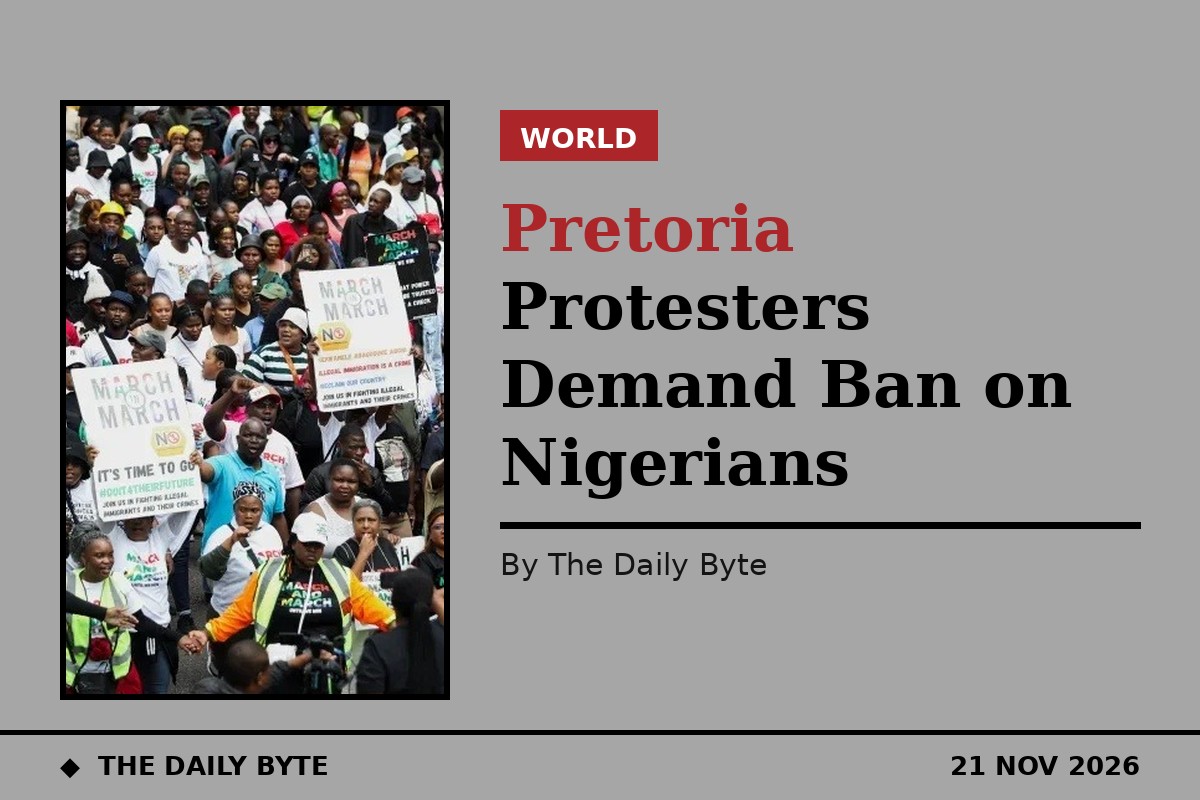
Anti-immigrant demonstrators marched through Pretoria on Wednesday calling on South Africa to ban Nigerians from entering the country, in the latest flare-up of hostility toward the Nigerian community there.
Members of the March and March movement staged the protest against undocumented migration and South Africa's immigration policies. The march began in Sunnyside, moved through Arcadia and proceeded towards the Department of Home Affairs in Hatfield, with protesters demanding stricter immigration controls and the deportation of undocumented foreign nationals.
Jacinta Ngobese-Zuma, leader of the March and March movement, led the march into Sunnyside. The Pretoria suburb has a large Nigerian community and is often called "Little Lagos". Ngobese-Zuma challenged Nigerian residents to explain their presence and role in the area, and asked how the suburb got its nickname.
"I am being told here that we've entered Sunnyside, the home of Nigerians. I am inviting Nigerians to come out, let's talk to each other. We want to know who gave you this place and called it Nigeria. Who gave you permission to call this place Lagos or whatever you call it?" Ngobese-Zuma asked.
Call for a ban and withdrawal from the refugee treaty
Xolani Zuma, legal counsel for the movement, went further and called for a full ban on Nigerians entering South Africa. "The state must ban Nigerians from South Africa. They must ban Nigerians until they stop selling drugs to our people. The rest of Africa, we are fine, but we do not want Nigerians in South Africa anymore. That is what we are saying," Xolani Zuma said.
Marchers also urged South Africa to quit the 1951 United Nations Convention Relating to the Status of Refugees. They said duties under the pact no longer work, and called for an end to new refugee applications. The demand for a ban on Nigerians represents the position of the protest movement and has not been announced as a policy of the South African government.
Ngobese-Zuma called the current setup "not sustainable and not feasible". She said migrants strain public services and fuel anger among South Africans. The group said it would take its demands to the home affairs department, asking for stricter border checks, limits on refugees and faster deportations of people without papers.
Strain between Nigeria and South Africa
The march adds to strain between Nigeria and South Africa over repeated hostility towards Nigerians living in the country. Last week, Femi Fani-Kayode, Nigeria's high commissioner to South Africa, clashed with the South African presidency after his prepared speech was left out when he presented his credentials on 13 November. Fani-Kayode called the move disrespectful to Nigeria.
He later said the row ended after South African President Cyril Ramaphosa stepped in and the international relations and co-operation department invited him. Fani-Kayode said he had already started handling issues facing Nigerians in South Africa since taking up his post.
He called those behind xenophobic attacks a small group that should not define South Africans, saying most South Africans are decent and welcoming. Even so, he warned that patience in Abuja was wearing thin over repeat attacks on Nigerians, and vowed that Nigeria would protect its citizens from xenophobic violence.
The march took place on the same day President John Mahama of Ghana criticised mob violence against foreigners in South Africa. Speaking at a migration conference in Accra, he said the country's migration crisis "will not be solved by vigilantism".


