Prince William: Protect Service Women from Harassment
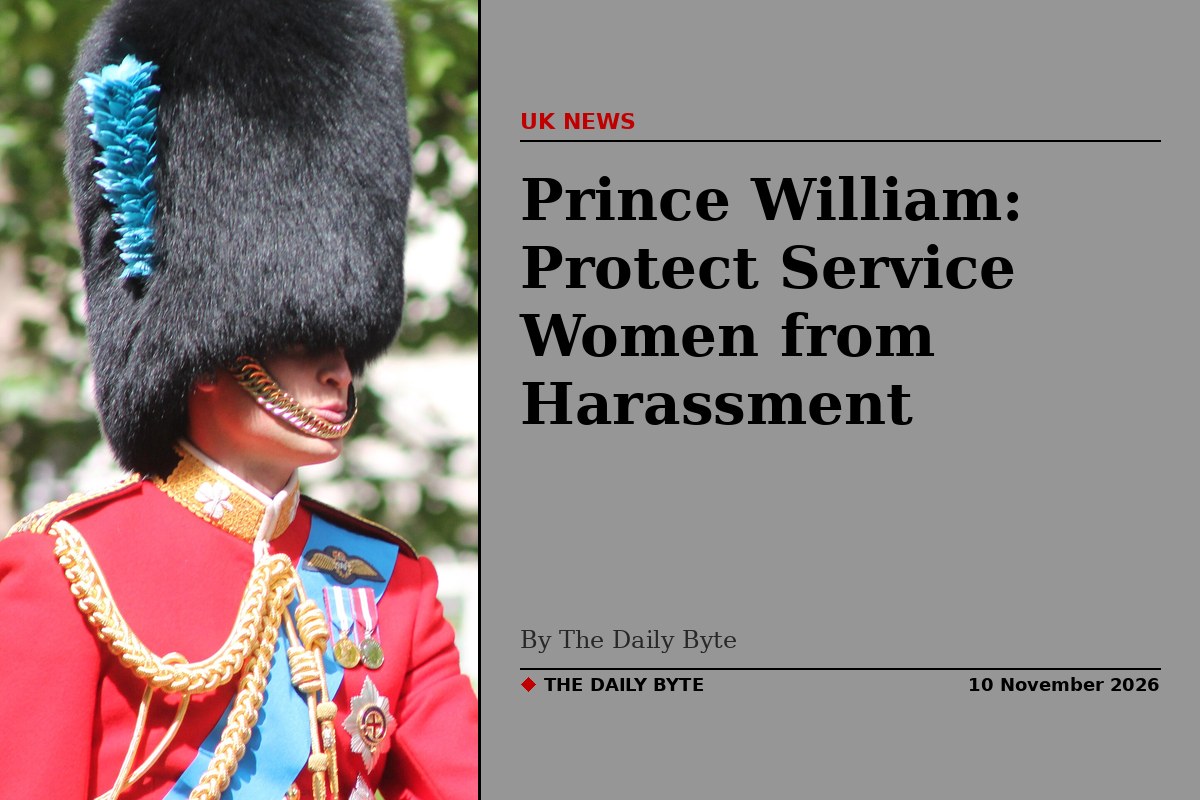
The Prince of Wales has called for Britain's military to do more to protect women in the Armed Forces from harassment, saying standards are not yet being met. Prince William made the call in an edition of Country Life magazine he has guest-edited, his first public intervention on the subject.
“We need to ensure our military culture is more inclusive of women,” the prince wrote. “I want to play my part in making the military feel like the welcoming, open and professional place I enjoyed and make it feel like that for everyone. At the moment, I don't feel that we meet those standards and, as a former serving officer, I really mind it when those who wear the uniform now don't feel safe, respected or valued.”
A year of meetings with servicewomen
Over the past year, the future King has held public and private meetings with servicewomen of all ranks from the Royal Navy, the Army and the Royal Air Force, hearing first-hand about their roles, the challenges they face and what more can be done to make them feel safe, respected and valued throughout their careers.
He treated the conversations as a fact-finding mission and also held meetings with senior leaders across the defence sector to discuss efforts to address the concerns raised.
William heard claims of sexualised bullying, including inappropriate comments, rumours spread about women who turned down sexual advances, and late-night harassment in barracks.
What the figures show
The magazine feature cites a Ministry of Defence survey which found that 67 per cent of service women had faced unwanted “sexualised behaviour” every year, and that 30 per cent had considered leaving the Armed Forces because of such behaviour.
The feature, which runs to five pages, also recalls the case of Royal Artillery Gunner Jaysley Beck, 19, who took her own life at Larkhill Camp in Wiltshire in 2021. She had reported a sexual assault, and an inquest heard that the Army's handling of her complaint had played “more than a minimal contributory part” in her death.
Her death prompted a wider reckoning within the Armed Forces and led to Operation Teamwork, a programme aimed at ending the culture behind such behaviour. Earlier this year, four young women told the BBC they had been sexually assaulted and harassed at the Army Foundation College in Harrogate, North Yorkshire.
The article also notes a practical problem: much military kit is designed for an average 70kg Caucasian male, so some uniforms fit women poorly.
Defence chief backs change
Air Chief Marshal Sir Richard Knighton, Chief of the Defence Staff, said: “We know the experience of women in our Armed Forces has not always been what it should be. Where behaviours and attitudes have fallen short of the standards we expect, we must be honest about that and continue to drive change.”
William served seven-and-a-half years in full-time military service. He was commissioned as a British Army officer in December 2006, later undertook attachments to the Royal Air Force and the Royal Navy, and trained as a search-and-rescue pilot in 2009, serving for three years in the role at RAF Valley in Anglesey.
As a future head of the Armed Forces, his intervention adds royal weight to a debate the military has been wrestling with for years: whether the culture of the services is keeping pace with the women now serving in them.