Qatar Lifts Ebola Travel Curbs on Uganda, CDC Welcomes
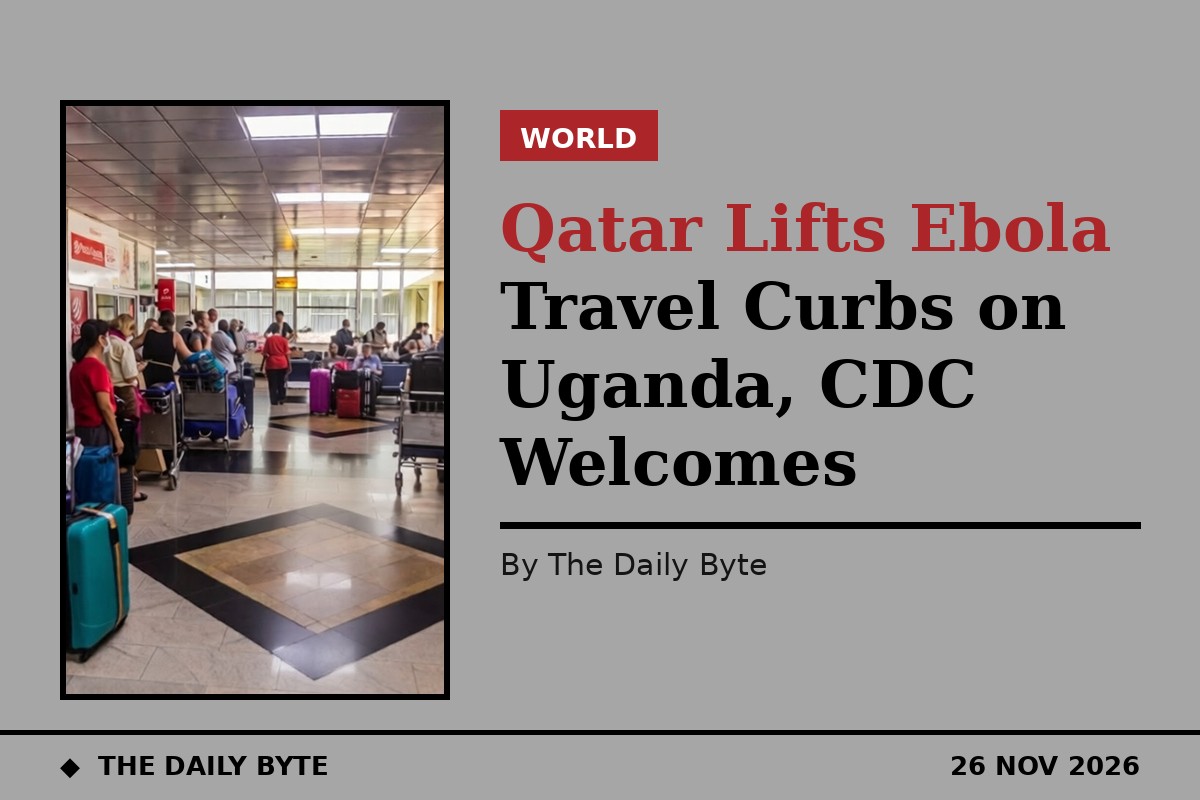
The Africa Centres for Disease Control and Prevention (Africa CDC) has welcomed Qatar's decision to lift Ebola-related travel restrictions on Uganda and resume issuing all categories of entry visas, calling it a positive signal for science-led responses to public health emergencies.
In a statement issued from Addis Ababa on Thursday, 26 November 2026, Africa CDC said it welcomed and expressed its appreciation to the State of Qatar for the decision. The agency said the move “sends a positive signal about the role of science, evidence and diplomacy in addressing public health emergencies” and commended Uganda's Ministry of Health for containing the Bundibugyo Ebola outbreak.
What Qatar decided
Qatar's Ministry of Foreign Affairs set out the decision in a diplomatic note to the Ugandan Embassy in Doha, confirming that health authorities had established a 42-day window with no new Ebola cases. The restrictions had included a suspension of entry visas for Ugandan nationals and foreign residents travelling from Uganda, and their lifting means the full resumption of all categories of entry visas under standard procedures.
How Uganda's outbreak ended
Uganda's Ministry of Health declared an outbreak of Ebola disease caused by the Bundibugyo virus on 15 May 2026, following infections associated with the neighbouring Democratic Republic of Congo. The country subsequently announced the interruption of local transmission on 28 July and completed the mandatory 42-day surveillance period without further cases, leading to the outbreak being officially declared over on 27 October 2026.
Qatari authorities announced the lifting of the measures on Monday, 23 November, and the change coincided with an update to the International Air Transport Association's Timatic travel regulations database, which no longer listed Uganda among countries subject to Qatar's temporary Ebola-related entry restrictions. Africa CDC's public welcome followed on 26 November.
What it means for travellers
The easing restores normal visa processing for Ugandans seeking to travel to Qatar for employment, education, business, tourism and onward connections, with Doha serving as one of the major aviation hubs linking East Africa to the Middle East, Europe and Asia. A travel advisory published by immigration consultancy Fragomen on 20 November had still listed Uganda alongside the Democratic Republic of Congo and South Sudan among countries whose travellers were barred from entering Qatar.
Contrast with the DR Congo outbreak
The development comes against a very different picture in the Democratic Republic of Congo, where the Ebola outbreak continues to grow. Confirmed cases there passed 12,000 on 26 November, with more than 5,900 deaths, while fighting in the east of the country has driven responders from their posts. Uganda, by contrast, maintains enhanced preparedness and screening measures following the closure of its outbreak, and returning Ugandans with a history of travel to the DRC are subject to 21 days of quarantine under measures announced in October.
Africa CDC is the continental public health agency of the African Union, headquartered in Addis Ababa, and coordinates disease surveillance and response across member states. Its statement framed Qatar's decision as an example of how countries should weigh evidence when deciding whether to keep emergency travel measures in place once an outbreak has been declared over.


