Qatar Pushes UN Protection for Conflict Mediators
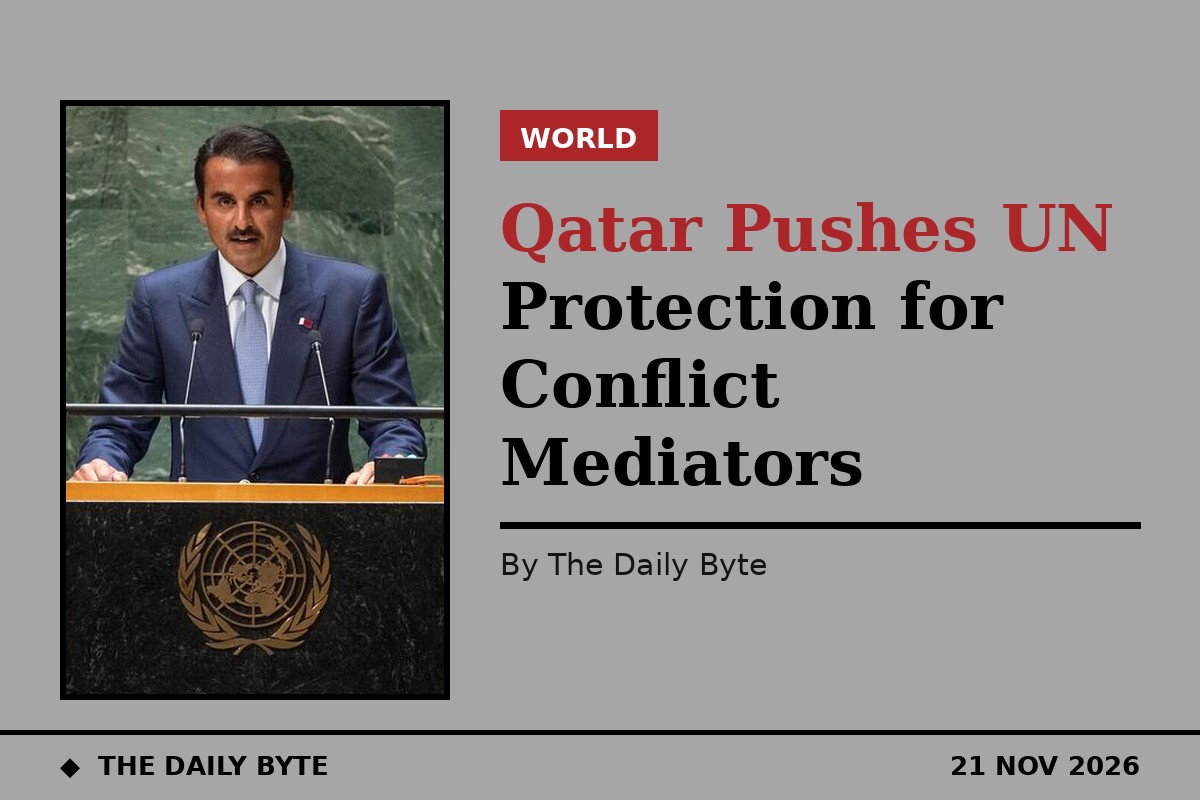
Qatar is promoting a new United Nations resolution to strengthen international protections for mediators and negotiators working to end armed conflicts, more than a year after Israel's strike on Hamas leaders in Doha.
The draft resolution, reported on Thursday, would cover mediators, negotiators, mediation teams, support personnel and civil society representatives involved in conflict-resolution efforts, including negotiations involving armed groups. It strongly condemns attacks, threats and acts of violence against them, and calls on member states to protect them under international law.
Qatar has completed an initial round of consultations among UN member states on the text, according to reports based on the Jerusalem Post's reporting. The resolution has not yet been adopted, and its final wording has not been agreed.
Why Qatar is pushing it
The proposal follows Israel's 9 September 2025 strike against Hamas leaders in Doha, which drew international criticism and renewed scrutiny of Qatar's role as a mediator. The draft does not name Israel, Hamas or the Doha strike, but its timing and subject matter are unmistakable.
Qatar has long mediated indirect talks between Israel and Hamas, including negotiations over ceasefire agreements and hostage releases. The strike on its capital raised questions about the safety of mediators themselves — and about whether a country hosting negotiations could be targeted for doing so.
The draft's scope is deliberately wide. It covers not only the named mediators at the table but the teams around them — support staff and civil society representatives who take part in conflict-resolution efforts. The aim, as set out in the text, is to make clear that those who broker peace talks deserve protection in their own right.
Israel's concerns
Israeli officials are watching the negotiations closely. According to the reports, they fear the resolution's broad language could be used to restrict future military operations against members of terrorist organisations who also take part in negotiations, and to increase diplomatic pressure on Jerusalem. Officials are examining the legal and diplomatic implications of the text.
The draft also includes language on the right to self-determination of peoples under colonial rule or foreign occupation, and on expanding the role of the UN Secretary-General and other UN bodies in mediation.
As a General Assembly text, the resolution would carry political weight rather than legal force. But a strong vote in its favour would put the Assembly on record that mediators are protected — a principle Qatar, as the region's most active mediator, has a direct interest in defending. The proposal remains under discussion among member states.


