Qatari PM to brief G7 in Paris after Trump Iran talks
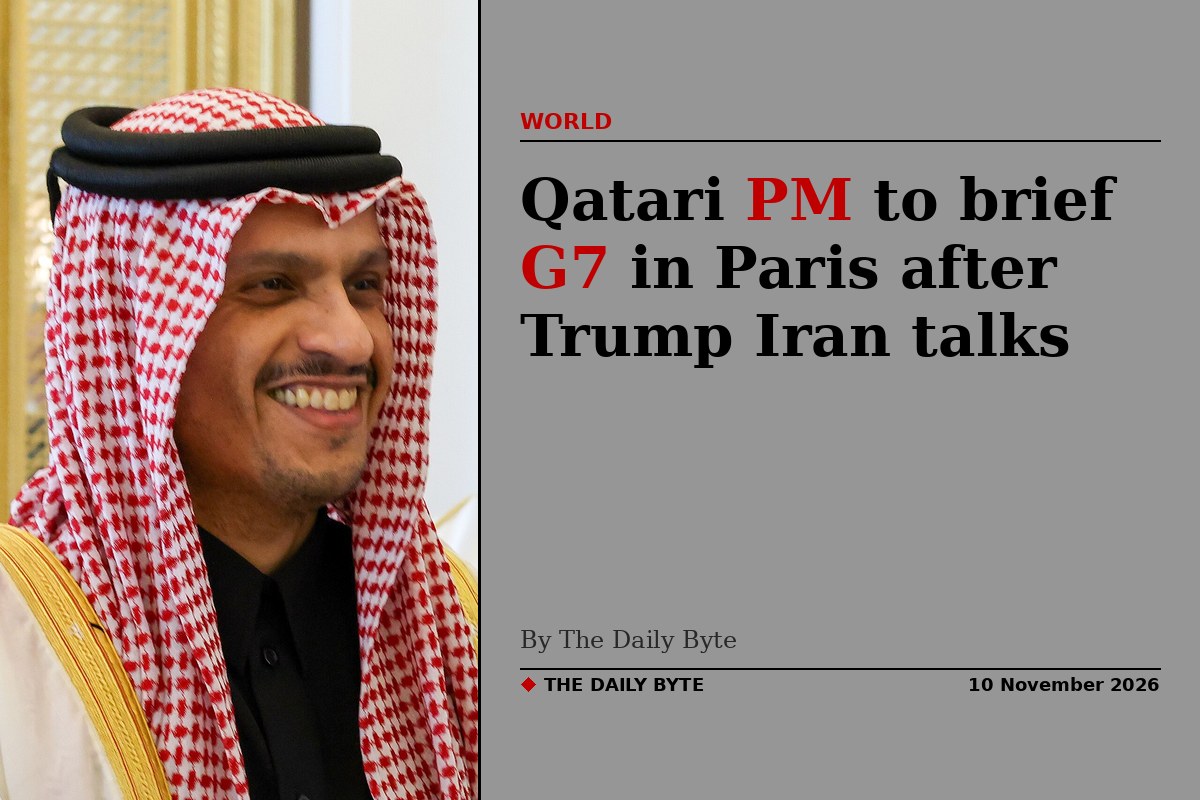
Qatar's prime minister will make an unscheduled stop at the G7 foreign ministers' meeting in Paris on Tuesday to brief European powers on his talks with United States President Donald Trump about the Iran conflict.
Sheikh Mohammed bin Abdulrahman Al-Thani, who is also Qatar's foreign minister, met Mr Trump at the White House on Monday. He will now meet the foreign ministers of Britain, France, Germany and Italy, along with Saudi Arabia, which had already been invited to the broader G7 discussions on the Middle East.
Iran crisis tops the Paris agenda
France's foreign ministry said the ministers would discuss the situation in the Near and Middle East, with the Iranian crisis and its security and economic repercussions at the centre of the talks.
Qatar has played a central role as mediator between Washington and Tehran throughout the conflict, carrying proposals back and forth as the two sides try to bridge wide differences over Iran's nuclear programme and the terms for ending a war now in its ninth month.
The Qatari prime minister's trip to Paris comes a day after Mr Trump said the war with Iran was, in military terms, effectively over, while insisting that the United States naval blockade of Iranian ports would continue. The president described Iran's leadership as weakened, but added that American forces remained ready if circumstances changed.
Wide gap remains over terms
US Secretary of State Marco Rubio struck a more cautious note before travelling to Paris, saying on Sunday that negotiations had made little progress and that he would not describe the two sides as being on the verge of a breakthrough. He called Tehran's demands unacceptable and, in some cases, unrealistic.
Iran has set out seven conditions for ending the war, including an end to hostilities, the lifting of the naval blockade and sanctions, the release of frozen assets and the withdrawal of US forces from the region. Tehran has said the Strait of Hormuz will remain closed until those conditions are met, while Washington has rejected the terms.
Iranian President Masoud Pezeshkian said on Monday that Tehran was prepared to negotiate with dignity and resolve the issue through dialogue, but would not yield to coercion. He said Supreme Leader Mojtaba Khamenei had instructed officials to end the prolonged state of neither war nor peace.
What the Paris briefing could decide
European governments have a direct stake in how the standoff ends. The conflict has disrupted shipping through the Strait of Hormuz, pushed up energy costs and raised the risk of a wider regional war, and European ministers have been pressing for a diplomatic settlement.
The Qatari prime minister's briefing is expected to give them their clearest picture yet of where the White House stands after Monday's talks, and whether the mediation effort led by Doha still has room to move. For now, the public signals from Washington and Tehran point in different directions, and the Paris meeting is a test of whether the gap can be narrowed before the fighting resumes in earnest.


