RBI brings 60 tonnes of gold home to India
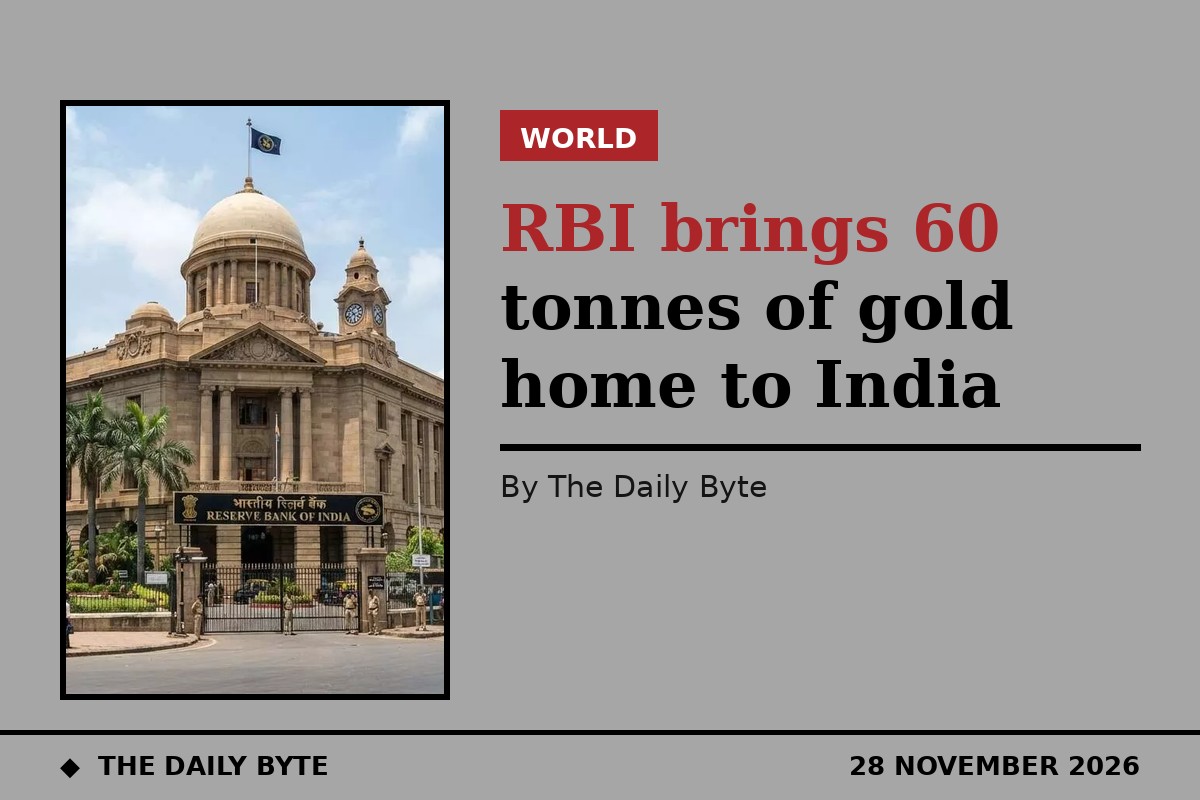
The Reserve Bank of India moved 60.08 tonnes of gold from overseas vaults to storage in India between April and September 2026, according to the central bank's latest half-yearly report on the management of foreign exchange reserves, released on 25 November.
The transfer raised the share of India's gold reserves held at home to 84.05 per cent at the end of September, up from 77.23 per cent at the end of March. Gold held in domestic vaults rose to 740.13 tonnes from 680.05 tonnes, while holdings kept with the Bank of England and the Bank for International Settlements fell to 140.39 tonnes from 197.67 tonnes.
The central bank's total gold holdings were unchanged at 880.52 tonnes over the six months. The increase in domestic storage reflects the relocation of existing bullion rather than new purchases. The Reserve Bank bought no gold during the period, according to the report.
Value falls as prices drop
While the quantity of gold was unchanged, its value fell. The Reserve Bank's gold holdings were valued at 106.08 billion US dollars at the end of September, down from 115.40 billion dollars at the end of March. International gold prices fell during the reporting period, from about 4,721 dollars per troy ounce in April to about 4,319 dollars in September, a decline of around 9 per cent. The bank linked the price movement to rising US Treasury yields, a stronger dollar and expectations of tighter monetary policy.
Gold's share of India's foreign exchange reserves also declined, from 16.70 per cent in March to 14.38 per cent in September, as the total reserves grew. India's foreign exchange reserves rose to 737.78 billion dollars at the end of September, up from 691.11 billion dollars at the end of March, an increase of 46.67 billion dollars over the six months.
A continuing shift home
The repatriation continues a shift that has been under way for several years, with the Reserve Bank steadily increasing the proportion of its bullion kept in India. Gold stored overseas remains in the custody of the Bank of England and the Bank for International Settlements, long-standing custodians for central bank reserves.
Gold prices have continued to fall since September. Spot gold dropped as low as 3,426.40 dollars per ounce during the week before recovering above the 3,500-dollar level. The Reserve Bank also raised the share of securities in its foreign currency assets to 87.06 per cent in September, up from 84.31 per cent in March.
The half-yearly report is the Reserve Bank's regular account of how it manages the country's foreign exchange reserves, including the currency composition, the instruments it holds and the location of its gold. The latest edition covers the period from April to September 2026 and was published on 25 November.


