RBI Brings 60 Tonnes of Gold Home as Reserves Rise
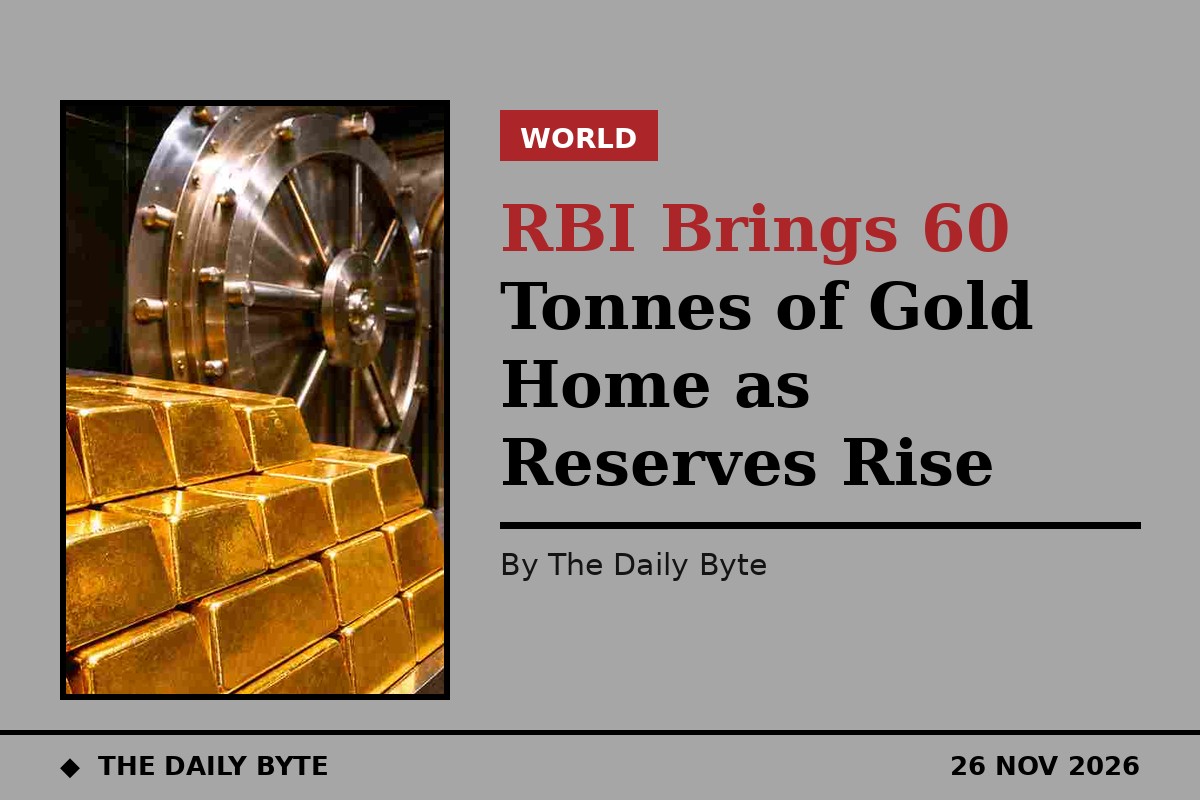
The Reserve Bank of India brought 60.08 tonnes of gold home from overseas vaults in the six months to September, raising the share of its bullion reserves held inside India to about 84 per cent.
The figures come from the central bank's 47th half-yearly report on the management of foreign exchange reserves, released on 25 November. The report covers April to September 2026.
India's total gold holdings were unchanged at 880.52 tonnes at the end of September. But the amount held in domestic vaults rose to 740.13 tonnes, up from 680.05 tonnes at the end of March. Gold held overseas, in safe custody with the Bank of England and the Bank for International Settlements, fell to 140.39 tonnes from 197.67 tonnes.
The share of the Reserve Bank's gold stored in India rose from 77.23 per cent at the end of March to about 84.05 per cent at the end of September.
The value of the gold reserves fell over the same period, even though the tonnage did not change. The reserves were valued at $106.08 billion at the end of September, down from $115.40 billion six months earlier, reflecting a fall in international gold prices during the period.
Gold's share of India's total foreign exchange reserves also slipped, from 16.70 per cent at the end of March to about 14.38 per cent at the end of September.
India's overall foreign exchange reserves grew strongly over the six months, rising by $46.67 billion to $737.78 billion at the end of September, from $691.11 billion at the end of March.
The Reserve Bank has been steadily moving more of its gold into domestic custody in recent years, a shift that leaves a larger share of the country's bullion within India's borders at a time of heightened geopolitical uncertainty and volatile global markets.
Central banks around the world have been adding to their gold holdings and, in several cases, bringing bullion home from overseas custodians. For India, the move also reduces reliance on foreign vaults for a portion of the reserves that back the rupee.
The half-yearly report is the Reserve Bank's regular account of how it manages the country's foreign exchange reserves, including the currency composition, the gold holdings and the returns earned on the portfolio.
The next half-yearly report, prepared as of the end of March 2027, will show whether the amount of gold held abroad falls further.
The Reserve Bank publishes the report twice a year, and the latest edition is the 47th in the series. India is among the world's largest holders of gold reserves, and the central bank's holdings are a closely watched part of its external balance sheet.


